On 3 December 1935, three leading feminists, Rosa Manus, Johanna Naber and Willemijn Posthumus-van der Goot founded the International Archive for the Women's Movement (now Atria). What are the highs and lows of the past ninety years?
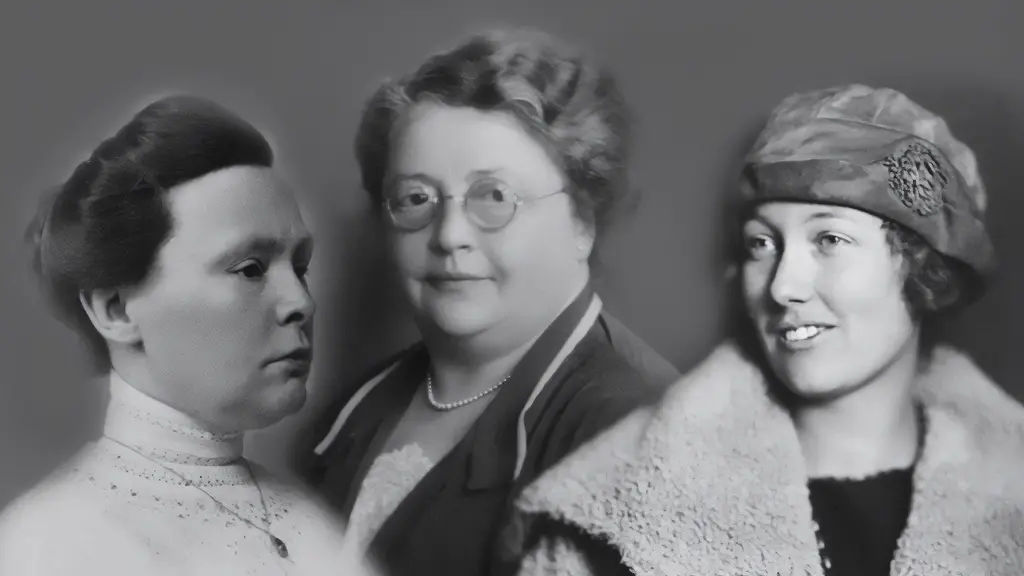
On 3 December 1935, three leading feminists, Rosa Manus, Johanna Naber and Willemijn Posthumus-van der Goot founded the International Archive for the Women's Movement (now Atria). What are the highs and lows of the past ninety years?
1935: Foundation of the International Archive for the Women's Movement
Rosa Manus, Johanna Naber and Willemijn Posthumus-van der Goot establish the International Archive for the Women's Movement (IAV) on 3 December 1935. They do this to collect and preserve the heritage of women and to stimulate scholarly research on the position of women. They believe that the history of women's movements should be preserved. Young feminists in their thirties need well-documented knowledge of the past. For example, to be able to defend themselves against the government, which since the 1920s has regularly tried to ban (married) women from gainful employment.
1936: opening IAV
On 19 December 1936 is the official opening of the IAV at Keizersgracht 264 in Amsterdam, attended by around a hundred invited guests. The beginning of the collection consists of three hundred books from Rosa Manus, one of the founders. A year later, Manus also donated the archive of Aletta Jacobs, which she had acquired in her possession.
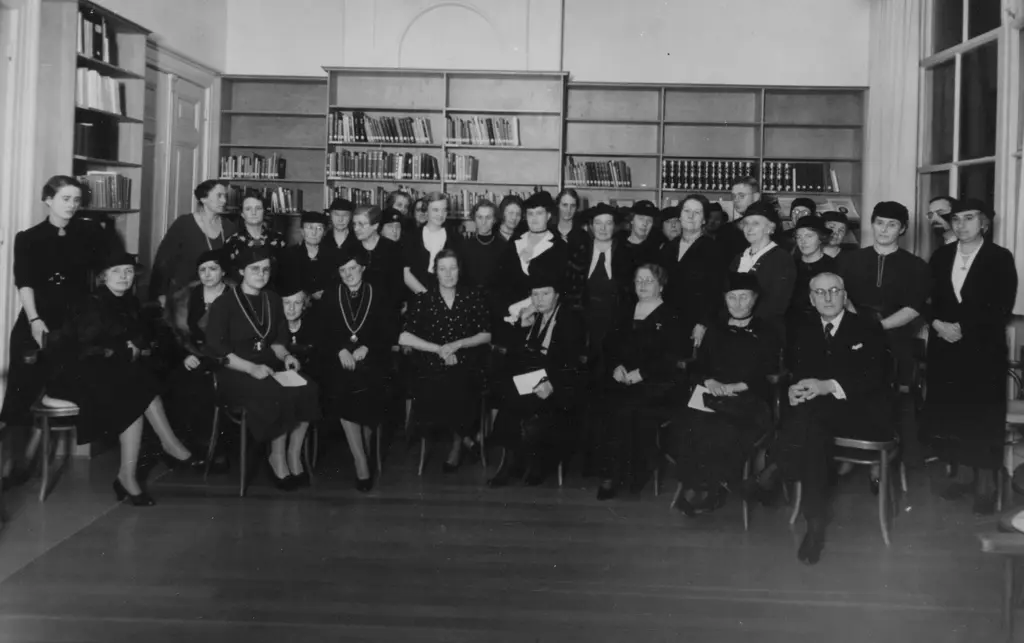
From left to right seated: A. Adama van Scheltema, Mrs Ketelaar van Gogh, three female students Amsterdam-Utrecht, Dr W.H. Posthumus-van der Goot (secretary IAV), Johanna W.A. Naber (founder IAV), Rosa Manus (president IAV), Mathilde Cohen Tervaert-Israels, Prof. N.W. Posthumus (director International Institute of Social History). Staande v.l.n.r.: mej. MacDonald, mevr. Potgieser-Rolandus, mevr. Manus-van Erkom, mevr. van Steenderen-van Houtum, mr. Corry Tendeloo, mej. M. C. Bouwmeester, mej. Jackson, mej. Corrie van der Griendt (adjunct secretaris IAV), mej. B. Ferf (bibliothecaris), mevr. Slingenberg, Ms Vening Meinesz, Mr Frida Katz, Ms Annie Schippers, Ms Douwes Dekker-Jolles, Ms B. Rijkens-Culp (treasurer), Mr Bas Bakker, Ms E.H. Piepers, Ms A.M. Boissevain-van Lennep, Mr Boissevain, Ms Clara Meijers.
1940: stolen collections
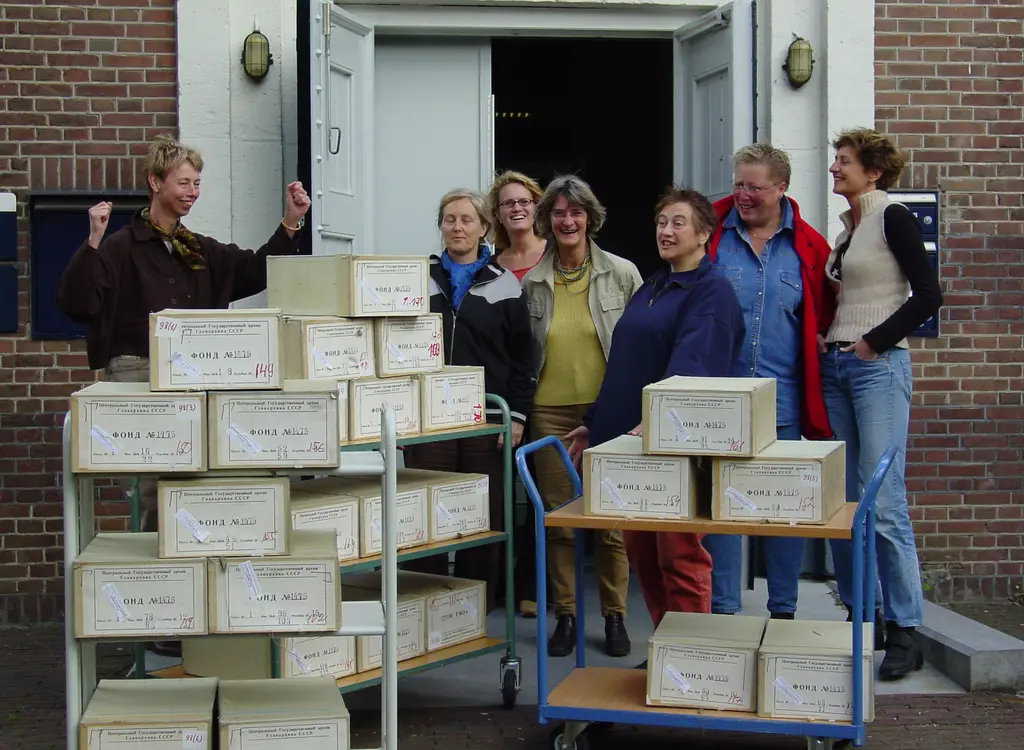
During World War II, the two premises of the IAV are emptied by the Germans on 12 July 1940. After the war, only 10% of the collection is recovered. When the archive is reopened in 1947, the bookshelves are almost empty. The old IAV archives are later found to have had a long wander. In 1992, they are found in Moscow and on 13 May 2003, after long negotiations, they are finally returned to Amsterdam. Read more about the looted archives
1970s: Enormous growth
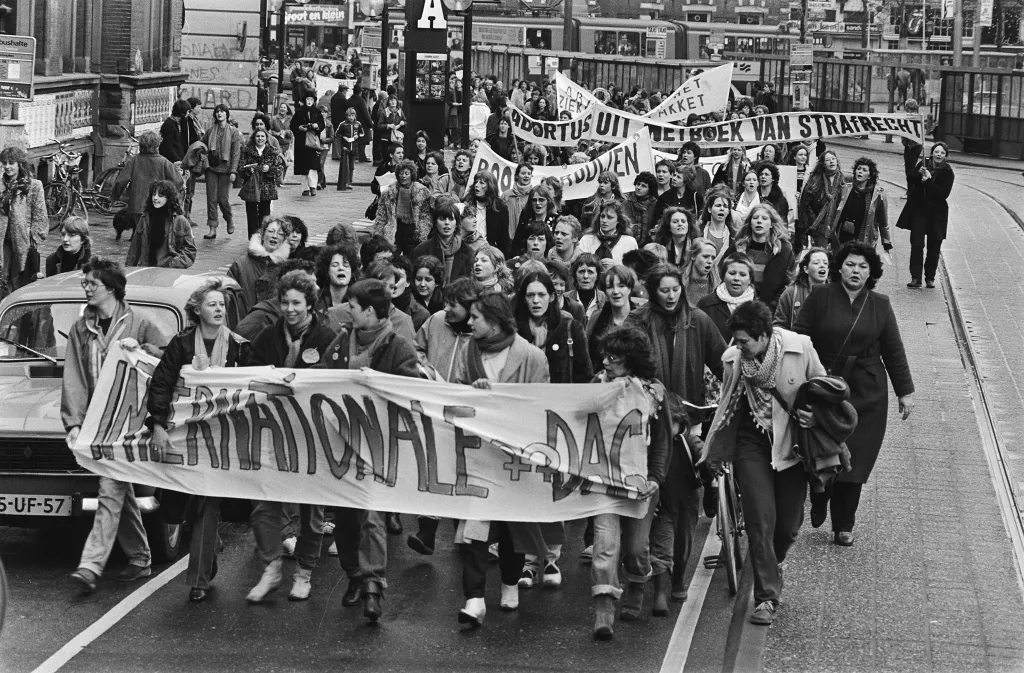
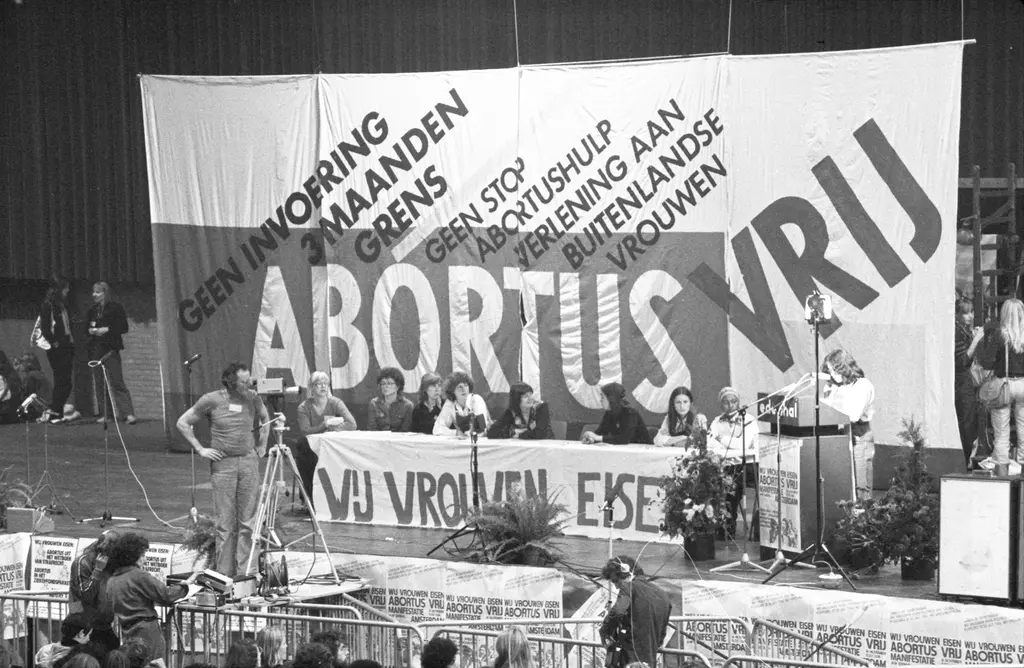
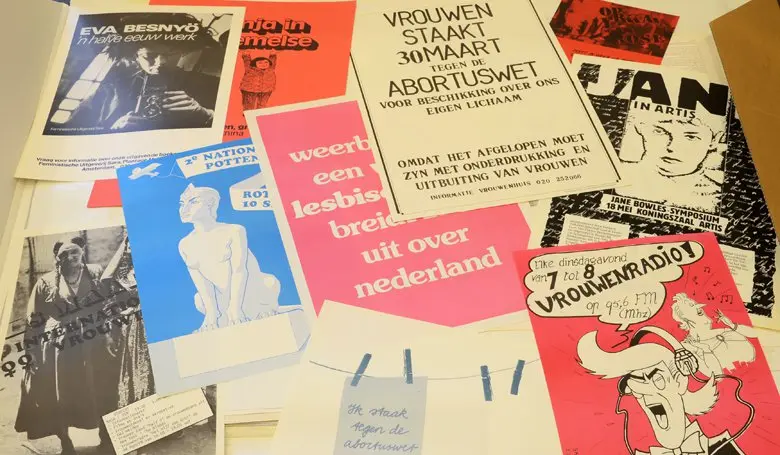
In the 1970s, the IAV experiences tremendous growth as a result of the 'second feminist wave'. 1975 is declared the International Year of Women by the United Nations to promote equality, development and peace for women worldwide. Partly as a result, the organisation receives a hefty government subsidy and is able to hire more paid staff. A wealth of material is collected. From this comes, among other things, the impressive collection of posters.
1980s: Relocation and merger
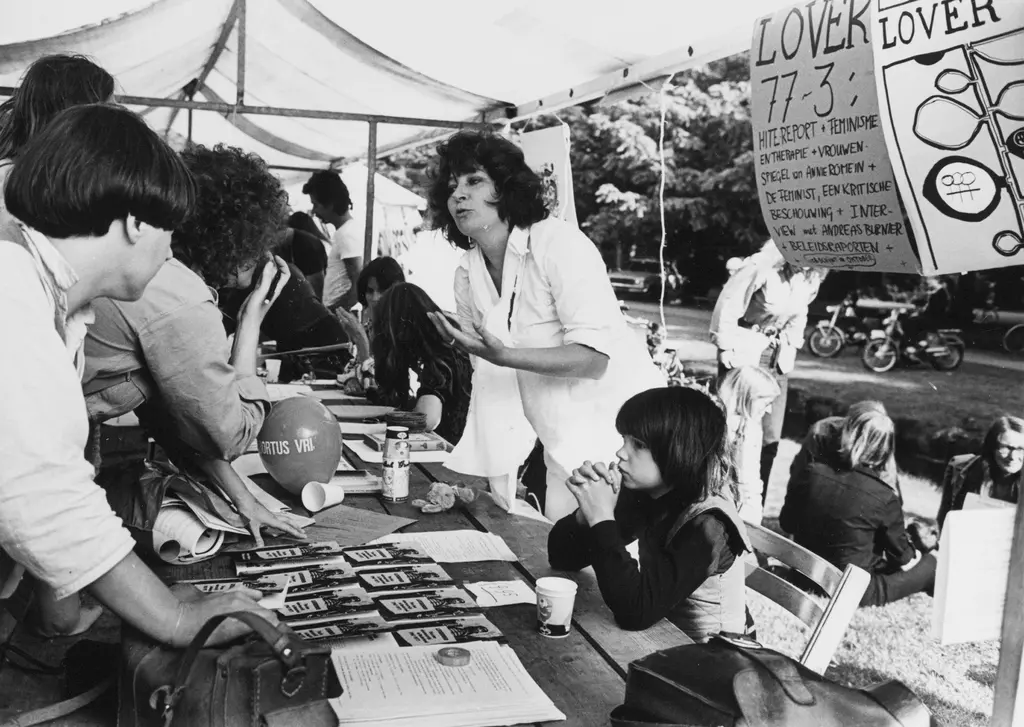
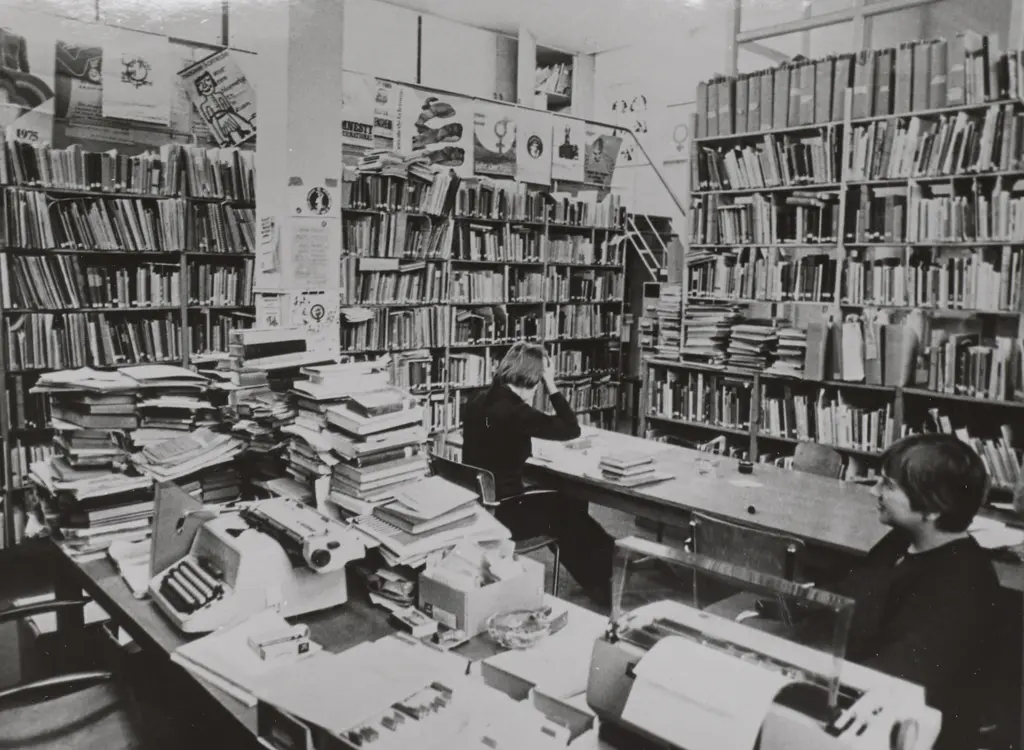
In the late 1970s, the IAV starts to grow out of its seams. Staff members are sitting among piles of books, paper and bulging bookcases. In 1981, the IAV moves to premises on Keizersgracht in Amsterdam (K10). Together with, among others, the Information and Documentation Centre for the Women's Movement (IDC) - which mainly collects current information - and LOVER, 'magazine on feminism, culture and science'. The IDC, LOVER and the IAV merged in 1988 to form the International Information Centre and Archive for the Women's Movement (IIAV).
1988: Separate archive department
The IAV wants a lot, but has little financial resources until 1975. The archives that come in are stored in cupboards and listed as acquisitions in the annual report, but not much more is done with them. From 1977, the professionalisation of the archives leg starts with the description and inventory of the archives of the National Exhibition of Women's Labour 1898. After the move in 1981, the other IAV archives are inventoried. In the early 1980s, three feminist historians work on a project to collect ego documents such as diaries, travel journals, diaries and correspondence. They write a plan, attend the Archive School and realise their dream for a separate archive department in 1988.
From 1980s onwards: Black perspective
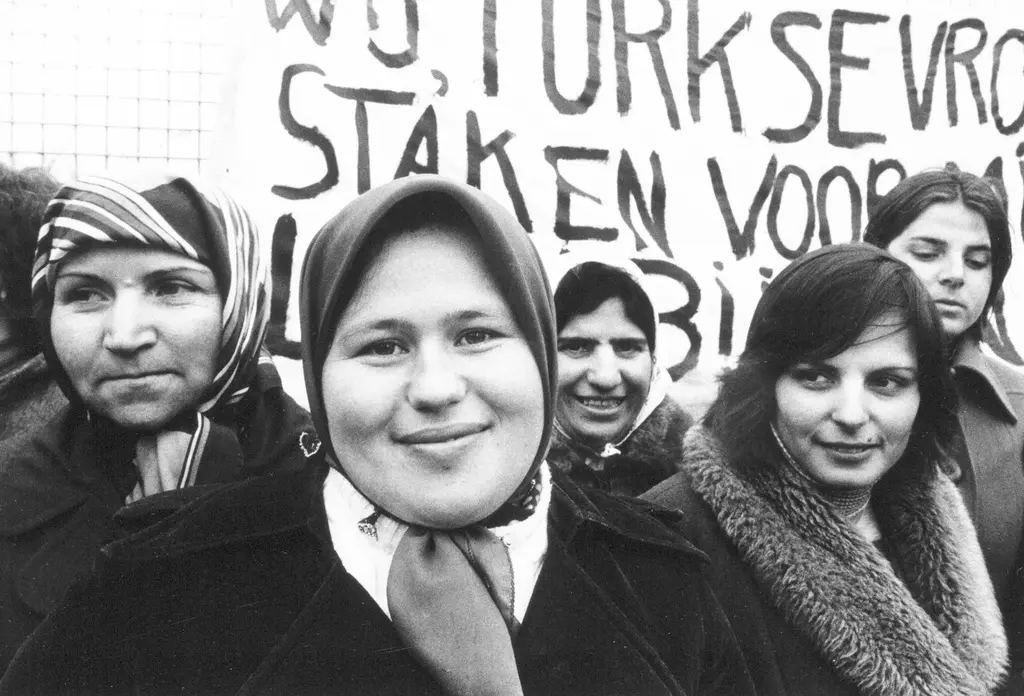
Both in Women's Studies and in (women's) libraries, information and documentation centres and archives, a white perspective often takes centre stage. Julia da Lima 's statement at the Winter University for Women's History in 1983 is a pivotal moment in the history of the black, migrant and refugee women's movement. Initiatives and networks such as the National Black Women's Days, Black Women's Radio, the Black Women's Newspaper, Sister Outsider, Black Orchid and Strange Fruit emerge, and the first black and migrant women's knowledge centre Flamboyant is established in 1985. In the mid-1990s, providing information for and about black, migrant and refugee (ZMV) women becomes a major focus of IIAV policy.
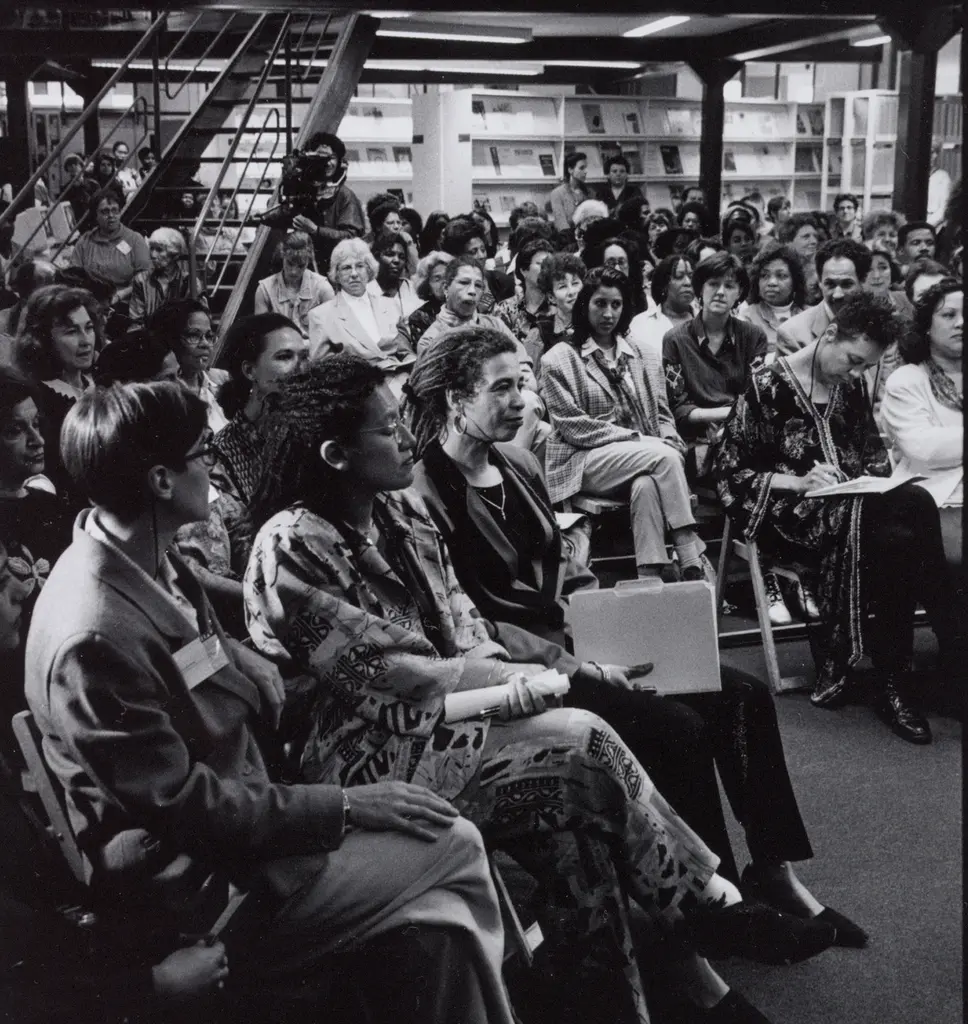
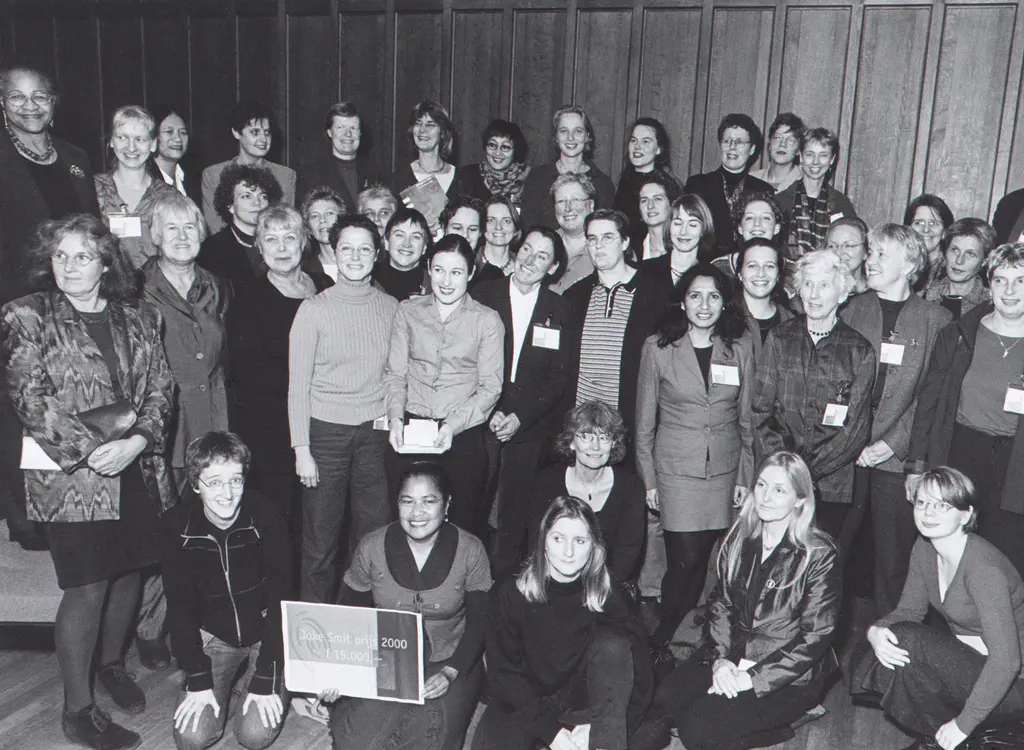
2000: Joke Smit Prize to IIAV
The new millennium started well. In 2000, IIAV receives the Joke Smit Prize, the government's biennial award for making a fundamental contribution to improving the position of women. State Secretary for Education, Culture and Science Rick van der Ploeg praised the IIAV for keeping up with ICT developments at an early stage.
2007: start of oral history projects
In 2007, the IIAV will start using oral history as a research method. Oral History or oral history is a method of scientific research into the past based on oral tradition. In the form of audio recordings and filmed interviews, life stories of women have been recorded since 2007, including personal accounts of the Second World War, stories of women who were active in Dolle Mina and Blijf van m'n Lijf, as well as portraits of lesbian women and black, migrant and refugee women. View the collection.
2012: Merger with E-Quality
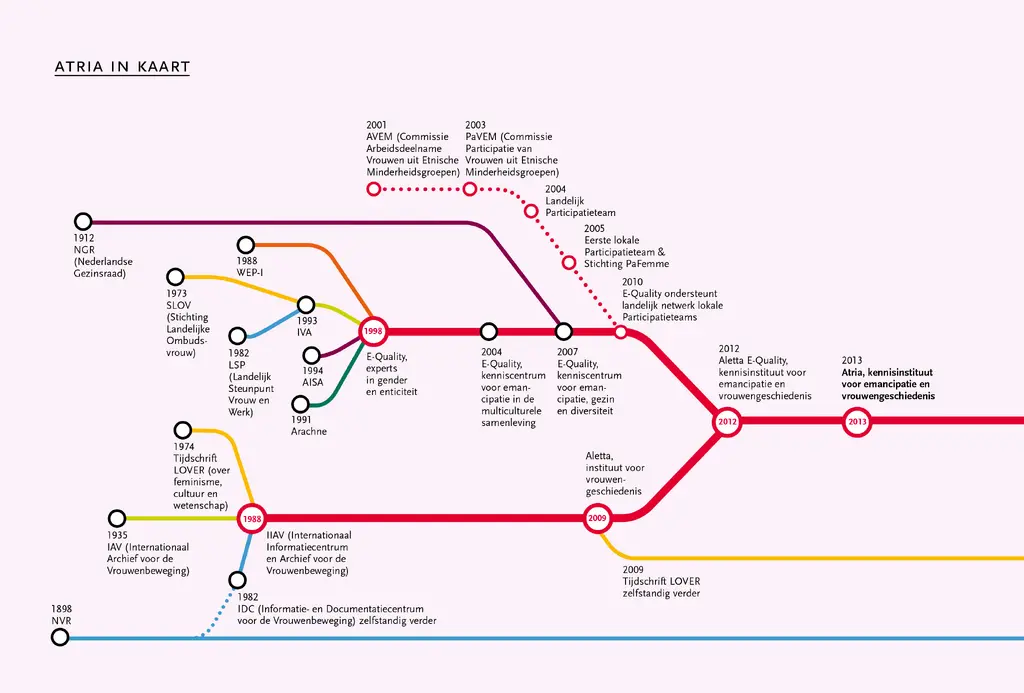
Aletta, institute for women's history (as the International Information Centre and Archive for the Women's Movement had been called since 2009) and E-Quality, knowledge centre for gender equality, family and diversity merge and continue together under the new name Atria, Institute for Gender Equality and Women's History. Besides collecting, managing and preserving information on the position of women and gender relations in society and preserving the heritage of the Dutch women's movements, Atria will engage in knowledge development and consultancy from an intersectional perspective by carrying out scientific and policy-oriented research, policy analyses and translation into policy practice. View research published in recent years here.
2017: Archives of Aletta Jacobs recognised as UNESCO heritage
Since October 2017, the archive of Aletta Jacobs has been included in UNESCO Memory of the World. With this, UNESCO promotes the preservation and accessibility of documentary heritage. Heritage that is authentic, unique, irreplaceable and of world significance. The Aletta Jacobs archive is located at Atria and shows images, objects and documents of the Dutch and international struggle for women's rights. The archive is digitised and thus accessible from all over the world.
2026: relocation to Utrecht
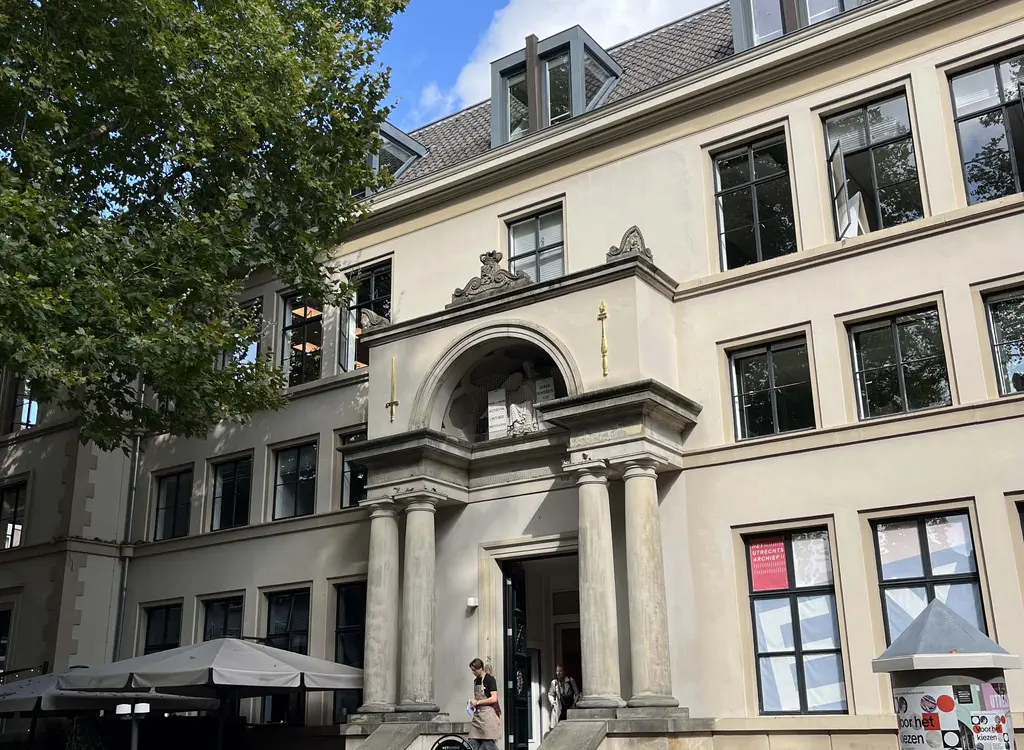
A new chapter in our rich history begins in the former courthouse on Hamburgerstraat in Utrecht. Read more about the move to Utrecht here.