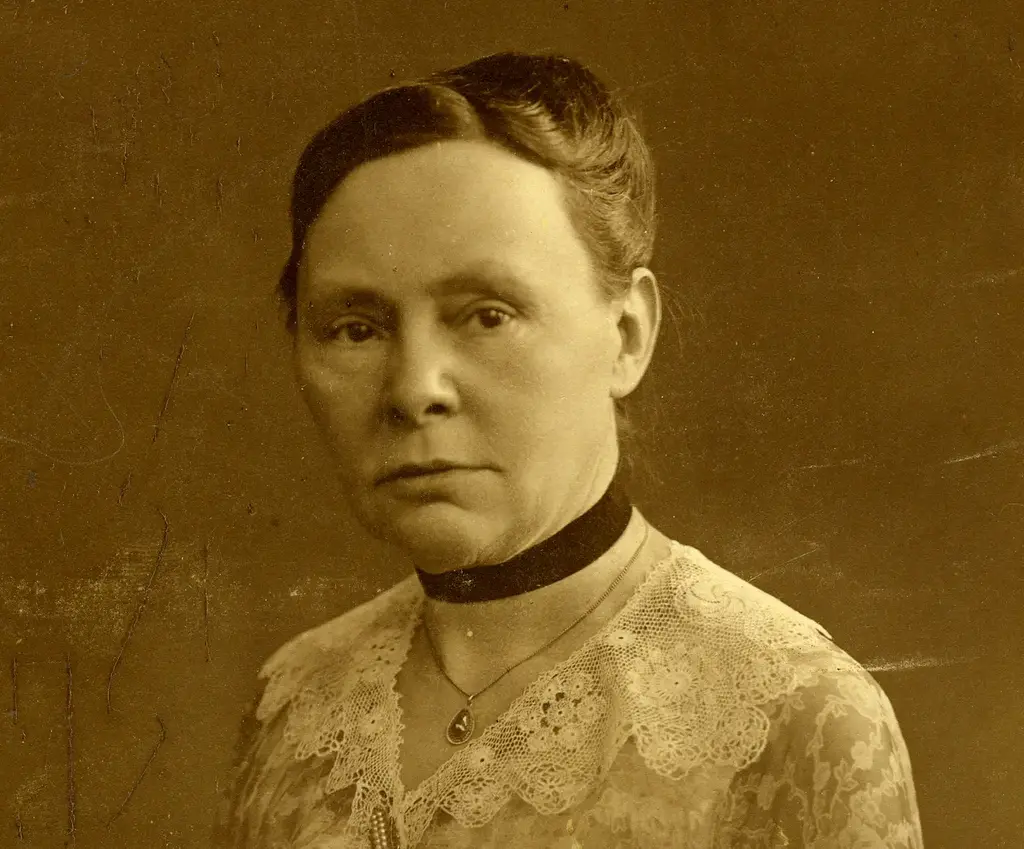
Johanna Naber was the first to describe the history of the women's movement and was one of the founders of the International Archive for the Women's Movement (now Atria). Every year, Atria and VVG platform for women's and gender history award the Johanna W.A. Naber Prize for the best graduation thesis in the field of women's or gender history.
Johanna Naber was the first to describe the history of the women's movement and was one of the founders of the International Archive for the Women's Movement (now Atria). Every year, Atria and VVG platform for women's and gender history award the Johanna W.A. Naber Prize for the best graduation thesis in the field of women's or gender history.
Brief biography
Johanna Naber was born on 25 March 1859. She was the daughter of Samuel Adrianus Naber, professor of Greek and Roman literature and antiquities, and Anna Elizabeth L'Honoré. After primary school, she attended the Amsterdam Higher Civil School for Girls in Amsterdam, where the Naber family then lived. She then obtained her assistant teacher's certificate and primary teaching certificates for French, English and Fine Handicrafts. She actually wanted to go to university, but her father refused to let her go. He preferred to keep her at home where she studied under his guidance and continued to become proficient in household chores. As an unmarried woman, Johanna was expected to take care of her parents' and later her unmarried brothers' households. She did not get her own flat until she was 77 years old.
Writer
In 1887, Naber first went public under the pseudonym Rechlindis, with a book on art needlework. She then went on to publish under her own name about important women in early modern history.
Women's movement
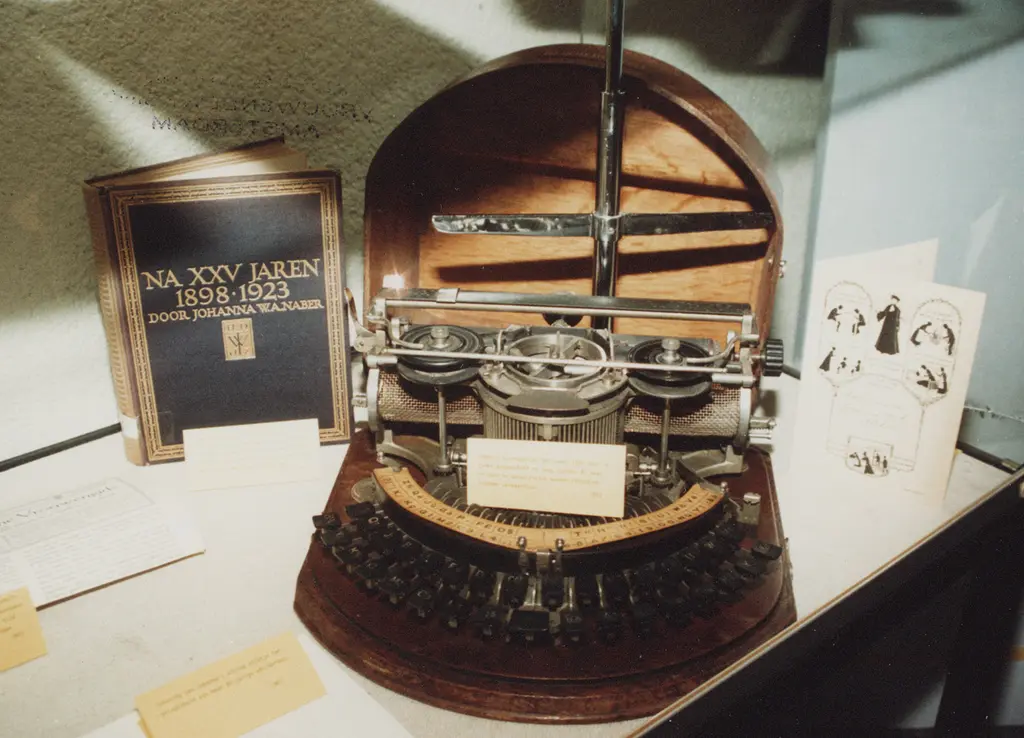
In 1896, Naber volunteered to organise the National Exhibition of Women's Labour, to be held in 1898 to mark the inauguration of Queen Wilhelmina. During the exhibition, Naber was the editor and chief writer of the journal Women's Labour. What she heard during the exhibition and undertook activities herself made a huge impression on her. She was forever connected to the women's movement.
Women's suffrage
Johanna Naber was chief executive committee member of the Vereeniging voor Vrouwenkiesrecht (VvVK) for several years. She became responsible for contacts with the press and board member of the World League for Women's Suffrage. She managed to convey her views so convincingly that her mother also joined the VvVK and her father gave up his opposition to women's suffrage. He wrote a sympathetic article in De Gids. From 1917 to 1922, Naber was president of the National Women's Council and from there also involved in the International Women's Council. In 1921, she was elected to the Amsterdam city council for the Vrijheidsbond, a liberal party.
After achieving women's suffrage in 1919, and the constitutional equality of women to men in 1922, Naber assumed that the women's movement would now no longer be needed. She reverted to this view in the 1930s. In 1910, she had already fought against a bill to exclude married women from gainful employment, and now it proved necessary again.
"We must not surrender our citizenship right of free self-determination by tolerating that for us women as such our diplomas and acts of appointment are stamped with 'valid only in case of celibacy'."
After many protests, as in 1910, the bill, to bar married women from gainful employment, was withdrawn.
Historical research
Naber continued to write throughout her life. In 1914, she founded De Nederlandsche Vrouwengids, which published articles on a variety of women's issues. In 1918, she became the first woman to join the executive committee of the Maatschappij der Nederlandsche Letterkunde. In several books and articles, she described the lives of former feminists and the development of the women's movement. With her First Prove of a Chronological Overview of the History of the Women's Movement in the Netherlands, she laid the foundation for the later standard work From Mother to Daughter by Willemijn Posthumus-van der Goot.
Through her own historical research, Johanna Naber knew the importance of preserving and making available historical material such as letters and diaries. This must have been the basis for her, together with Rosa Manus and Willemijn Posthumus-van der Goot, to set up the International Archive for the Women's Movement (IAV). She intended to bequeath her own archive to the IAV by will, but changed her disposition when all the IAV's material disappeared to Germany in 1940. Only later did much of her archive come to the then IIAV.
On 25 May 1941, Johanna Naber died, aged 82.