The late 1960s saw a spectacular revival of a movement that went back to a much older body of thought. Feminism. Feminists of the first hour saw themselves as part of a 'second wave', to be distinguished from what they saw as the 'first wave': the women's movement in the Netherlands in the 19th and early 20th centuries, the time of, among other things, the fight for women's suffrage. In this article, you will read how 'the second feminist wave' began and developed.
The late 1960s saw a spectacular revival of a movement that went back to a much older body of thought. Feminism. Feminists of the first hour saw themselves as part of a 'second wave', to be distinguished from what they saw as the 'first wave': the women's movement in the Netherlands in the 19th and early 20th centuries, the time of, among other things, the fight for women's suffrage. In this article, you will read how 'the second feminist wave' began and developed.
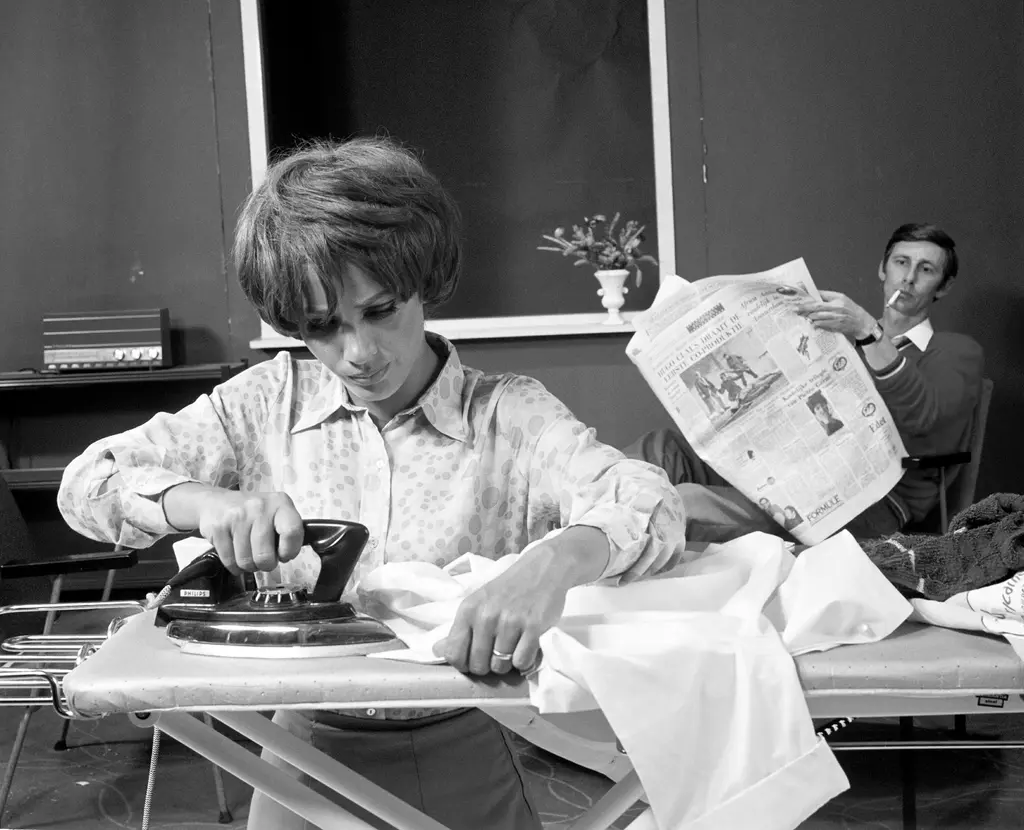
The women's movement, like all social movements, cannot be categorised under one heading. From the beginning, feminism had an international character, although its focus was initially very much on the Western world. The Netherlands was mainly influenced by the radical feminist movement in the United States and other social movements of the 1960s.
Action groups
In the Netherlands, a beginning of the 'second wave' can be marked with the founding of Man-Vrouw-Maatschappij (MVM) in 1968, followed by the action group Dolle Mina in late 1969, which went public with playful actions in the first months of 1970. For instance, they tied up public urinals with pink ribbons in protest against the lack of public toilets for women. Men were also active in MVM and Dolle Mina. Both groups campaigned for the abolition of legal discrimination against women, legal abortion, childcare and women's labour, among other things. Dolle Mina did not think Man-Woman-Society was radical enough. Looking at feminist idea development, Joke Smit's 1967 article Het onbehagen bij de vrouw is often cited as the starting point of the women's movement of the 'second wave' in the Netherlands.
Women's culture
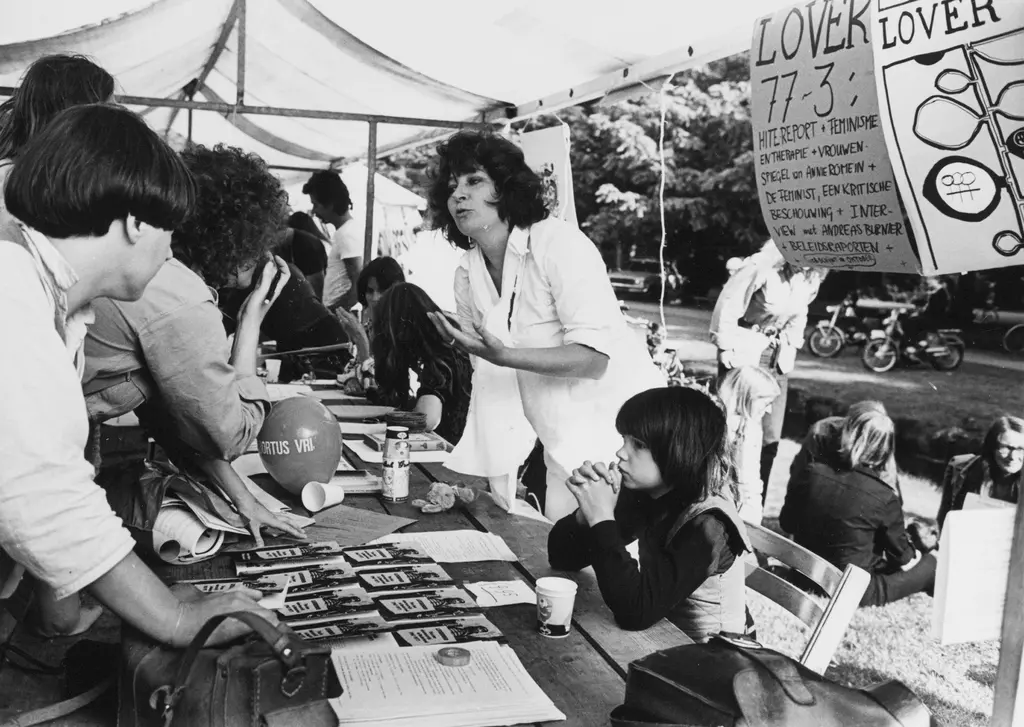
Gradually, a 'separatist' phase of the movement emerged: a women-only movement with an emphasis on raising awareness of the meaning of being a woman, also referred to as the 'talking groups movement'. A whole new momentum and political agenda developed from the talking groups, based on women's solidarity, women's culture and the creation of 'own' spaces where men were not allowed. Examples include: women's houses, women's cafes, shelters, women's parties, women's housing groups, feminist singing choirs and self-defence courses. Women-specific health centres and mental health initiatives, such as feminist radical therapy groups (FORT), also emerged. Other cultural initiatives also emerged, such as magazines, bookstores, publishing houses and print shops. Dissemination of ideas also took place through VOS (women's orientation to society) courses.
These tumultuous years of women's culture were accompanied by fundamental criticism of male supremacy, especially regarding (hetero)sexuality. There followed a period of 'discovery' of abuse and sexual violence against women, later followed by the 'discovery' of child sexual abuse. But there was also a fierce struggle around female sexuality and 'what women want'. Unmarried motherhood was always a shame, now it is becoming a serious option, a child without a man: the Consciously Unmarried Mothers (BOM mothers). In short, the famous slogan of the 'second wave' is not for nothing: "the personal is political".
Lesbian movement
Within women's culture, there was more room for lesbian women to be visible and take a leading role. The lesbian action group Purple September was perhaps the most radical action group. In October 1972, the first issue of Paarse September, the magazine for and by radical lesbian feminists, was published. It passionately fought patriarchy, and everything in the women's movement that hinted at compromise and accommodation. In 1979, the Lesbian Splendour Book was published. The idea for establishing lesbian archives in the Netherlands originated in 1981, during the Summer University Women's Studies Amsterdam. Although many lesbian women are part of the women's movement and are usually at the forefront of actions, there is little in the programme offered on specifically lesbian themes. Initiatives for lesbian archives arise in Leeuwarden, Amsterdam, Utrecht, Eindhoven and Nijmegen.
Professional feminism
A growing awareness and more knowledge emerged that highlighted how glaring and all-pervasive gender inequality was. Then, alongside the 'autonomous' women's movement, women's groups and organisations within political parties and trade unions developed. At universities and colleges, students and teachers exerted pressure to have 'women's studies' included in education. Women were also given special education in professional women's schools for women with little education.
Women's programmes appeared on radio and TV. From 1975 to 1983, VARA broadcast the feminist radio programme Hoor Haar (Hear Her), edited by Hanneke Groenteman. Journalists, lawyers, filmmakers and artists tried to break into the male strongholds of their professions. Feminist men organised themselves into a men's gender equality movement that largely supported feminists' demands. The government, under pressure from feminist initiators, embarked on gender equality policies, and feminist officials worked to enshrine gender equality in legislation and policy.
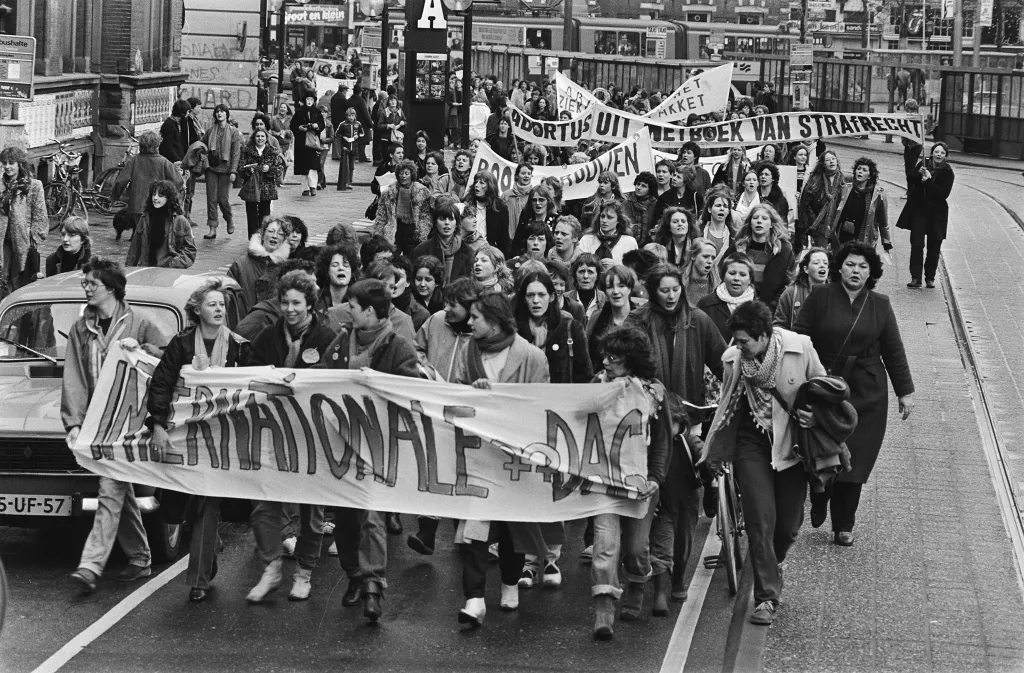
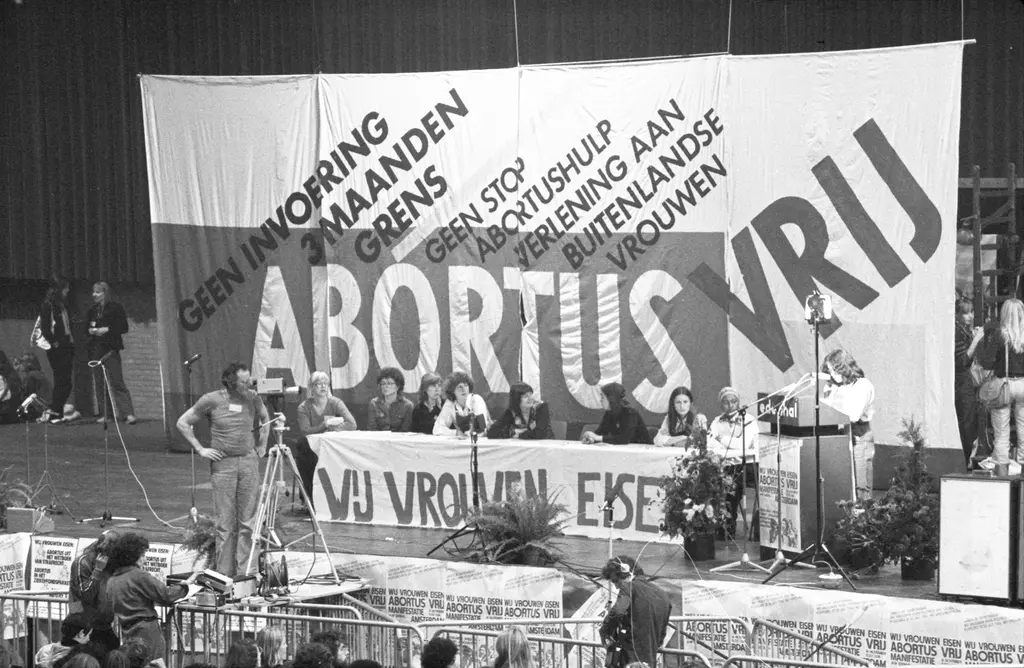
In all this, there was no single policy or ideology. The word 'feminism' could mean anything in this period. There were many different views, divergent and even conflicting ideas and a range of lived practices. From the 1980s onwards, it was already almost impossible to grasp how extensive the movement was and who identified with it. One indication of its popularity were the thousands of women, and men, who took part in the recurring demonstrations in the tough fight for legal abortion and against sexual violence.
Feminist diversity
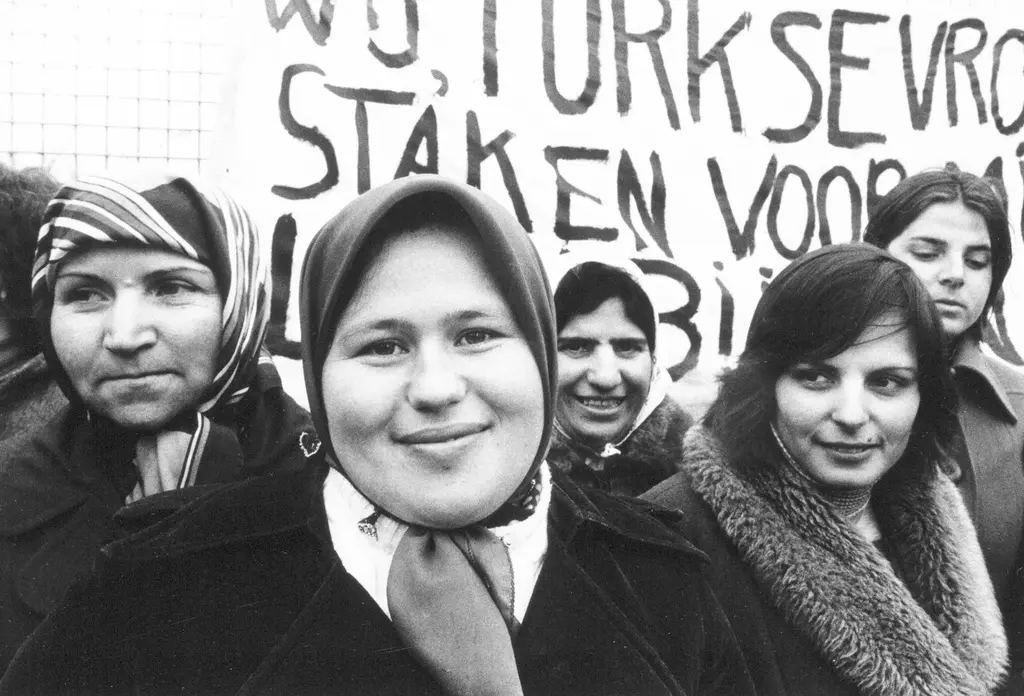
During the 1980s, more awareness and discussion about 'differences' among women emerged. Other social inequalities such as racism, ethnocentrism and sexual lifestyle had to be thought through for their intertwining with sexism. Women increasingly organised themselves on the basis of ethnicity and culture. Various groups of black, migrant and refugee women emerged and sparked discussions about what was seen as the white heterosexual dominance of the feminist movement. Other groups that did not identify with the existing women's movement, such as prostitutes, also organised themselves.
It remains a question whether the 'second feminist wave' in the 1990s was diluted, went into recession, or actually achieved successes and consolidated. In any case, since then, there has been regular talk of a 'third wave' or even 'fourth wave'. In recent years, feminists from all over the world have been pushing for equal rights on social media. Hashtags are being created to campaign, condemn poignant events and break taboos.