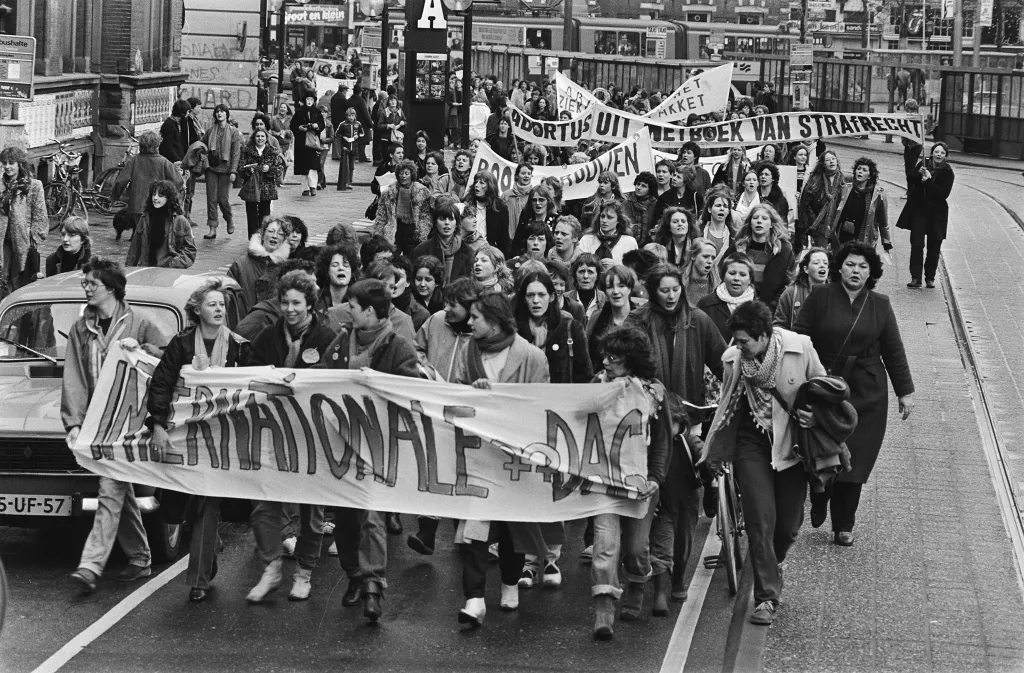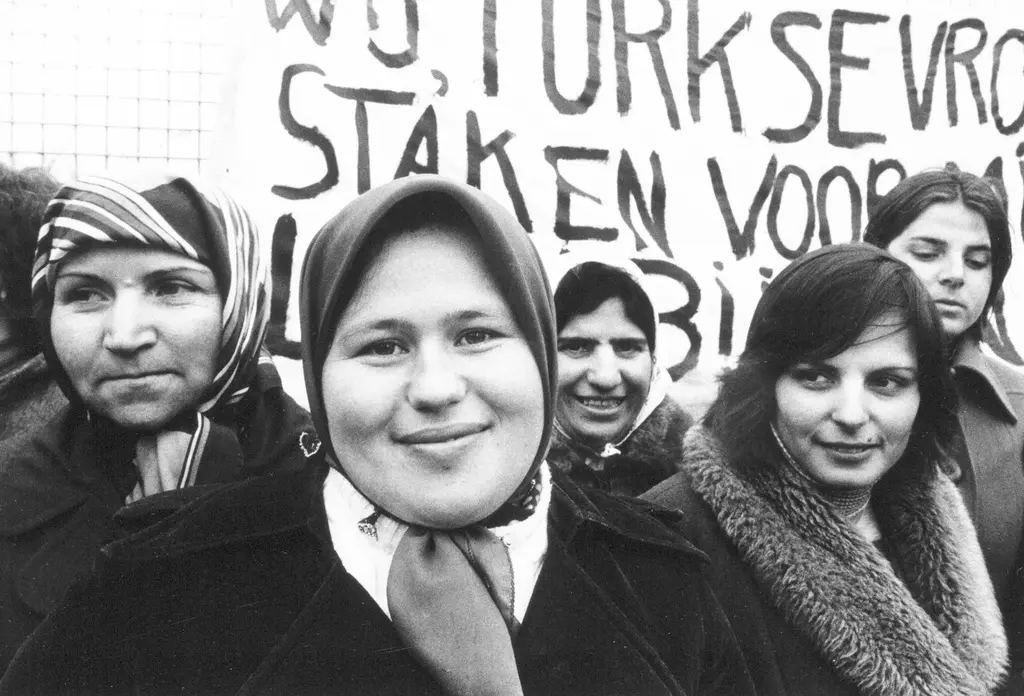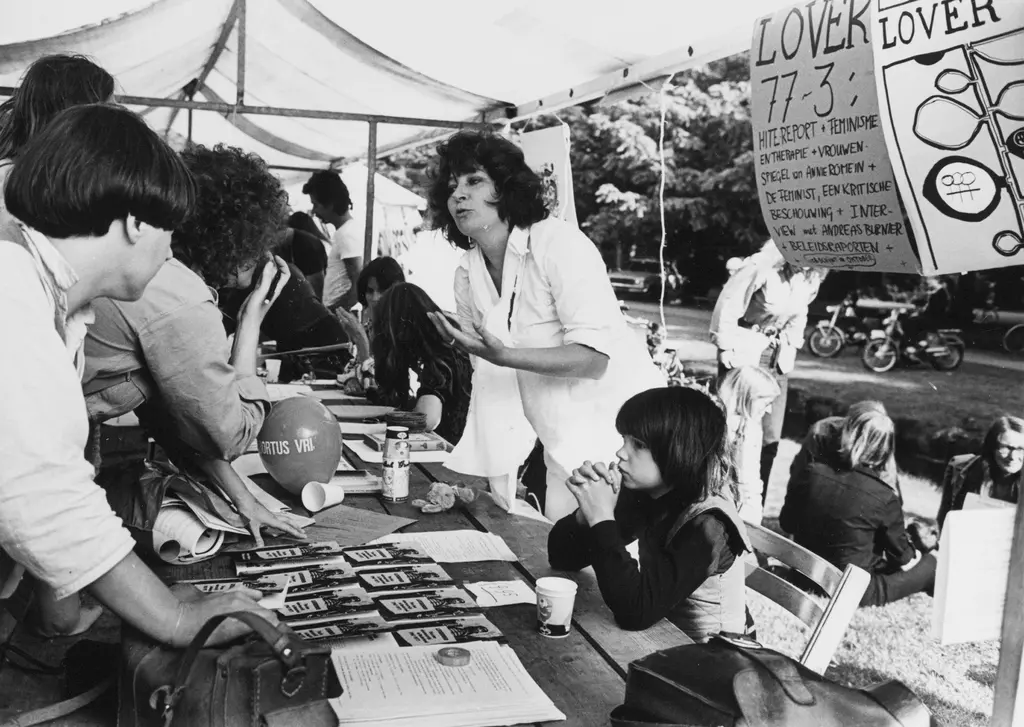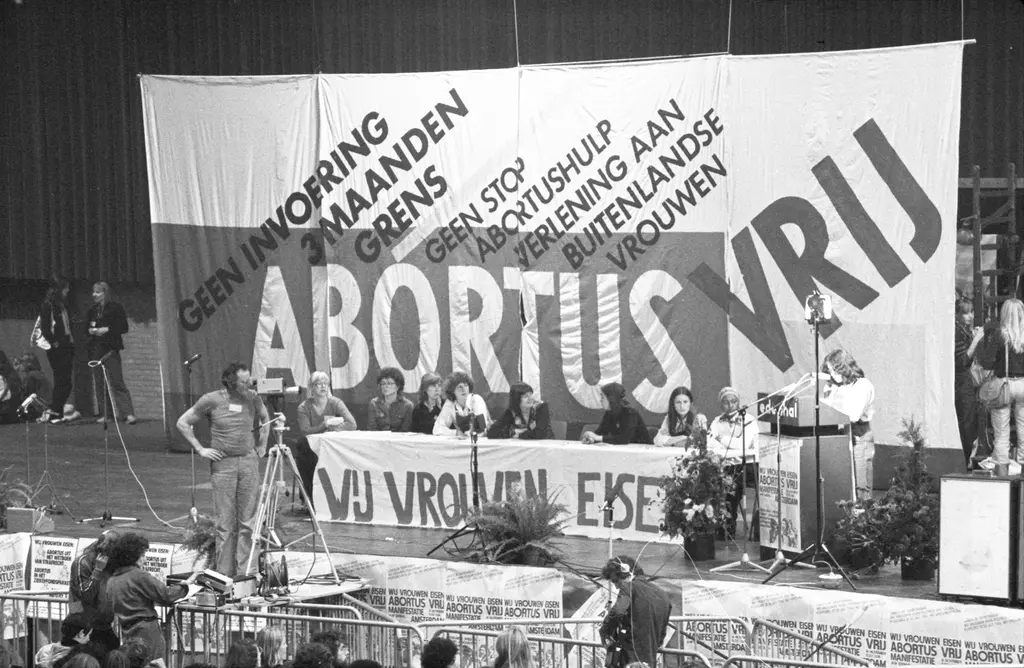
Intersectional feminism is a form of feminism based on the premise that everyone has to deal with differences based on, for example, skin colour, age and class, and that the connection of these differences creates structural advantages or disadvantages. Intersectional feminism is also referred to in the Netherlands as intersectional thinking or kaleidoscopic thinking.
Intersectional feminism is a form of feminism based on the premise that everyone has to deal with differences based on, for example, skin colour, age and class, and that the connection of these differences creates structural advantages or disadvantages. Intersectional feminism is also referred to in the Netherlands as intersectional thinking or kaleidoscopic thinking.
But where does the term intersectional feminism come from? And what exactly does it mean? Who paved a way for intersectionalism in the Netherlands? And what does this form of feminism look like today?
Origin of the term intersectional feminism
US law professor and civil rights activist Kimberlé Crenshaw wrote an essay in 1989 in which she raised the term intersectional feminism. She made the concept of intersectionality understandable using a case about discrimination at the General Motors factory.
In 1976, Emma DeGraffenreid and other black women in the US sued the car factory for racial and gender discrimination. What was going on? Office jobs went only to white women, on the factory floor only black men worked. As a result, black women stopped getting jobs at the company altogether. Because they were black AND women, they were doubly discriminated against.
Sojourner Truth
Crenshaw is usually credited with coining the phrase intersectionality. However, the foundations were laid earlier by other American thinkers, such as Sojourner Truth, a black woman who introduced the same mechanism in 1851.
"That man over there says that women need to be helped into carriages, and lifted over ditches, and to have the best place everywhere. Nobody ever helps me into carriages, or over mud-puddles, or gives me any best place! And ain't I a woman?"
Sojourner Truth, in this speech 'Ain't I A Woman', questioned what her skin colour had to do with being a woman. After all, was she not a woman because she was black? Here, she pointed to the fact that as a woman of colour, you are treated differently. And face different struggles than a white woman.
Intersectionality in the Netherlands
Professor of Critical Race, Gender and Leadership Studies Philomena Essed and Emerita Professor of Gender and Ethnicity Gloria Wekker have played an important role in the rise of intersectionality in the Netherlands. They wrote well-known books such as Alledaags Racisme (Essed, 1984) and White Innocence (Wekker, 2016/2018), which are still considered standard works on racism, gender and ethnicity.
Before intersectional thinking as a concept was discussed in the Netherlands, the topic was already being written about. Based on interviews with Surinamese and African-American women about everyday situations, Philomena Essed in 1984 painted a picture of the prejudice and racism they experienced on a daily basis. Gloria Wekker would build on this in later publications, introducing the term intersectionality in 2001 in the Netherlands as 'intersectionalism'.
Kaleidoscopic thinking
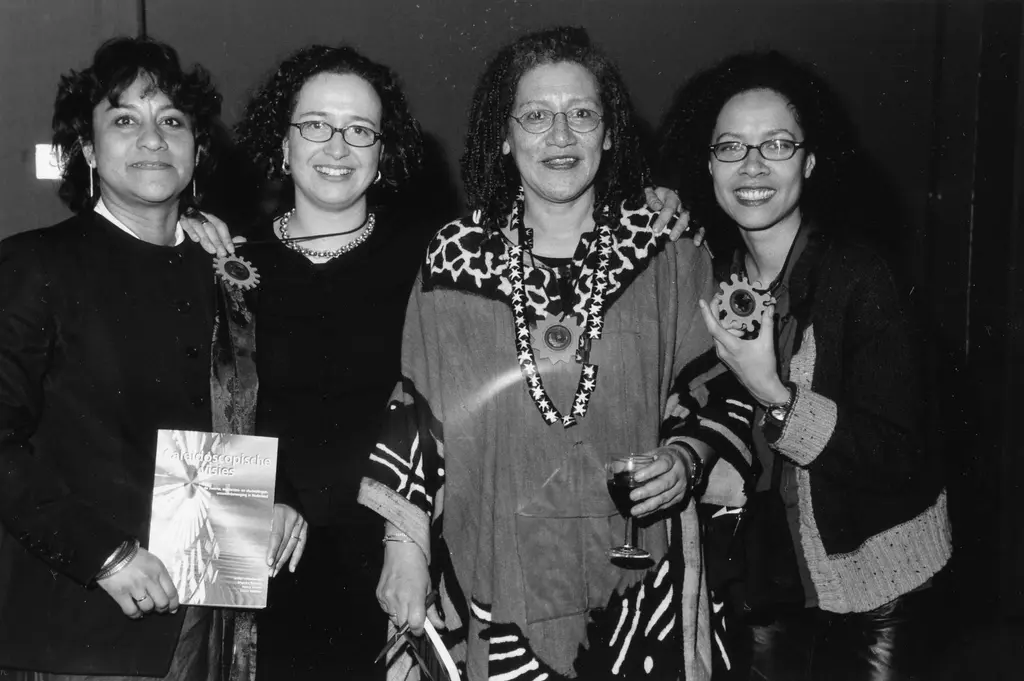
The book Caleidoscopische Visies (published 8 March 2001) documents the history of the black, migrant, and refugee women's movement in the Netherlands. The black, migrant en refugee women's movement was a movement in the 1980s and 1990s of women from different ethnic backgrounds. They found each other in a common oppression and raised the meaning of gender and ethnicity in the Netherlands.
In Kaleidoscopic Visions, Gloria Wekker introduces the term 'kaleidoscopic thinking' alongside the concept of intersectionality. This corresponds to the concept of intersectionality:
"A first step in kaleidoscopic thinking involves self-reflection; everyone learns to recognise that we are all simultaneously positioned by gender, ethnicity, class and sexual orientation and that some combinations carry more power than others."
White women
In another chapter, Gloria Wekker and Helma Lutz provided insight into how the term 'women' almost automatically brings white women to mind. They showed how whiteness, in short, is the norm. Wekker and Lutz studied the recruitment policy of the police as a case study. The latter tried to attract more women and people with a migrant background to the force. The police considered two separate groups: women or people with a migration background. White women were considered for women, and men for people with a migration background.
The black, migrant and refugee women's movement
The women who were part of the black, migrant and refugee women's movement organised numerous activities. And they left their mark on the social debate on feminism, gender and ethnicity. Kaleidoscopic Visions is so far the only book to comprehensively chart this movement. (A brief overview is already given in Roline Redmond's 1990 "Daar hoor ik ook bij" (That's Where I belong too). The book includes contributions by Maayke Botman and Nancy Jouwe, Gloria Wekker and Helma Lutz, Troetje Loewenthal, Amalia Deekman and Mariette Hermans, Isabel Hoving and Gabbi Mesters, Esther Captain and Halleh Ghorashi. A reissue was published on 8 March 2024 with an updated reflection on the relevance of intersectionality in the context of recent social developments, such as the Black Peters debate, the Black Lives Matter movement and the tax allowance affair.
Sister Outsider and Audre Lorde
Gloria Wekker was one of the founders of Sister Outsider in addition to being an academic. This group of black lesbians campaigned for the visibility of black lesbian women in Amsterdam. They were part of the black, migrant and refugee women's movement. The name Sister Outsider referred to a collection of essays by American poet and essayist Audre Lorde.
Lorde already showed in her essays and poetry that you cannot separate sexism, homophobia and racism. She made a plea for recognising the differences between people and the positions they hold.
"It is not our differences that divide us. It is our inability to recognise, accept, and celebrate those differences."
Various initiatives
Within the black, migrant and refugee women's movement, besides Sister Outsider, many other organisations were active, such as the documentation centre Flamboyant (later continued as Zami) and the Moroccan Women's Association of the Netherlands (MVVN). All contributed to the visibility of black women and women of colour. And through various initiatives, they paid attention to the intersections between gender, ethnicity, sexual orientation and class. Parties and women's cafés were organised, own media outlets like the Black Women's Newspaper and Black Women's Radio were established.
Black as a political term
The term 'black women' was introduced by a group of Indian and Moluccan women in 1984, following the statement of Dutch-Moluccan feminist Julia da Lima at Winter University Women's Studies in 1983. They used the term as a designation for all women who were not white and to describe their own unique position in society. Black here was the political term for all women who faced discrimination. In 1985, the term was reiterated in the first publication of the Black Women's Newspaper:
"Black is a political statement. It is not a skin colour designation! It is used by us to indicate unity and solidarity among non-white people. It is a bundling of what white people call immigrants, foreigners, minorities, third world people, dark coloured, second generation, etc. etc. etc. This subdivision perpetuates divide and rule politics!!! It makes unity among black people impossible. It isolates us from each other. Therefore, therefore, we unitedly define ourselves as BLACK!!!"
White
This period also sees the introduction of the opposing term 'white' as a term, which is more neutral than the term 'white' because the latter expressed superiority in colonial history. Philomena Essed wrote more about this in her book Everyday Racism, which came out in 1984. The above explanation of 'black' and 'white' was also used on posters of the Black Women's Telephone - for and by Black women.
Later, 'migrant women' and 'refugee women' were also added to 'Black women'. To provide more space for the differences between the groups.
Intersectional organisations in the Netherlands
One of the first organisations in the Netherlands to approach gender equality issues from an intersectional perspective was E-Quality, knowledge centre for gender equality, family and diversity. With research and fact sheets, E-Quality championed women from different ethnic backgrounds and social positions. A large part of E-Quality's constituency had roots in the black, migrant and refugee women's movement. E-Quality was founded in 1997 and merged with Aletta (formerly IAV/IIAV) in 2012 to form Atria. Much knowledge and practical experience of intersectional working methods was lost as a result.
Another organisation that has been pursuing policy from an intersectional perspective since 1994 is Tiye International. This is an umbrella organisation for initiatives by black, migrant and refugee women aimed at improving the position of black, migrant and refugee women. Tiye member organisations focus on knowledge sharing and policy advocacy at national and international levels. According to Tiye International, policies must take into account differences in power positions between men and women and women among themselves. Because otherwise there cannot be true equality of opportunity.
Intersectional feminism today
Intersectional feminism has now permeated all kinds of activist groups working for diverse causes, from the rights of trans people to the future of the climate. Many young people experience the intersectional perspective as a natural starting point because it is mindful of all forms of injustice and their interconnectedness.
"My feminism will be intersectional or it will be bullshit."
Amsterdam-based Argentine feminist Flavia Dzodan wrote an essay in 2011 with the above sentence as its title. It was a plea in which she called on her fellow feminists to approach gender equality issues from an intersectional perspective. Ten years later, the words are used as a catchy slogan on T-shirts worldwide.
Meaning intersectional feminism
Intersectional feminism is increasingly common, but the meaning of the term is sometimes lost sight of.
Intersectional feminism recognises that different aspects of one's identity (such as gender, skin colour and sexuality) place everyone on different points of an axis by society. These axes (e.g. 'being a woman' or 'being of colour') can overlap, creating specific positions (positions) associated with a greater or lesser degree of power.
The position and influence of a white highly educated woman differs from the position and experience of a trans woman of colour. Both occupy a place in society that comes with associated advantages and disadvantages. From this understanding and starting point, intersectional feminism is committed not only to improving the position of white cisgender women (women who identify with the gender they were assigned at birth), but to improving the position of all groups who experience some form of discrimination. Intersectional feminism also involves the lgbti+ community, people with (in)visible disabilities, people of colour, as well as diverse backgrounds in class, education and religion.