You can find everything you want to know about the women’s movement at Atria. This archive has been in existence for ninety years and is moving this month from Amsterdam to Utrecht, where it will make its collection accessible once again. Director Karin van der Heiden: “Through our work, we are contributing to the fight for gender equality.”
You can find everything you want to know about the women’s movement at Atria. This archive has been in existence for ninety years and is moving this month from Amsterdam to Utrecht, where it will make its collection accessible once again. Director Karin van der Heiden: “Through our work, we are contributing to the fight for gender equality.”
Interview with Karin van der Heiden, by Pam van der Veen, in UITagenda Utrecht, June 2026.
Atria, one of the world’s oldest and most comprehensive archives on the subject of gender equality, is moving into the former courthouse in Utrecht. There, on Hamburgerstraat, the knowledge institute is embarking on a new chapter. Admittedly out of necessity, according to director Karin van der Heiden: the rent in Amsterdam had become unaffordable. But the move also offers opportunities, she emphasises. “We are looking forward to our new home in Utrecht. It is a city where the women’s movement has traditionally been very active. Take Savannah Bay, for example, one of the first feminist bookshops in the Netherlands. And we’re right in the city centre, close to institutions such as Utrecht University, the Library, the Catharijne Convent and the Centraal Museum. And in the same building as the Utrecht Archives. We therefore hope to enter into many collaborations in the future.”
A defining moment
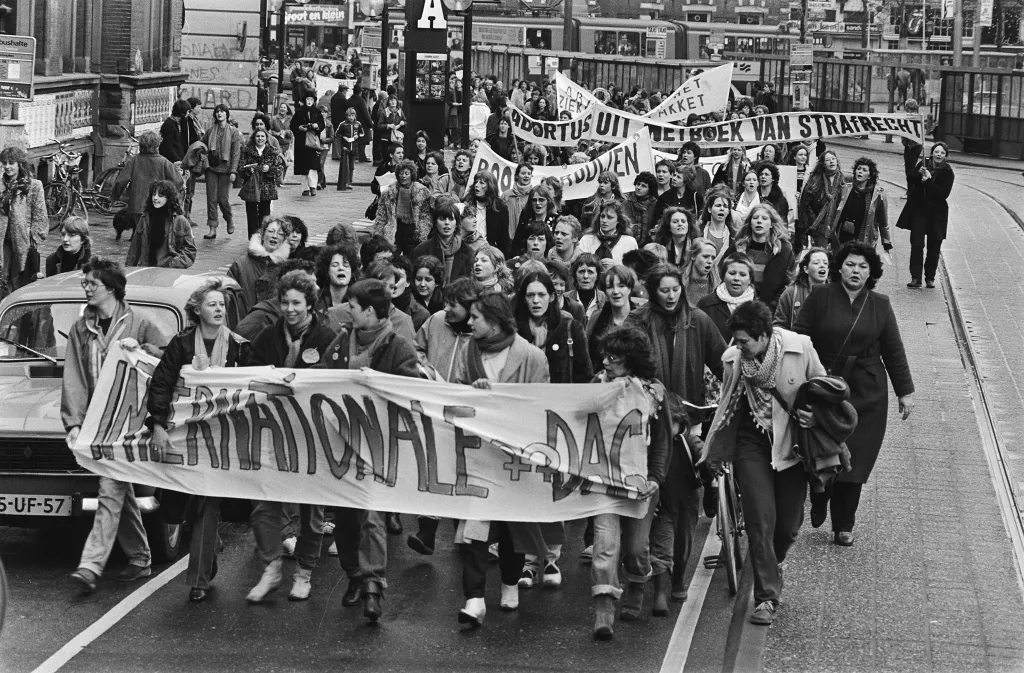
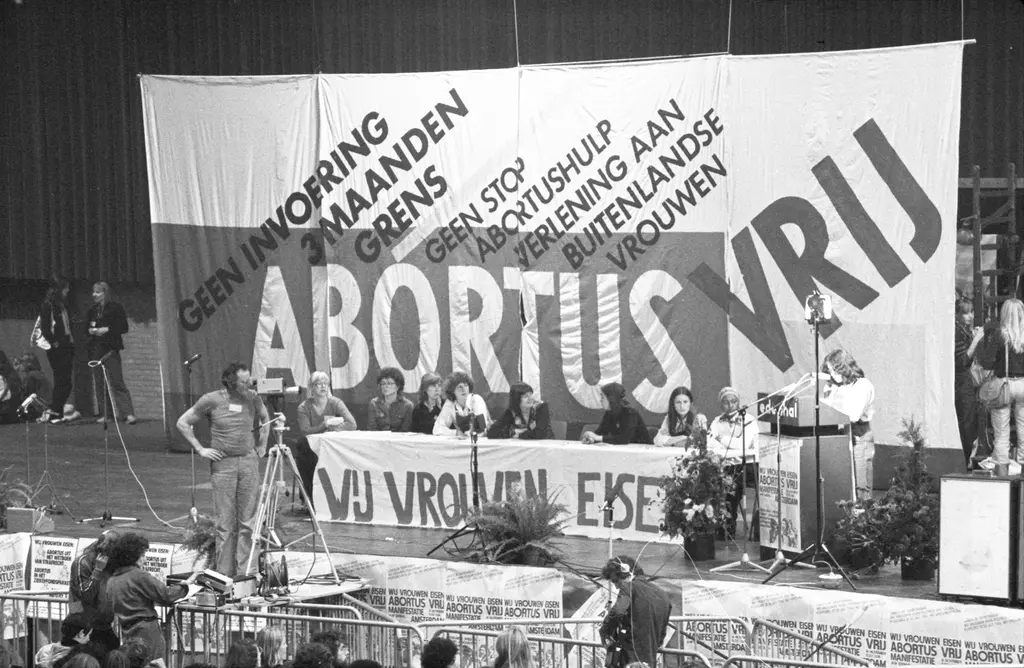
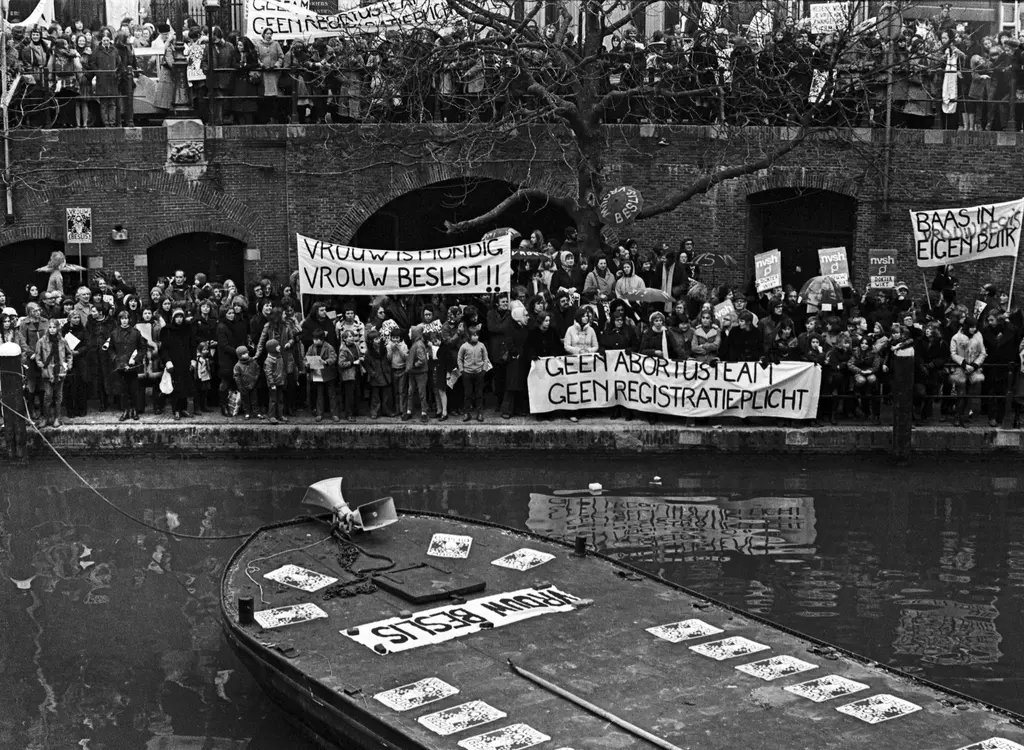
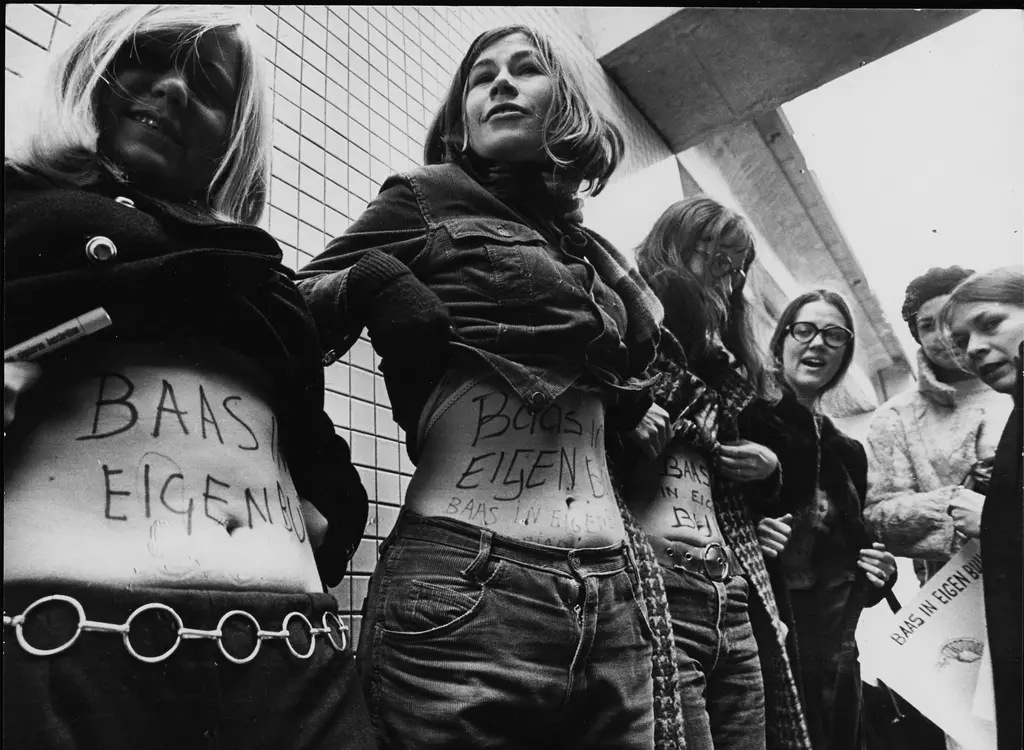
When it comes to feminist heritage, Utrecht certainly has a reputation. Women’s strikes and abortion demonstrations were organised, culminating in the Dolle Mina protest during a gynaecologists’ conference in 1970. That iconic photo of the women with ‘Baas in eigen buik’ (Boss of my own womb) written on their bodies? It was taken in Utrecht. The protest attracted a great deal of media attention and was a key moment in the fight for abortion rights in the Netherlands.
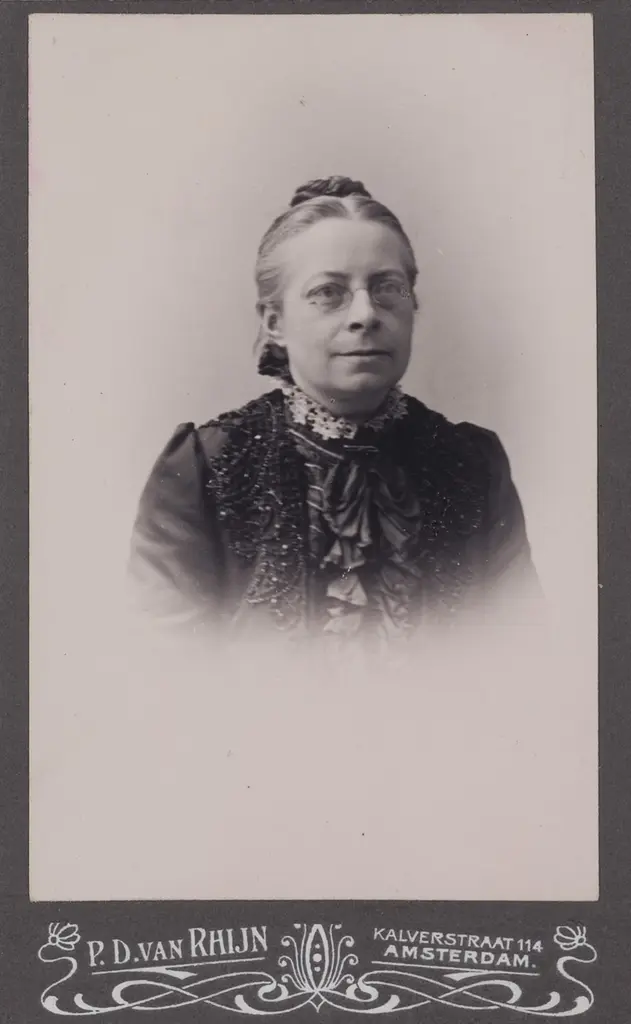
But the history goes back much further: Anna Maria van Schurman from Utrecht was the first female student in the Netherlands in 1636. She was allowed to attend lectures at Utrecht University, on condition that she hid in an alcove behind a curtain. The first female gynaecologist in our country also came from Utrecht. In 1880, Catharina van Tussenbroek was admitted to Utrecht University to study medicine. She forged a path in the male-dominated world of medical science and advocated for women’s labour rights.
Blind spots
It is these and countless other stories that you can find in the Atria archive. Many of them have been recorded in (filmed) interviews with the people who were able to recount them. Oral history is one of Atria’s areas of expertise, and a proven way of documenting informal history. And to fill in the blind spots of ‘official’ historiography, says Karin, who is a historian herself. “In this way, we show what has changed over the past ninety years, but also what has still not changed. How is it possible, for example, that we have been discussing equal pay for women and men for a hundred years, yet still haven’t achieved it? As a knowledge institute, we demonstrate the mechanisms behind this.”
In addition to being an archive, Atria is also a centre for academic research. It focuses not only on economic inequality, but also on themes such as self-determination, femicide and gender stereotyping. Atria also recently conducted research into domestic adoption and relinquishment between 1956 and 1984, when an estimated 13,500 unmarried pregnant girls and women were subjected to severe social pressure to give up their children. Researchers documented the personal experiences of birth parents, children given up for adoption, foster parents and adoptive parents in a report. This has led to various recommendations for policymakers.
Prejudices
Researching and documenting: that is Atria’s approach. “We don’t get involved in the debate ourselves, but we provide those who are going to have that debate with the right information,” says Karin. “That was also the aim when the organisation was founded in 1936: to combat prejudices about women and reduce gender inequality with facts and knowledge. For example, by using hard data to convince policymakers that women were indeed suited to so-called ‘male professions’.”
Over the years, the themes have changed, but Atria still sees its role as making knowledge about the position of women accessible to a wide audience. Whether it concerns online hate directed at female politicians or the effect of climate change on gender equality.
"We are doing groundwork that contributes to a struggle that has been going on for a very long time, and which I fear we must continue to fight. In the two and a half years that I have been director, I have seen this become increasingly necessary. It is distressing to see how hard-won rights are being undermined, such as safe abortion and trans rights. It’s maddening."
Banners and badges
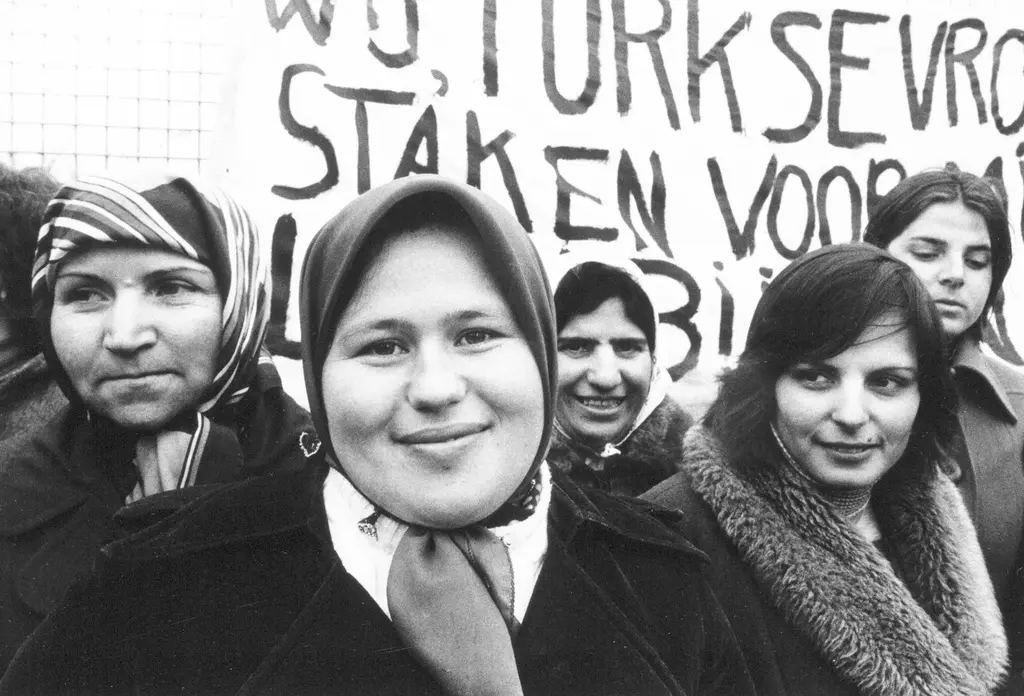
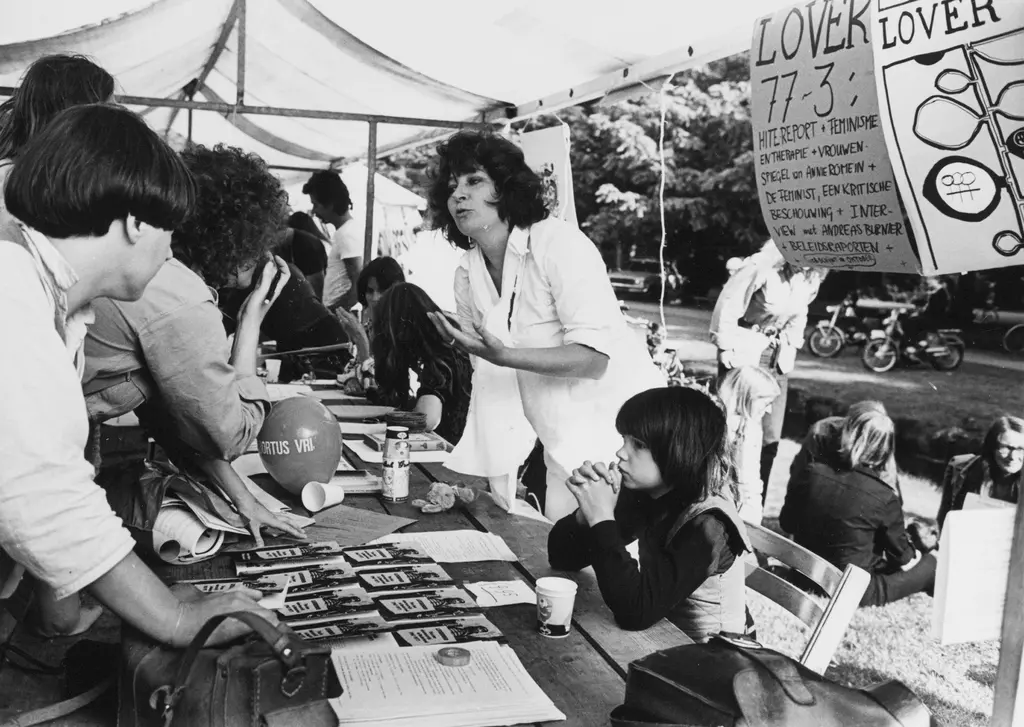
In addition to research publications and interviews, Atria’s collection includes, amongst other things, the papers of well-known women such as Aletta Jacobs. It also includes material from the archives of the abortion campaign group Women on Waves and the Moluccan women’s group Kelompok, which played a major role in the emerging Black women’s movement in the 1970s and 1980s. You will also find books, magazines, work by female photographers who documented their times, and countless posters, banners, placards and badges that reflect the‘second wave of feminism ’. The material is available on loan to museums and can be consulted by anyone on request in the reading room and library.
And then there’s Atria’s 90th anniversary, which we’re celebrating this year. How? Karin: “We’re incredibly proud to have such a long history and we’d like to mark the occasion properly. But the move naturally takes up a lot of time and energy. That’s why we’re not opting for one big anniversary event, but for several activities for different groups throughout the year. For example, we’re organising lectures and meetings, a conference on Gender in Policy, and a special poster exhibition featuring both old and new work."
Meanwhile, Atria is pressing ahead with its mission – for instance, research is currently underway into gender-based violence and health activism in relation to the menopause and transgender care. All with the aim, according to Karin, "of strengthening the position of women in all their diversity and thus contributing to an inclusive and just society. Because a world in which we can live together in freedom and equality is to everyone’s benefit."