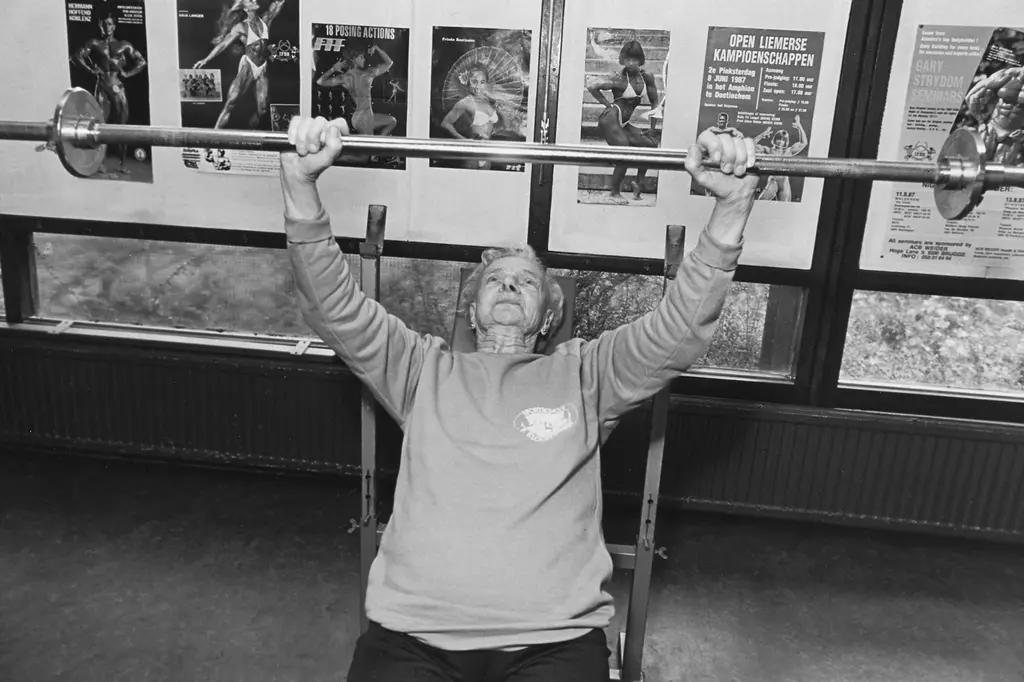
Ideas about how men and women should behave in the Netherlands are often traditional and based on stereotypes. Such as: men work and women care. Or that men are natural leaders, ambitious, assertive, athletic and dominant. And that women, on the contrary, are affectionate, naive, cheerful and sociable, compassionate, sensitive, kind and loyal.
Ideas about how men and women should behave in the Netherlands are often traditional and based on stereotypes. Such as: men work and women care. Or that men are natural leaders, ambitious, assertive, athletic and dominant. And that women, on the contrary, are affectionate, naive, cheerful and sociable, compassionate, sensitive, kind and loyal.
Why do stereotypes create inequality?
Stereotypical characteristics associated with masculinity are socially valued more highly than characteristics we associate with femininity. Men are therefore more likely to be hired for management positions than women. While women are much more likely to be hired at a nursery than a man. This gender inequality affects not only individuals but entire sectors. In healthcare and education, which are seen as 'soft' and 'feminine', the lower valuation of women compared to men literally translates into lower incomes compared to 'masculine' professions, such as engineering. In reality, however, just as many women are good at engineering or leadership as men. There are also an increasing number of men who say they would like to care, for example for their children or just professionally.
Movie Out of the straitjacket!
Why is it so complicated to break gender stereotypes?
However, breaking gender stereotypes is easier said than done. Not only is people's behaviour strongly shaped by those norms and stereotypes, but most people are also quite attached to existing gender categories. This is because of two things. First, people are taught gender norms from an early age, which makes them feel natural and 'proper'. Stereotypes are transmitted through a socialisation process. As a result, children internalise what is expected of them from society. In this process, parents, teachers, friends, neighbours, people on TV and characters in books play a role as examples or messengers. By presenting certain behaviour as 'normal' on the one hand, and rejecting certain ideas (implicitly or explicitly) on the other.
However, some ideas or messages conveyed are more nuanced than others. Stereotypes are different from norms because they represent the world clichéd and very black and white, with little room for all kinds of shades of grey. Thus, in stereotyping, there is only one kind of 'good woman' and one kind of 'real man'.
Second, gender feels 'logical' because gender norms and stereotypes permeate different levels of society. An individual's gender-related choices feel as correct and right because they fit cultural norms and are consistent with expectations at work or in the classroom. Precisely because gender is so 'layered' and reflected in everything, it is ubiquitous, it is a real 'system'. This makes it complicated for people to do something different from what the gender system dictates.
So how can things change?
Yet there are some people who manage to 'swim against the tide'. They make (deliberately or not) 'counterstereotypical choices' in education and work. In doing so, they organise their lives in a way that goes against expectations. In Judith Butler's terms, these people make 'gender trouble'. Think of a man taking care of the children at home or a woman opting for vocational technical training. By going outside gender stereotypical expectations to draw their plan and implement it, people around them may just come to realise that things can be done differently, without serious consequences. After all, a caring man is still a fine man, or even a better one.
Role models
While some people will be aware of swimming against the tide, this will certainly not be true for everyone. Regardless, it does allow them to gain the status of a counterstereotypical role model. A role model is an individual that people - especially children, adolescents and young adults, look up to. Role models can be very close, such as parents, siblings or a teacher, but can also be distant, think top athletes, singers, vloggers or a high-ranking boss of a bank or a large company.
Counterstereotypical examples or role models help break gender stereotypes. And thus in reducing gender inequality. We cannot have enough of them for the time being. The more men and women swim against the gender stream, the more the assumed immutability of male-female differences is shaken, and the more space is created for people to make freer choices in their work, education or home situation.