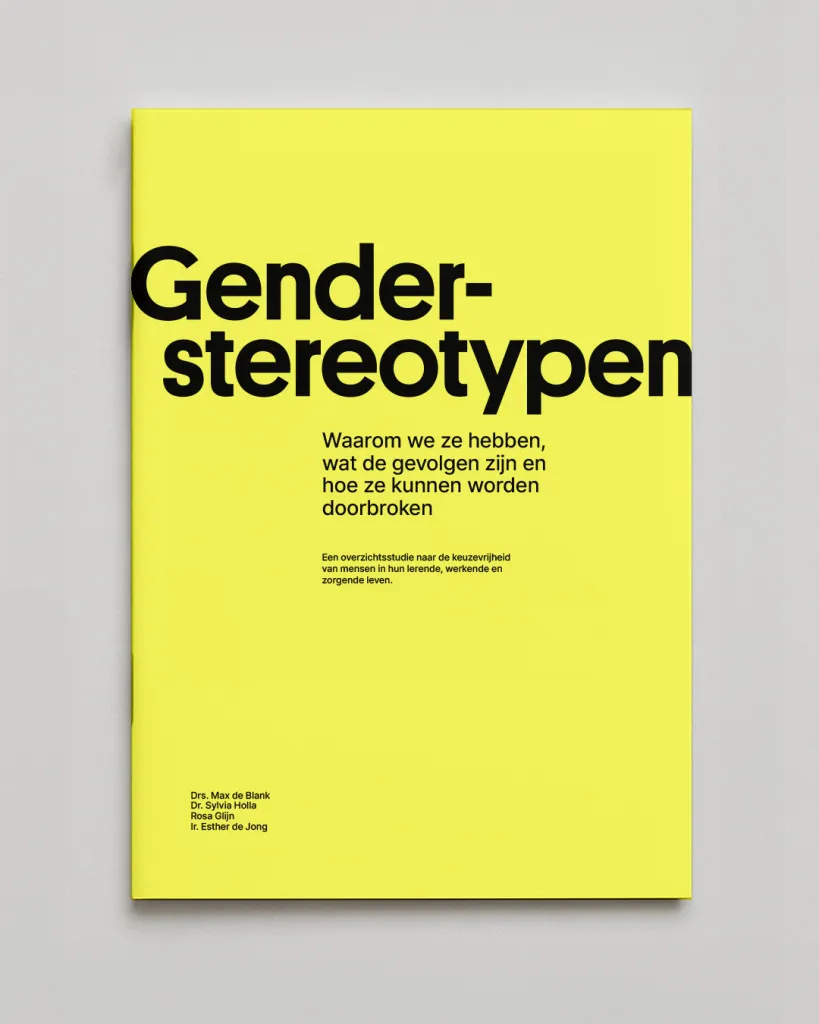
At Atria, we see that representation about men and women (and everything in between and beyond), in media and politics for example, often creates a one-sided representation of reality. Repetition and exaggeration of this representation create gender stereotypes, which in turn contribute to inequality between people. You can read how this works and the effect of gender stereotypes on choice on this page.
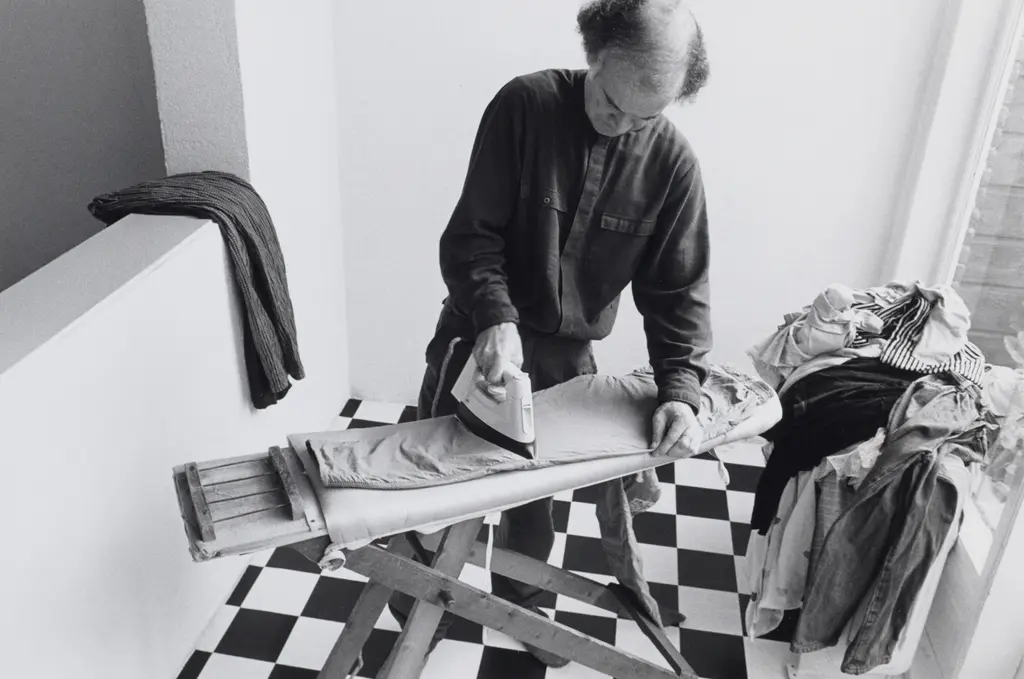
Ideas about how men and women should behave in the Netherlands are often traditional and based on stereotypes. Such as: men work and women care. Or that men are natural leaders, ambitious, assertive, athletic and dominant. And that women, on the contrary, are affectionate, naive, cheerful and sociable, compassionate, sensitive, kind and loyal.
Masculinity and femininity
Stereotypical characteristics associated with masculinity are socially valued more highly than characteristics we associate with femininity. Men are therefore more likely to be hired for management positions than women. While women are much more likely to be hired at a nursery than a man. This gender inequality affects not only individuals but entire sectors. In healthcare and education, which are seen as 'soft' and 'feminine', the lower valuation of women compared to men literally translates into lower incomes compared to 'masculine' professions, such as engineering. In reality, however, just as many women are good at engineering or leadership as men. There are also an increasing number of men who say they would like to care, for example for their children or just professionally.
In order to create more freedom for all people to design their lives according to their own wishes, talents and preferences, the beaten track must therefore be widened. This will only succeed if guiding gender norms and stereotypes, which limit men's and women's choices, are broken down.
Why is it so complicated to break gender stereotypes?
However, breaking gender stereotypes is easier said than done. Not only is people's behaviour strongly shaped by those norms and stereotypes, but most people are also quite attached to existing gender categories. This is because of two things. First, people are taught gender norms from an early age, which makes them feel natural and 'proper'. Stereotypes are transmitted through a socialisation process. As a result, children internalise what is expected of them from society. In this process, parents, teachers, friends, neighbours, people on TV and characters in books play a role as examples or messengers. On the one hand, certain behaviour is presented as 'normal' and, on the other, certain ideas are (implicitly or explicitly) rejected.
Second, gender feels 'logical' because gender norms and stereotypes permeate different levels of society. Gender-related choices of an individual feel as correct and right because they fit cultural norms and are consistent with expectations at work or in the classroom.
What do we see in practice?
Gender stereotypes limit opportunities and choices. Among young adults, they influence choices around learning, working and caring. These choices have major consequences for later; for the sector a person works in, working hours and the division of tasks at home.
Our research Free to choose shows:
Gender stereotypes are already emerging in education. Boys and girls often choose stereotypical school careers.
These school careers lead to gender-stereotyped occupations. The labour market is structured so that in certain sectors, such as healthcare and education, part-time work is more common than in, for example, the technical sectors, where full-time work is more likely to be the norm.
Early gender-stereotypical choices in life thus carry over into later life: when a child is on the way, the mother-to-be is likely to be the one to work (even more) part-time and take on more care responsibilities. Fathers are known to work more rather than fewer hours.
Young adult men are more strongly guided by gender stereotypes than women.
So how can things change?
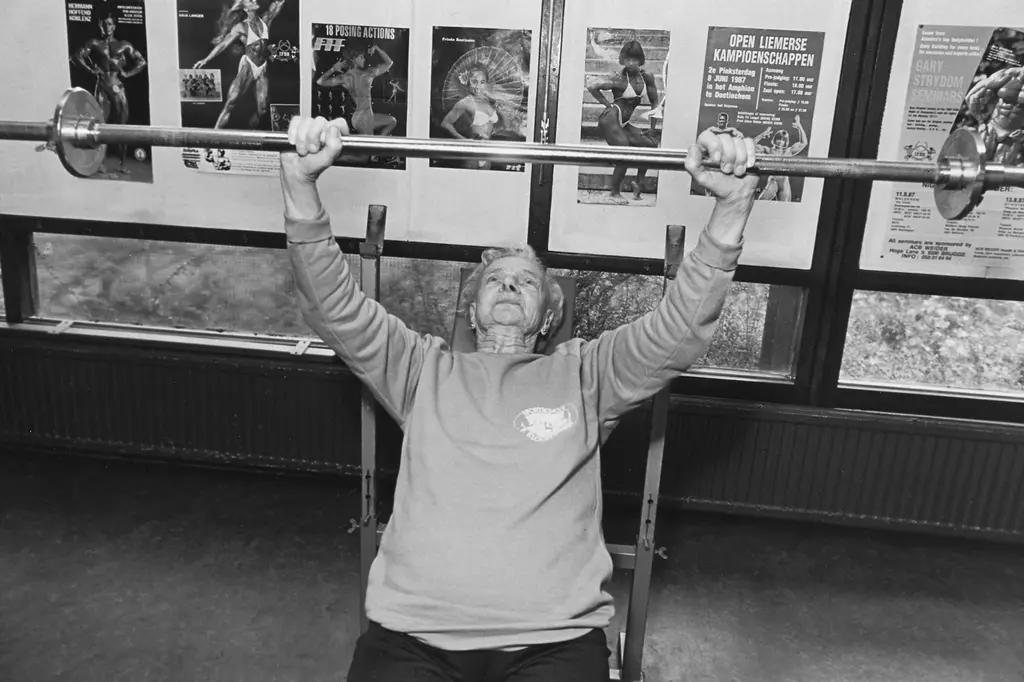
Yet there are some people who manage to 'swim against the tide'. They make (deliberately or not) 'counterstereotypical choices' in education and work. In doing so, they organise their lives in a way that goes against expectations. In terms of Judith Butler (leading thinker on gender and identity), these people make 'gender trouble', or 'gender trammel'. Think of a man taking care of the children at home or a woman opting for vocational technical training. By going outside gender stereotypical expectations and carrying out their plan, people around them may just come to realise that things can be different, without serious consequences. After all, a caring man is still a fine man, or even a better one.
Photo top: Man ironing, 1989, photographer: Mieke Schlaman, IAV-Atria Collection
Related publications
Themes
As an independent knowledge institute, Atria bridges the gap between research and social change.
Our themes are: feminism, self-determination, gender stereotyping, economic inequality, gender-based violence. View our knowledge and expertise per theme.