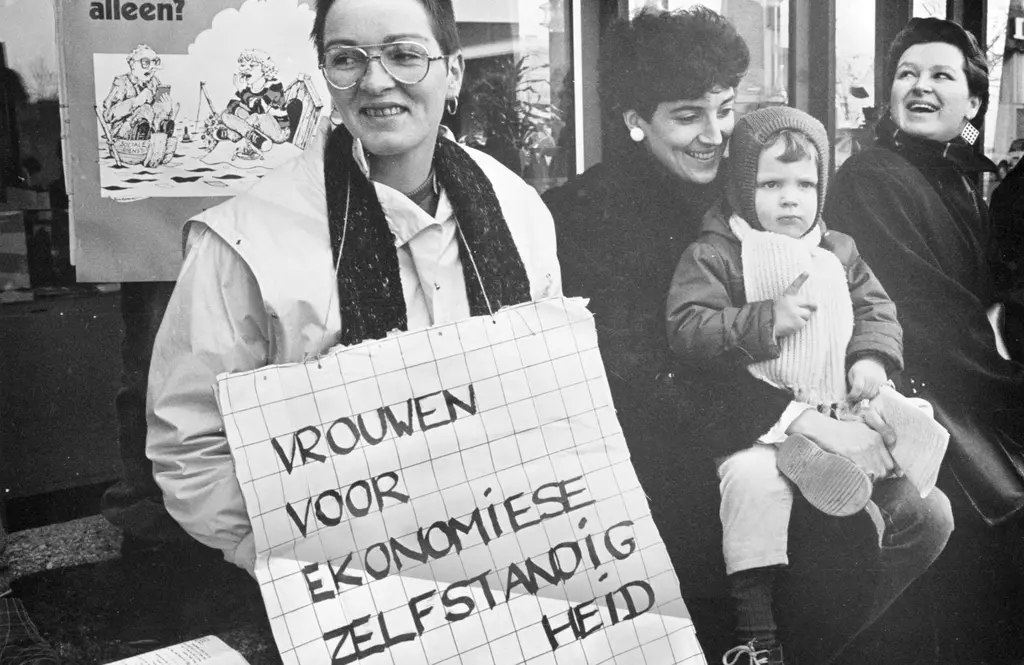
Economic inequality between men and women persists in the Netherlands. According to CBS figures, between 1977 and 2023, the proportion of economically self-employed women rose from just 20% to almost 70%. Among men, this percentage remained stable around 80% during the same period. The biggest growth among women took place in the 1980s and 1990s, when they became increasingly active in the labour market. How economic (im)equality is measured and which factors contribute to women's disadvantage can be read on this page.

Economic vs financial independence
According to CBS, 7 in 10 women are economically independent - that is, they earn at least the welfare level. But making ends meet on that amount is almost impossible in this day and age. Since 2000, economic independence has been an important goal in gender equality policy. This involves an income from work, at the level of at least the social assistance benefit for a single person*. To make ends meet even with children, since 2022 the gender equality policy has pursued a second goal, namely financial independence. By this is meant earning an income from work of at least the level of the minimum wage*.
Economic independence is: income at welfare level (approx. €1,295 net per month in 2024).
Financial independence is: income at least at the level of the net minimum wage (approx. €1,845 per month in 2024).
The share of financially independent women (and men) is thus lower than the share of economically self-employed.
A brief history
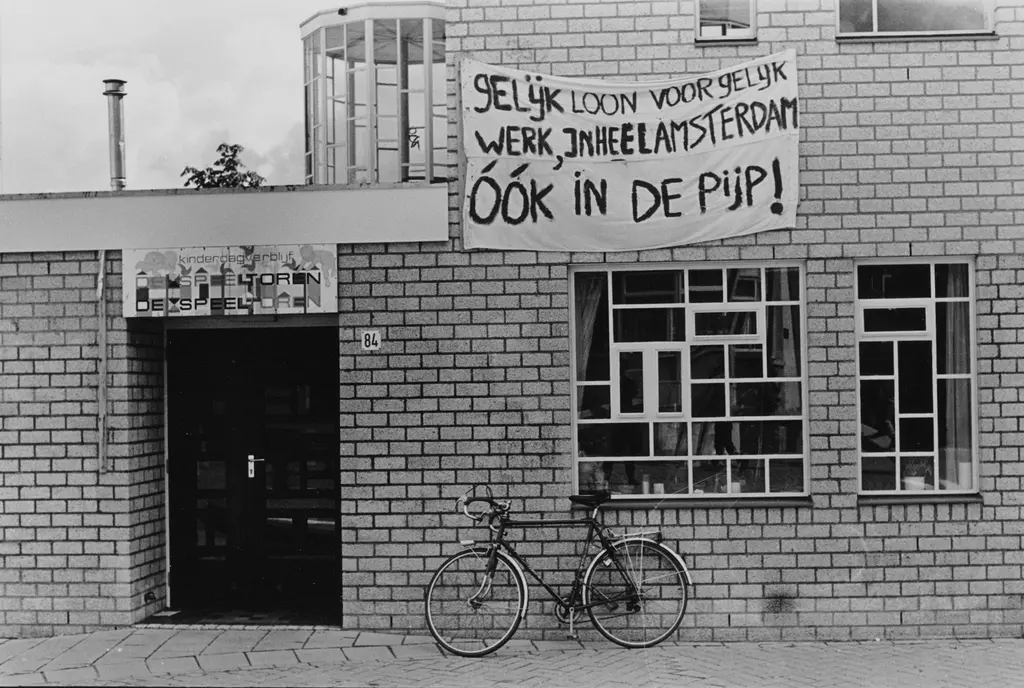
How women (movements) stood up for equal pay and better working conditions:
30 March 1897: Establishment of first union for women.
The first 'union' for women was the seamstress union All One, which stood up for seamstresses who worked long hours for low hourly wages.1898: National Exhibition of Women's Labour.
The exhibition aimed to promote women's labour and improve wages and working conditions through lectures, conferences and music, among other things.29 June 1951: International Convention on Equal Pay.
1969: First women's strike for equal pay.
Women working at the Champ Clark/Lugano cigar factory in Nieuwe Pekela were paid less than men for the same work.May 1973: Working women's plan.
In May 1973, the action group Dolle Mina launched this plan in which it advocated, among other things, equal pay for equal work, equal opportunities in education and occupation and individualisation of taxes.1975: Lower House passes the Equal Pay for Women and Men Act .
1978: First strike of Turkish women in the Netherlands.
At chicken slaughterhouse Ten Dam in Almelo, they took action because of the poor working conditions: the women worked sixty hours a week, were underpaid and suffered physical complaints because they had to bone the red-hot chicken meat with their hands.
Why do women earn less?
Three main factors come into play:
Pay gap: On average, women still earn less than men for the same work.
Care responsibilities: Women are expected to take on more caring responsibilities, so they work fewer paid hours or choose to work part-time.
Education level: Practically educated women are less likely to be in paid employment or work fewer hours than theoretically educated women, often with lower hourly wages.
The role of gender stereotypes
Stereotypical role patterns make it 'normal' for women to work part-time and carry more caring responsibilities. These patterns are persistent and influence choices of young adults. Atria has done extensive research on this.
Why is economic independence important?
Women who are not economically independent are more at risk when their partner gets divorced or unemployed. Economic independence increases freedom of choice and strengthens women's position in society.
Photo top: Father and son in the supermarket, 1997, photographer: Mieke Schlaman, IAV-Atria Collection
Related publications
Publications
10 February, 2022
The effects of climate change and adaptation on gender equality in the Netherlands and Europe
Economic inequality
Related articles


Themes
As an independent knowledge institute, Atria bridges the gap between research and social change.
Our themes are: feminism, self-determination, gender stereotyping, economic inequality, gender-based violence. View our knowledge and expertise per theme.