The annual UN Women Summit, the Commission on the Status of Women (CSW), concluded this year with new international agreements on gender equality after difficult negotiations. For the first time in 70 years, the final declaration was adopted not by consensus but by a vote among UN member states. Despite attempts by conservative countries to water down the text, the document was eventually adopted by a large majority.
The annual UN Women Summit, the Commission on the Status of Women (CSW), concluded this year with new international agreements on gender equality after difficult negotiations. For the first time in 70 years, the final declaration was adopted not by consensus but by a vote among UN member states. Despite attempts by conservative countries to water down the text, the document was eventually adopted by a large majority.
In this article, we discuss how the negotiations went, what political tensions played a role and what the final 'Agreed Conclusions' mean for women's rights worldwide. We also discuss key progress, missed opportunities and the role of civil society organisations during the conference.
Difficult negotiations
After weeks of intense negotiations, UN member states adopted new commitments on gender equality at the Commission on the Status of Women (CSW).
The process was difficult: conservative member states tried to weaken the final text more and more. Just before the vote, the United States tabled amendments to make the text less inclusive. These proposals would be a big step backwards from earlier agreements. After an appeal by State Secretary Judith Tielen on behalf of the European Union to vote on the amendments, a majority of member states rejected these proposals. The final document was then adopted by a large majority.
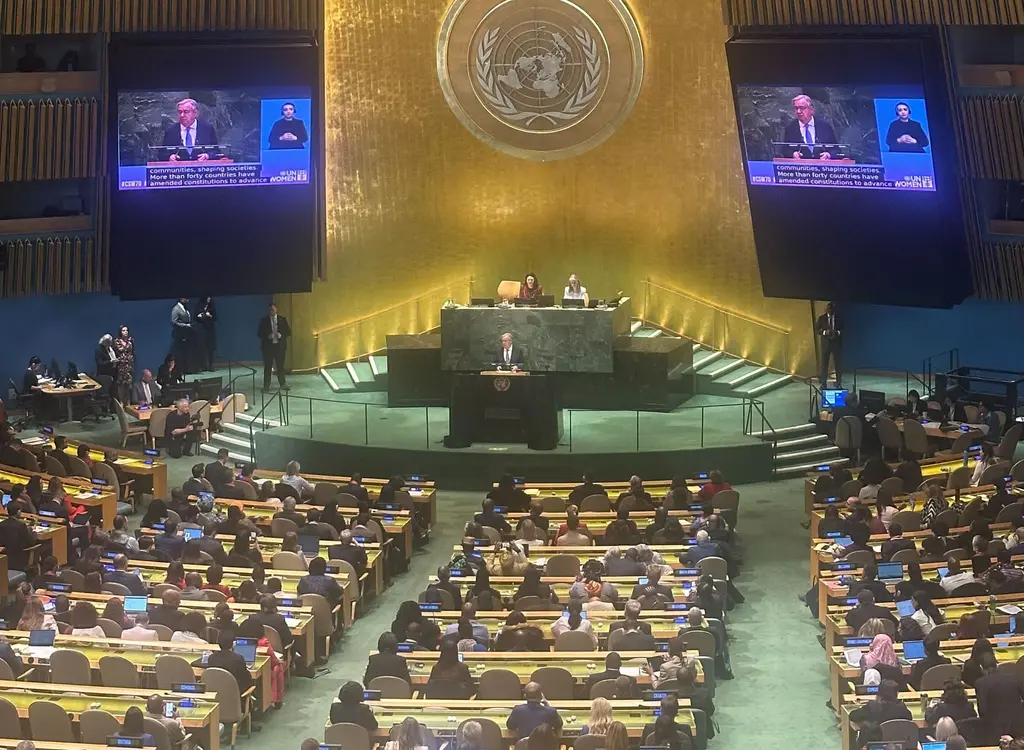
When the result appeared on the screens in the General Assembly Hall, a standing ovation ensued: only the United States voted against. For many attendees, including civil society organisations, this meant not only an adopted text, but also a failed attempt to undermine the process. Earlier in the day, a broad international coalition of feminist organisations had already called on member states not to give in to pressure from conservative countries.
Discussion on language
The theme of this CSW is access to law and justice for all women and girls. Yet, as in previous years, there was especially much discussion about language around sexual and reproductive health and rights, participation of girls and young women, and language on inclusion and diversity.
There was also much discussion about the term 'gender'. Conservative countries wanted to remove the entire term from the document or, if necessary, limit it to 'men and women'. That would be a big step backwards and does not do justice to the diversity of people and the cultural and social mindsets that perpetuate gender inequality.
Moreover, this language was already enshrined in the Beijing Declaration and Platform for Action (BPfA) and successive final declarations in 1995, making it the absolute lower limit. The Beijing Declaration and Platform for Action is the UN blueprint for women's rights and gender equality, endorsed by 189 countries. Each year, CSW should build on the commitments set out in this declaration.
Political shifts and the anti-gender movement
This year there was again clearly coordinated opposition from the growing anti-gender movement, which was strongly represented in negotiations by conservative member states taking anti-gender positions. The Vatican, which formally has only an observational role, was also very active in the discussion. Some countries that previously supported progressive language were more cautious this year. In addition, there were more divisions within regions that usually negotiate as a united bloc.
The disruptive influence of the Trump administration was also evident this year. Since this year, the US has also been a member of the CSW. The US tried to obstruct the process in several ways. For instance, they first did not participate in the negotiations, only to come up with all kinds of proposals towards the end to delete paragraphs and block the adoption of the final declaration.
That the final declaration was eventually adopted, albeit by vote, is a great victory. It shows that promoting gender equality is still on the international agenda and member states still want to commit to it.
Participation of civil society organisations
Due to adjustments in the negotiation process, it was more difficult for civil society organisations in the Netherlands to follow and influence the negotiations this year. Joyce Brummelman, this year's Dutch NGO representative, flew to New York earlier and was one of the few CSO representatives present in the room. Read about her experienceshere.
Representatives of civil society organisations from the 75 countries barred from the US, or for whom it is unsafe to travel to the US because of their background or identity, could not attend. Furthermore, the curtailment of CSO participation remained largely invisible (after all, you cannot see who is not there), but it was felt and noticed during CSW events. The question then becomes what was ultimately reflected from these negotiations in the content of the final document.
Outcome of negotiations
The outcomes of the negotiations are set out in what are known as Agreed Conclusions. Atria researchers Maya Declich and Paula Thijs made an initial analysis of this text. It shows that the agreements contain both progress and obvious shortcomings.
The text is much shorter this year than in previous years. As a result, there is less room to mention progress made earlier and to reiterate previous agreements. Conservative countries ended up including many reservations and watered-down wordings in the text that undermine human rights and international law and make the agreements less strong. Nonetheless, progress was made on a number of issues.
Progress
Important steps have been taken on the theme of this year's CSW, 'access to justice':
Strong recommendations to improve access to justice, including by putting the experiences and needs of women and girls at the centre of the justice system and providing affordable or free legal aid.
A strong paragraph on women's right to safe and paid employment.
Recognition that women and girls are disproportionately criminalised and incarcerated by discriminatory laws and policies.
Recognition of the situation and needs of women and girls in detention and imprisonment. And recommendations to better protect their rights.
Recognition of the disproportionate impact of conflicts and humanitarian crises on women and girls, and the continued feminisation of poverty.
Measures to combat gender-based violence, including by ensuring accessible and victim-centred support.
There is also continued attention to the diverse situations of women and girls and that they may face multiple, mutually reinforcing forms of discrimination. Think of women with disabilities, migration backgrounds, young people or just older women.
Missed opportunities and regression
Many reservations and watered-down wordings that make member states less accountable.
No reference to bodily integrity and self-determination (while this is mentioned in the Beijing Declaration and Platform for Action).
No explicit mention of sexual and reproductive health and rights (only in watered-down form).
No explicit mention of (gender) diversity, sexual orientation and intersectionality.
A worrisome paragraph on family-oriented policies that may provide ample room for curtailing the rights of women and girls.
No more separate paragraph on funding and participation of civil society organisations, feminist groups, youth and human rights defenders.
Dutch delegation in discussion with civil society organisations
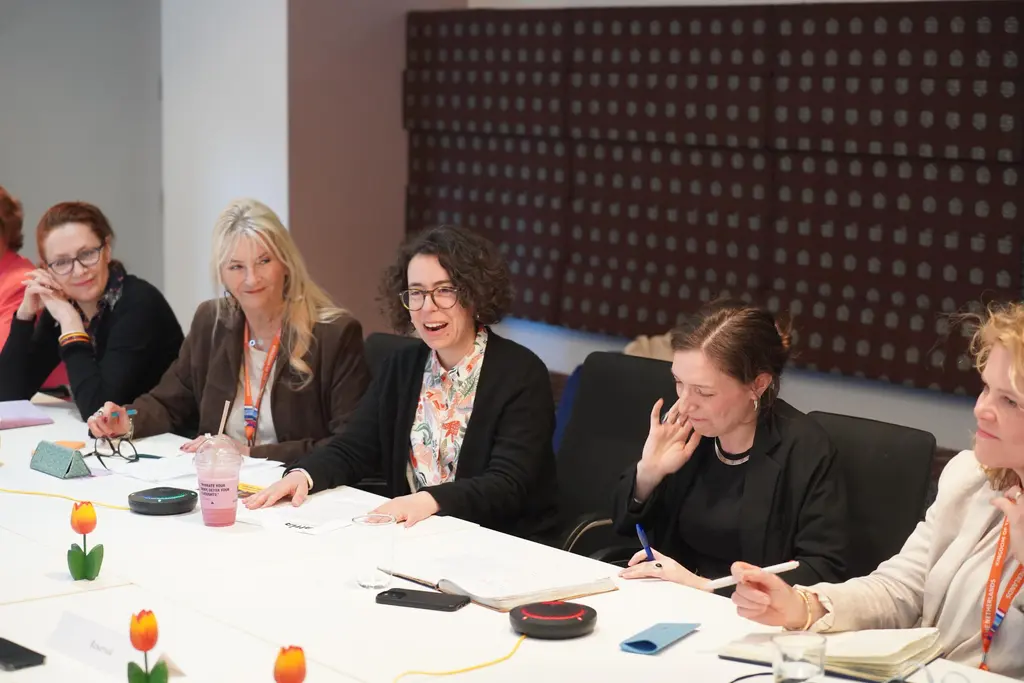
On the second day of CSW, there was a briefing for Dutch civil society organisations with the Dutch delegation in New York. This included State Secretary for Education and gender equality Judith Tielen, together with colleagues from The Hague from the Ministries of Foreign Affairs and Education, Culture and Science, and staff from the Permanent Representation in New York.
On the 15th day of her new role as State Secretary, Judith Tielen made time to hear recommendations, questions and requests from civil society organisations. She made it clear that her vision of gender equality revolves around equality as a compass when considering complex dilemmas and priorities. "People and families, whatever they look like, should be treated equally and given equal opportunities," she said.
Recommendations for implementation
During the NGO briefing, Maya Declich, researcher at Atria, presented recommendations for the implementation of the CSW Agreed Conclusions in the Netherlands on behalf of civil society:
Make legal aid accessible to all, including all women and girls.
Make the legal system work better for survivors/victims of gender-based violence.
Ensure that all women and girls have access to sexual and reproductive health and rights.
Actively involve civil society organisations in all policies on gender equality.
As the Dutch government, proactively speak out for gender equality, women's and lhbti+ rights and take action against the anti-gender and anti-rights movement.
After the CSW, WO=MEN and Atria will organise a debriefing session. The debriefing provides an opportunity to translate the international agreements into concrete Dutch policy. This will help determine how the Netherlands will actually implement the agreements made on gender equality and access to justice.