This plate, made by Wed. C.D. Fetter & Sons Encadreurs, shows seventeen occupations in which women were not or hardly employed around 1900. The plate was shown at the National Exhibition of Women's Labour held in The Hague in 1898. Even in this day and age, there are still occupations in which women are underrepresented.
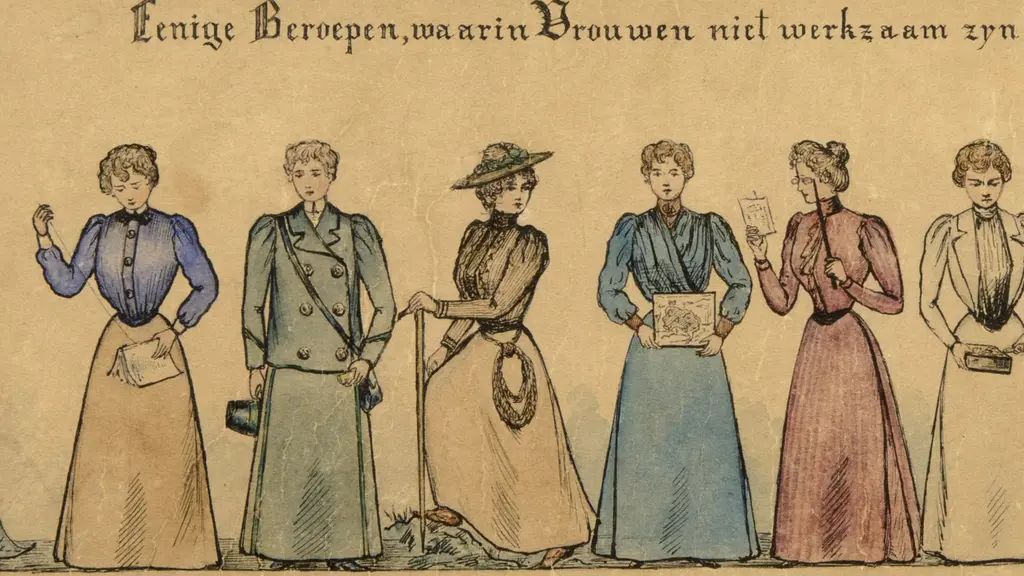
This plate, made by Wed. C.D. Fetter & Sons Encadreurs, shows seventeen occupations in which women were not or hardly employed around 1900. The plate was shown at the National Exhibition of Women's Labour held in The Hague in 1898. Even in this day and age, there are still occupations in which women are underrepresented.
The National Exhibition of Women's Labour aimed to give visibility to women's paid and unpaid work. In addition, the organisers wanted to expand the work force for women and also improve the conditions and payment of the work women were already doing. The exhibition was initially aimed at the middle class. After fierce criticism from socialist women, the objective was eventually adjusted and working-class women were included in the exhibition. The exhibition was an incredible success and marks an important moment in the women's movement in the Netherlands.
In which occupations were women not or barely employed?
The drawing shows 17 occupations in which women were not or hardly employed at that time.
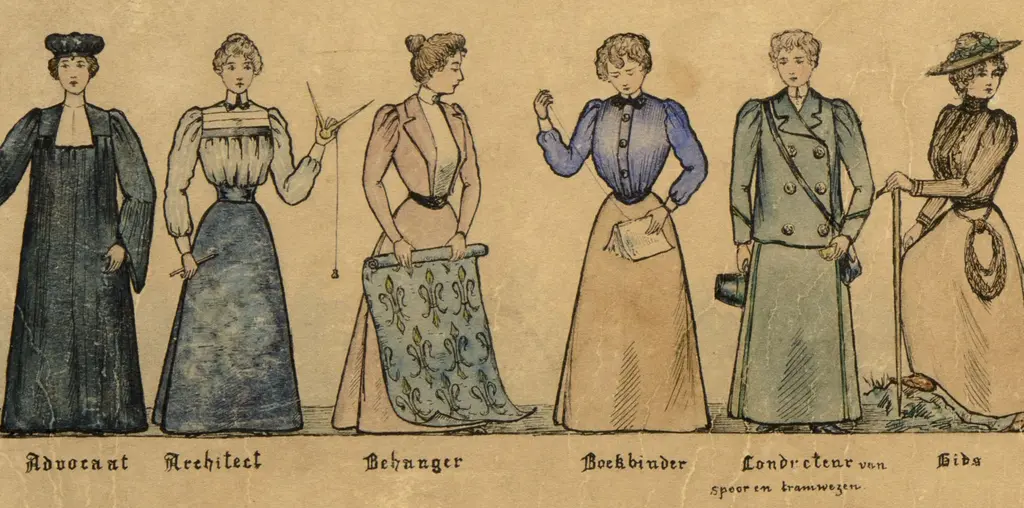
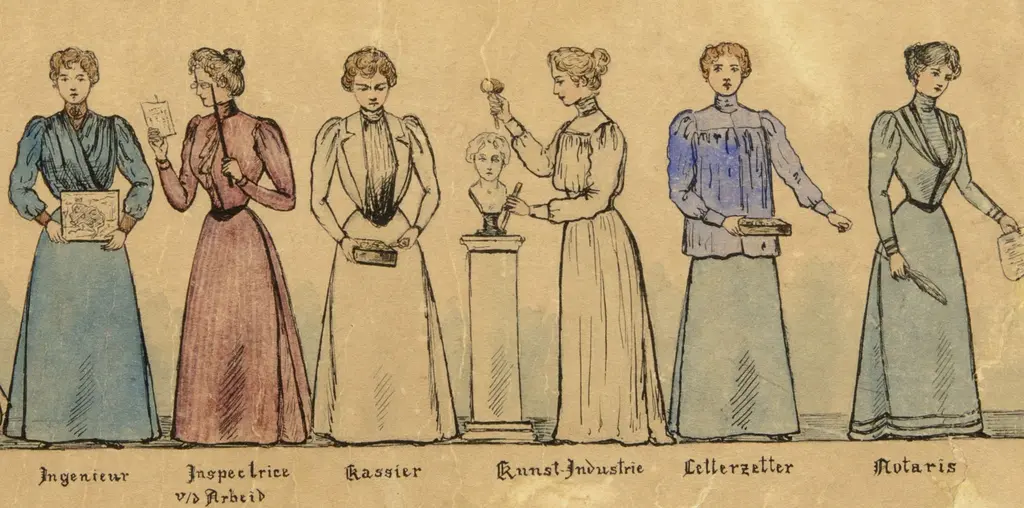
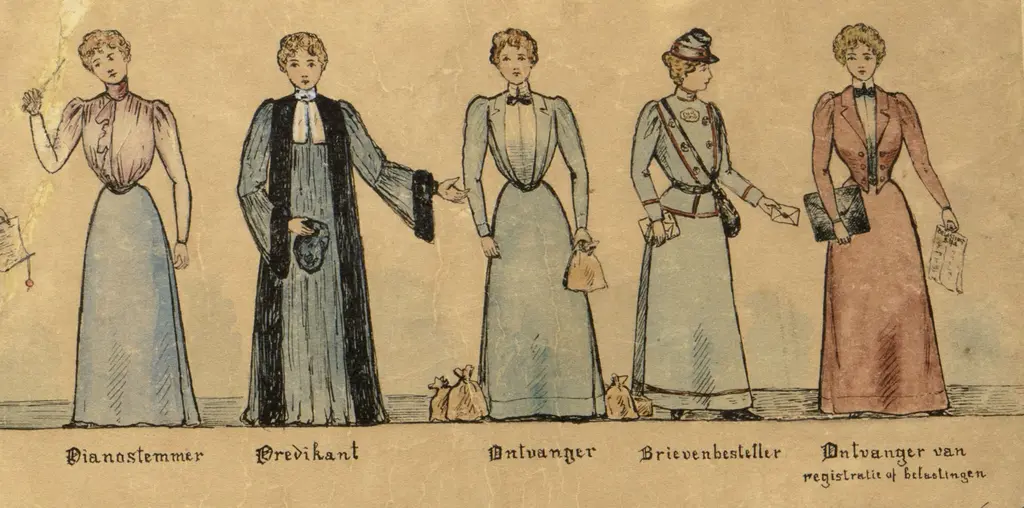
Working women
Although it often seems that women had low (paid) employment rates throughout history, this was not always the case. A lack of sources makes it difficult to express this in precise figures. For many women it was necessary to work because, for example, they did not have a breadwinner who brought money home. (Schmidt, 2017) In addition, married women also generally worked, although their marital status did affect the kind of work they did.
Women also worked during the time of craft guilds in the Middle Ages. Although they were often excluded from the formal training that boys were allowed to take and could not become members independently, some women did find work within these guilds. This was possible, for example, if the man to whom a woman was married worked as a guild master. Women could also do work within guilds as the widow of a guild master. (Schmidt, 2007)
A 'women's guild' was rare. In the 17th century in Gouda, for example, there was the fencing guild, for almost exclusively women. This guild combed flax and hemp for line-turning to make rope. The management of this guild was in the hands of men.