Gender-based violence is a major social problem. It includes not only physical violence, but also sexist comments, street harassment, online hatred and - in its most extreme form - femicide. You can read exactly what gender-based violence is, how it occurs and what we can do to prevent it on this page.
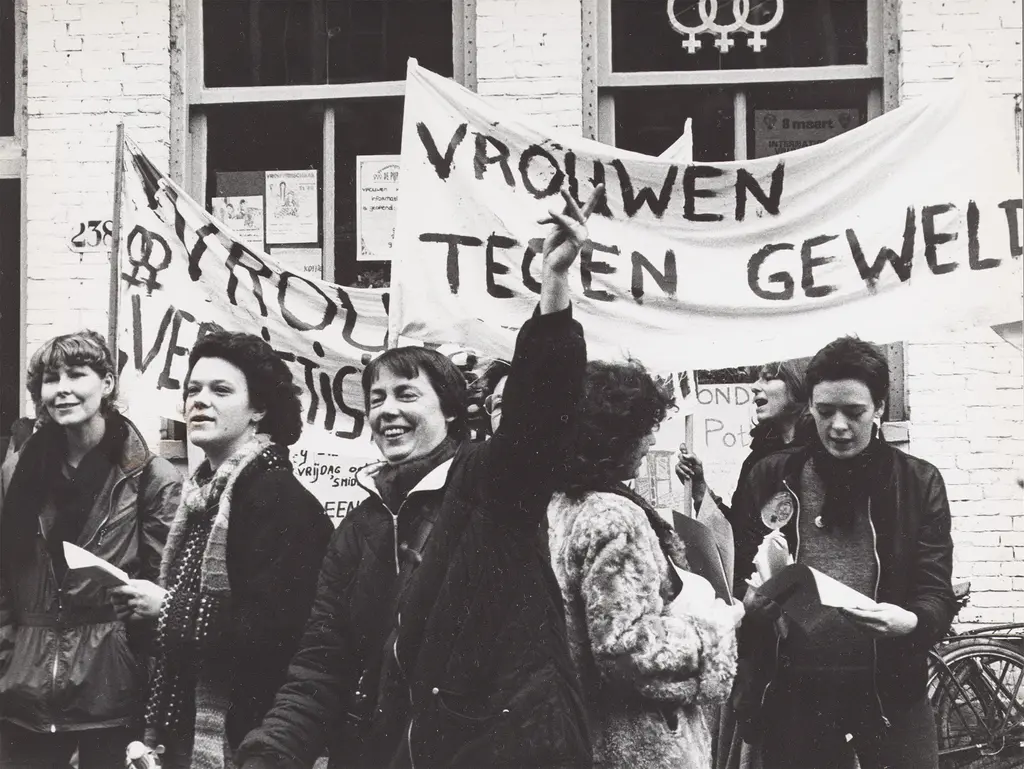
What is gender-based violence?
Gender-based violence is violence based on sex, gender or sexual orientation. It can take place verbally, physically or online.
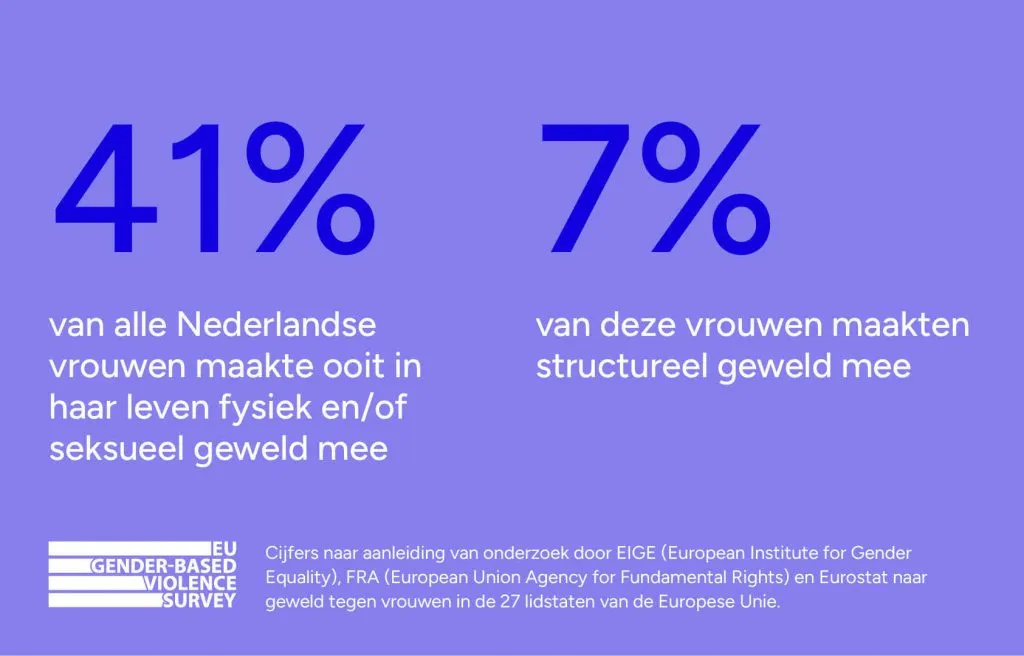
In the Netherlands, 41% of women have ever experienced physical and/or sexual violence (European Union, 2024)
Lhbti+ individuals are even more at risk.
A brief history
Gender-based violence has been on the agenda of women's movements for decades:
1970s: women protest against sexual violence by taking to the streets together at night during 'Witches' Nights'. The first Stay-at-home houses emerge without government support.
1980s: the government makes policy on violence against women for the first time. In 1982, the Dutch government invited feminist activists to advise and participate in policy-making. The proposed plan was provided with a feminist perspective, which saw violence against women as a consequence of unequal power relations between men and women.
1990s: many policies in the Netherlands become gender-neutral; however, this ignores the skewed power relations between men and women.
1991: marital rape becomes punishable.21st century: the Netherlands signs the Istanbul Convention (2016) and commits to combat and prevent violence against women and domestic violence.
In the current zeitgeist, there is increasing talk of countering gender-based violence.
How does gender-based violence arise?
Serious forms of gender-based violence are rooted in stereotypical beliefs. And characterised by sexist comments, homophobic jokes or online hatred. These 'innocent' expressions contribute to a culture in which more serious forms of violence become possible. The Pyramid of Violence (developed by Act4Respect-Unlimited) shows how this works.
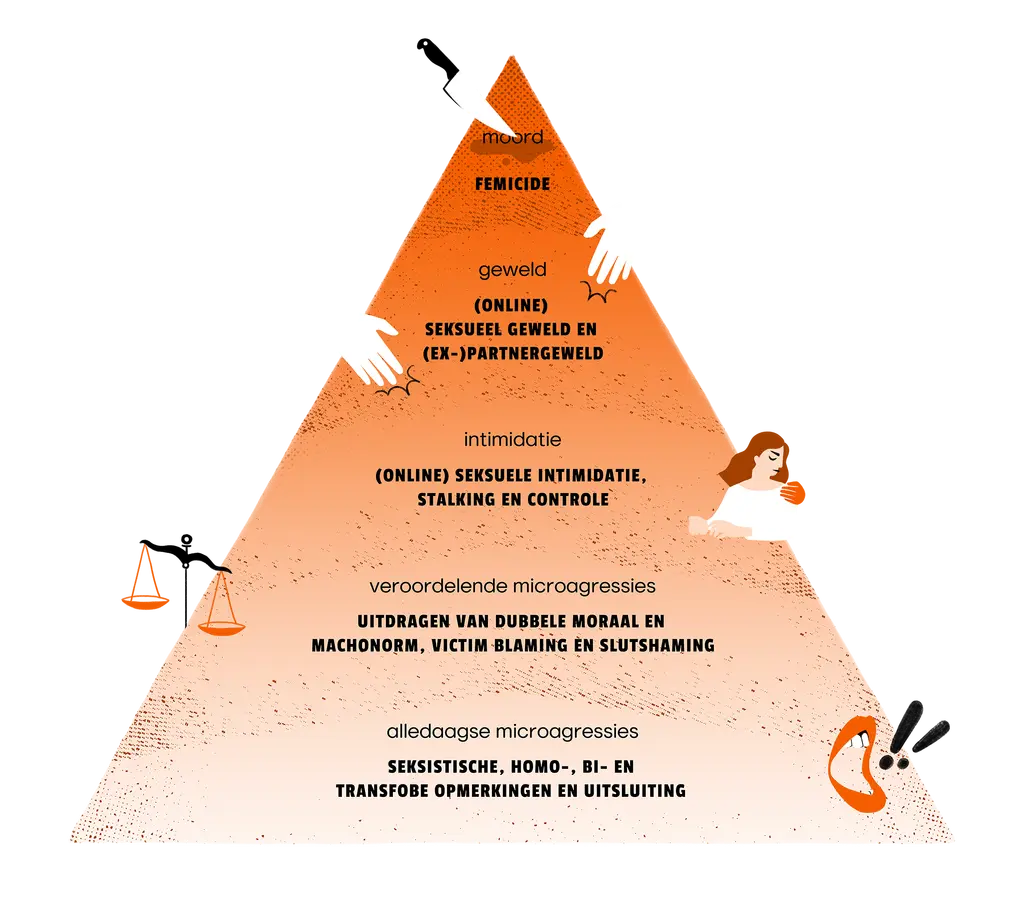
Femicide: the most serious form
Femicide is murder of a woman because of her gender.
In the Netherlands, an average of 43 women are murdered every year.
In 2024, it was 44 women, almost 90% of whom were murdered by someone they knew.
Five in 10 murders were committed by a (former) partner.
The term femicide was introduced in 1976 by feminist researcher Diana E.H. Russell.
"Femicide, the killing of females by males because they are female"
Prevention: what does Atria do?
Together with Rutgers and COC, Atria forms the alliance Act4Respect-Unlimited. The aim of this alliance: a world in which young people feel safe and equal in relationships. We develop knowledge, tools and regional approaches that help organisations embed prevention sustainably. Outputs include handouts, webinars, research reports, trainings, the Pyramid of Violence tool and materials for schools and youth professionals.
Atria's role within Act4Respect-Unlimited is to carry out the (evaluation) studies conducted in cooperation with Rutgers and/or COC. In addition, we contribute to the scientific foundation used to (further) develop the expertise, tools and interventions.
View Act4Respect's products and trainings for the prevention of gender-based violence here
Sources:
Act4Respect: Fact sheet Physical, sexual and online violence due to gender
CBS (2025): 120 people killed in 2024
European Institute for Gender Equality (EIGE): What is gender-based violence?
European Union, European Union Agency for Fundamental Rights, European Institute for Gender Equality (2024): EU gender-based violence survey - key results [PDF] .
Fairspace (2023): Process evaluation bystander intervention
Femicide, European Institute for Gender Equality (EIGE)
Römkens, R., Jong, T. de, Harthoorn, H. (2014): Violence against women: European research data in the Dutch context
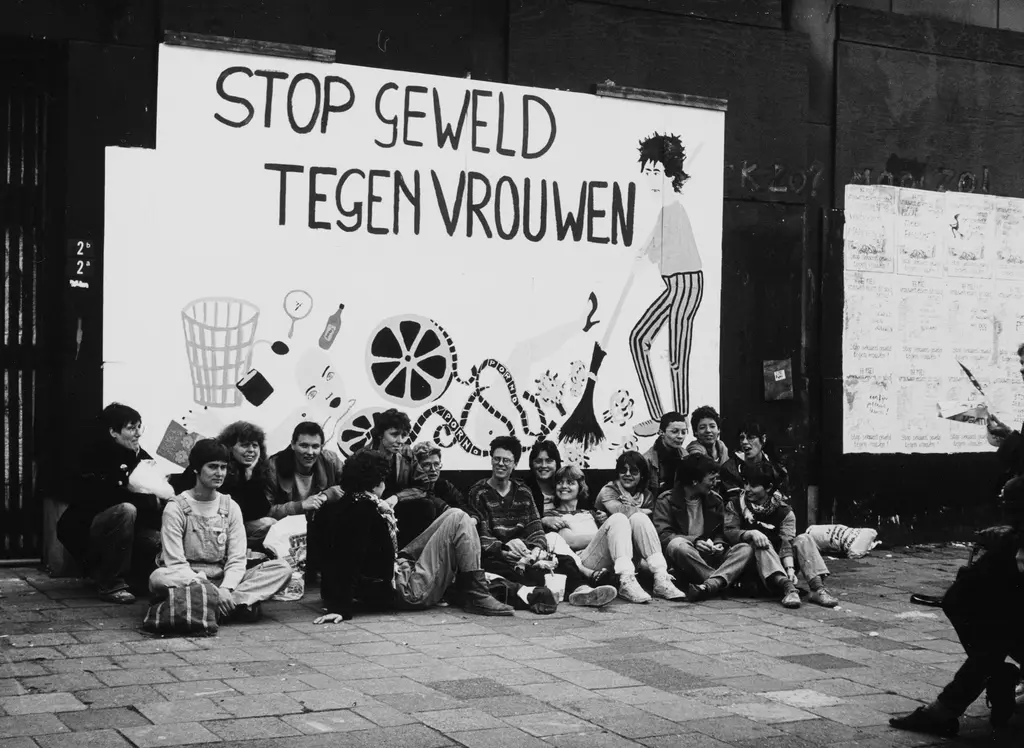
Photo top: Demonstration International Women's Day, 1981, photographer: Joop Blom, IAV-Atria Collection
Related publications
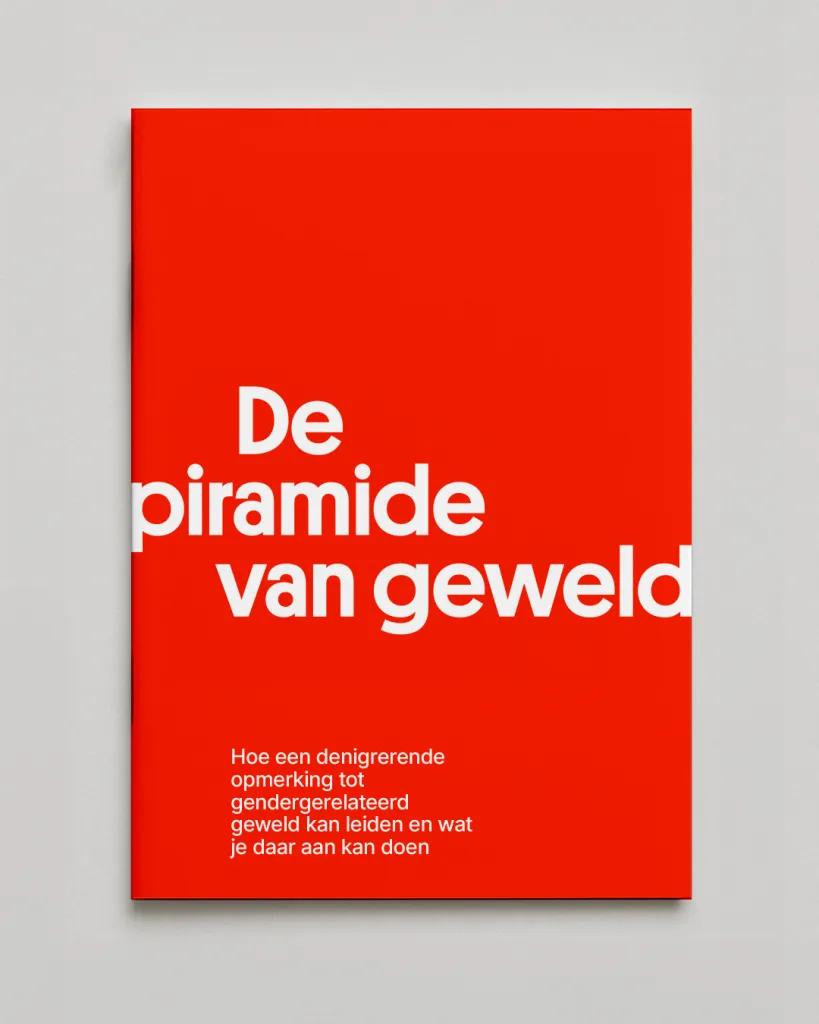
Publications
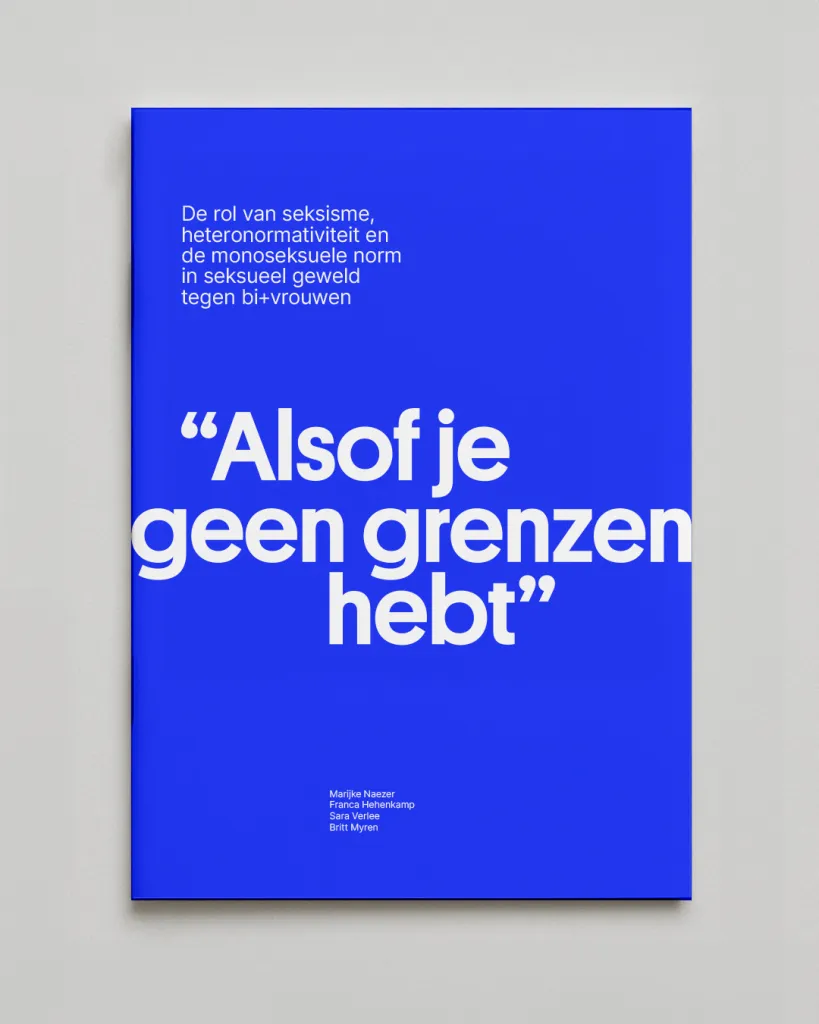
15 April, 2025
The role of sexual orientation in bi+ women's experiences of sexual violence
Genderrelated violence

Related articles


Themes
As an independent knowledge institute, Atria bridges the gap between research and social change.
Our themes are: feminism, self-determination, gender stereotyping, economic inequality, gender-based violence. View our knowledge and expertise per theme.