How do you develop policies that do justice to people’s diverse experiences, opportunities and needs? That question was the focus of the Gender in Policy conference organised by Atria and its partners on 2 July 2026. The day yielded four key lessons for policymakers: prevention starts with everyday norms; language and framing determine what we value; technology is never neutral; and self-determination goes beyond legislation.
How do you develop policies that do justice to people’s diverse experiences, opportunities and needs? That question was the focus of the Gender in Policy conference organised by Atria and its partners on 2 July 2026. The day yielded four key lessons for policymakers: prevention starts with everyday norms; language and framing determine what we value; technology is never neutral; and self-determination goes beyond legislation.
Policy measures that appear the same for everyone on paper can have very different outcomes in practice. After all, experiences, opportunities, needs and power dynamics vary from person to person and from group to group. Anyone who fails to take these differences into account runs the risk of unintentionally reinforcing existing inequalities.
From the opening address by Atria’s managing director, Karin van der Heiden, to the closing spoken-word performance by poet Sophia Blyden, a single common thread ran through the day: gender-sensitive policy begins with recognising people’s differences. Four key lessons in particular stood out.
Lesson 1: Prevention starts with everyday norms
Policy often focuses on tackling violence once it becomes visible. But if we want to prevent violence, we need to start earlier. What norms are children being taught? What messages are young people receiving online and offline? And what inappropriate behaviour is being normalised without us realising it?
Seemingly minor comments, stereotypes and microaggressions can contribute to a climate in which inequality and violence take root more easily. Prevention therefore requires not only enforcement and support services, but also investment in education, awareness-raising, parenting and inclusive policy-making.
The Pyramid of Violence helps to highlight this interconnection. Serious forms of violence, such as intimate partner violence or femicide, are not separate from everyday forms of sexism, exclusion or LGBTI+ discrimination. The pyramid shifts the focus from combating individual incidents to tackling the underlying norms and patterns that enable violence.
"We must not only respond to violence, but also tackle the everyday remarks, stereotypes and inequalities that lead up to it."
What can policymakers do as early as tomorrow?
Invest more in prevention, particularly among young people.
Explicitly include gender stereotypes and social norms in policy analyses.
Carry out an assessment to identify blind spots and unintended consequences.
Lesson 2. We also determine what we value through language and framing
Informal and unpaid work, such as childcare, informal care and domestic work, forms an indispensable pillar of our society. Yet this work often remains overlooked in policy, statistics and societal recognition. What we regard as ‘real work’ appears to depend heavily on the words and images we use.
This tension is reflected in the figures. Over the past fifteen years, women with children living at home have, on average, increased their paid working hours by fifteen hours. At the same time, their unpaid work fell from 45 hours to 36.5 hours per week. For men with children living at home, the time spent on paid work increased by three hours, whilst their time spent on care work rose only slightly: from 20 to 20.4 hours per week (Feuth and Wibaut, 2026). Although around half of heterosexual couples in the Netherlands would like to share care and work equally, in practice only 9 per cent of couples manage to do so (CBS, 2024).
During the session organised by Atria, Movisie and Drs Mama, it became clear how language and framing determine which activities are seen as economically valuable and which are not. Childcare, informal care and domestic work are often portrayed as an individual responsibility or a private matter, whilst society relies on them on a daily basis. Without this often invisible labour, families, organisations and services would simply be unable to function.
Care is still often seen as something that ‘naturally’ belongs to women, whilst paid work is traditionally associated with men. The breadwinner model, which many of us have been brought up with – consciously or unconsciously – continues to shape expectations regarding work and care. Behind these perceptions lie entrenched gender stereotypes. This is precisely why the way in which a policy question is framed is so important: it helps determine which solutions are developed.
When care is viewed as a private matter, collective solutions often remain out of sight. Think of public services, leave arrangements or other forms of support. If, on the other hand, care work is recognised as an essential part of the social infrastructure, this creates scope for very different policy choices.
These insights are consistent with research conducted by Atria in 2022 into the influence of gender stereotypes on the choices young adults make at the start of their life course and how these choices have long-term consequences. One of the recommendations from that study is to critically examine the dominant narrative within gender equality policy. The high prevalence of part-time work among women is seen as a problem because women accrue lower pension entitlements and are less likely to be economically independent. However, according to the study, another question also deserves attention: to what extent does it actually be men’s full-time work, combined with their relatively limited share of care responsibilities, that contributes to the persistence of gender inequality?
From that perspective, a different solution comes into focus. Instead of encouraging women to work more hours in line with the existing norm of full-time work, policy could encourage both men and women to opt for a larger part-time role. The average number of hours worked by people in the Netherlands – around 31 hours a week – could serve as a starting point for everyone, regardless of gender. This shifts the focus from individual choices to a fairer distribution of paid work and care responsibilities.
"Care is too often seen as something you do on the side, something that keeps you from working."
The key lesson from this session is that policy is never separate from the language used to describe social issues. Work is often defined as paid employment and regarded as ‘real work’. Gender-sensitive policy therefore requires a critical examination of the words, assumptions and frames that guide policy choices. Which activities are seen as valuable? Which responsibilities are taken for granted? And for whom?
Read more here about how gender stereotyping works and how it can be challenged.
Lesson 3. Technology is never neutral
Digitalisation and AI are often presented as objective and neutral. However, during the session organised by Atria and VHTO, it became clear that technology can actually reinforce existing social inequalities.
Technology is developed by people and therefore also reflects human assumptions, choices and blind spots. When certain groups are under-represented in development teams, datasets or decision-making, this can lead to systems that do not work equally well for everyone. After all, those sitting at the design table influence who technology is made for – and who it is not.
Women are still under-represented as developers of technology and digital systems. Women and gender-diverse people are also less frequently represented in the research and datasets used to develop algorithms and AI. This is even more pronounced for people who deviate from the dominant norm in multiple ways, such as women of colour. These forms of gender bias mean that technology is often unintentionally tailored to the experiences and needs of men. A well-known example is Google’s speech recognition software, which generally recognises men’s voices better than women’s.
At the same time, digital technology also offers significant opportunities. Technology can increase access to information, create new networks and help under-represented groups to organise themselves, speak out and participate in public debate. AI can even contribute to gender equality, provided it is developed and deployed in a transparent, ethical and inclusive manner. This requires systems that do not reproduce biases, but rather actively help to break down stereotypes and negative social norms.
Attention was also paid to the growing influence of online misogyny and the so-called ‘manosphere’. The online world not only reflects existing rigid gender stereotypes, prejudices and power dynamics, but can also reinforce them. Digital technology enables new forms of gender-based violence and can amplify its impact.
Youth participation is essential in tackling these issues. Young people spend a large part of their social lives online, where they are confronted with online harassment, disinformation and content that propagates traditional or polarising views on gender and masculinity. Digital issues cannot therefore be viewed in isolation from broader societal developments.
What are the key policy priorities?
Increase knowledge and awareness of the relationship between gender (in)equality and digital technology.
Ensure a greater diversity of perspectives in the development and application of technology.
Integrate a gender perspective into policy on digitalisation and AI.
Treat digital technology as a matter of public interest, with greater transparency and democratic oversight.
Invest in media literacy and citizenship education, including a focus on gender equality and diversity.
Investigate how digital technology can actively contribute to gender equality and human rights.
"We cannot resolve this issue without young people at the table."
The session made it clear that technology is never separate from the society in which it is developed. If a gender perspective is not incorporated into digitalisation policy, there is a risk that existing inequalities will be reinforced. Precisely because governments and businesses are increasingly using algorithms and AI for automated decision-making, the consequences can be significant. The Benefits Scandal illustrates how discriminatory algorithms can contribute to unjust outcomes. A gender-sensitive and inclusive approach to technology is therefore not a luxury, but a necessary prerequisite for fair and effective policy.
Lesson 4. Self-determination goes beyond legislation
Formal rights form an important basis for equality, but they do not automatically guarantee that people are actually free to make choices about their own lives. Social norms, cultural expectations, taboos and power relations play at least as significant a role in this.
During the session led by Atria and Dr Fleur van Leeuwen (University of Utrecht, affiliated researcher at Atria), the central question was what self-determination means in practice. Self-determination refers to the freedom to make choices about one’s body, one’s relationships and how one organises one’s life. It also concerns bodily autonomy: being able to decide for oneself what happens to one’s body, without others making that choice for you.
According to Van Leeuwen, there is no separate and explicit right to self-determination in law that people can directly invoke. In legal proceedings, other rights are usually considered, such as the right to privacy and the right to family life. However, whether people can actually exercise those rights depends on much more than legislation alone. Family, friends, religious beliefs, cultural norms and socio-economic circumstances also influence the scope people feel they have to make choices. Factors such as place of residence, background, skin colour and language proficiency can also play a role.
The session demonstrated how societal norms, social movements and legislation constantly interact. This is evident in the history of mothers who gave up a child for adoption between 1956 and 1984. The prevailing norms within families, institutions and the social services sector at the time had a strong influence on how the 1956 Adoption Act was applied. For many women, freedom of choice was limited or even non-existent.
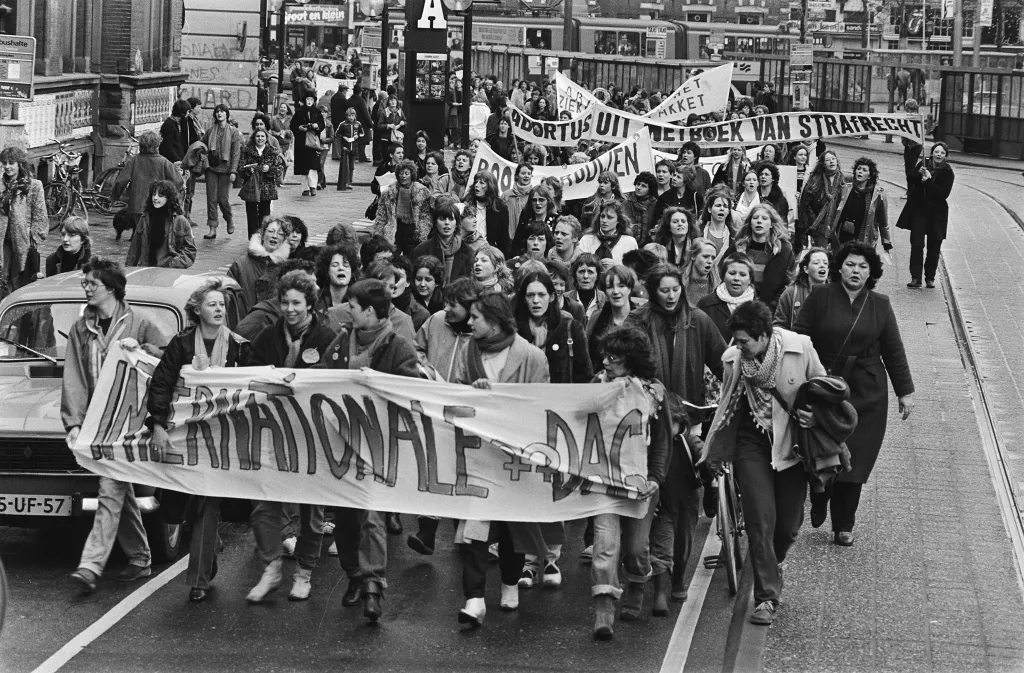
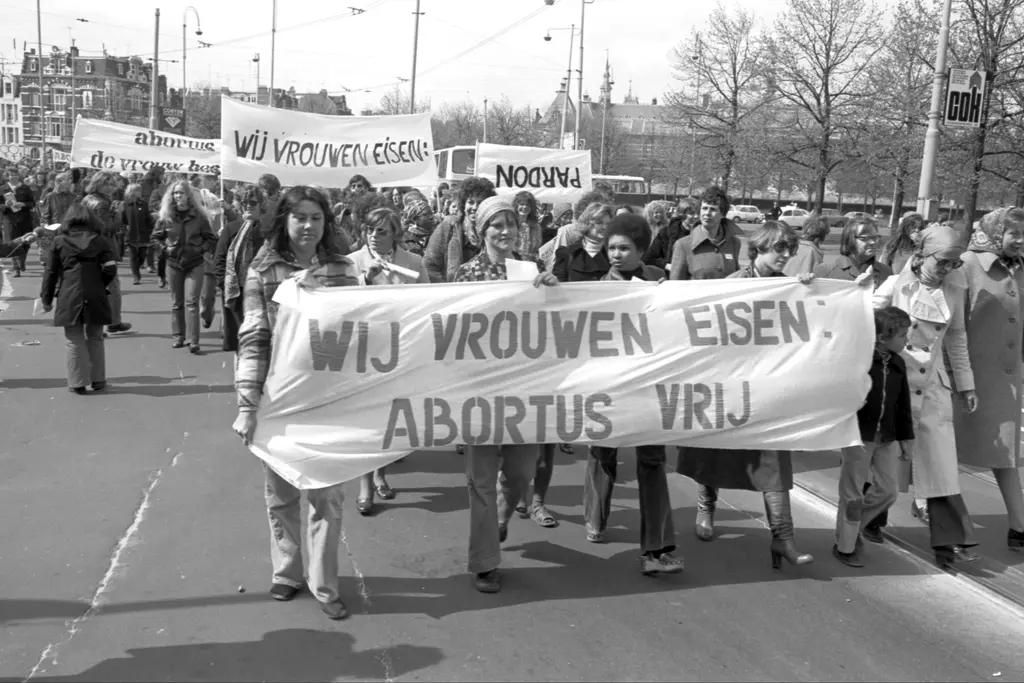
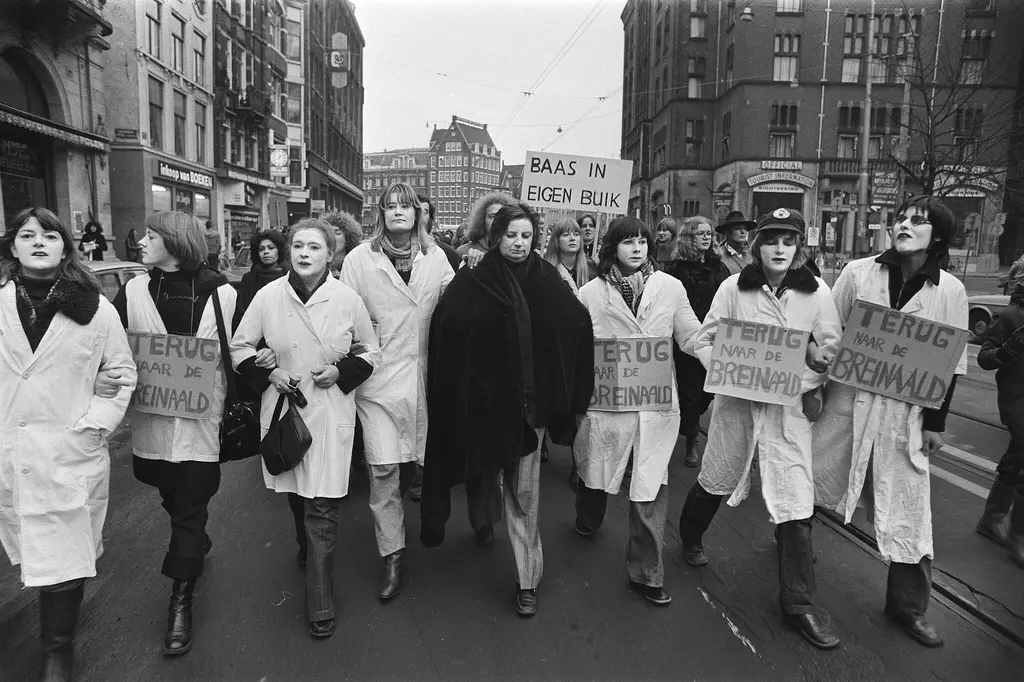
The abortion debate in the Netherlands also illustrates how social change often arises from the grassroots. Feminist organisations such as Wij Vrouwen Eisen put the issue on the political agenda and, through campaigns and demonstrations, contributed to changes in legislation and policy. Van Leeuwen linked this history to the concept of reproductive justice, developed by Black feminists in the United States, including Loretta J. Ross. This approach emphasises that reproductive rights are not just about legal freedom of choice, but also about the social, economic and cultural circumstances that determine whether people can actually exercise those rights.
Access to healthcare, financial resources, physical accessibility, cultural expectations and experiences with institutions all influence people’s actual freedom of choice. As a result, the same right can have a very different meaning for different groups.
"Reproductive justice goes beyond rights on paper: the conditions must also be in place to enable those rights to be exercised in practice."
The key lesson for policymakers is therefore to look beyond legislation and regulations alone, as in the case of the right to abortion. Anyone wishing to develop accessible and inclusive policies must pay attention to those groups that are less visible, have limited access to services or are systematically excluded. Only then can self-determination become a reality for everyone.
Gender-sensitive policy starts with asking the right questions
The conference made it clear that policy is never entirely neutral. Social norms, power relations and existing inequalities influence how policy affects different groups of people.
Gender-sensitive policy recognises that women, men and non-binary people do not always have the same experiences, opportunities and needs. This does not mean that people are pigeonholed, but rather that policy takes account of different lived experiences and perspectives.
The main challenge for policymakers is therefore not to treat everyone the same, but to critically examine who might be overlooked and to scrutinise their own stereotypical assumptions. Which groups are not being reached? For whom do policies work less effectively? And what assumptions underpin policy choices?
A gender analysis is an important first step in this regard. The gender scan developed by Atria helps to highlight blind spots and unintended effects, thereby making policy more inclusive and effective.
After all, inclusive policy does not happen by itself. It starts with asking the right questions.