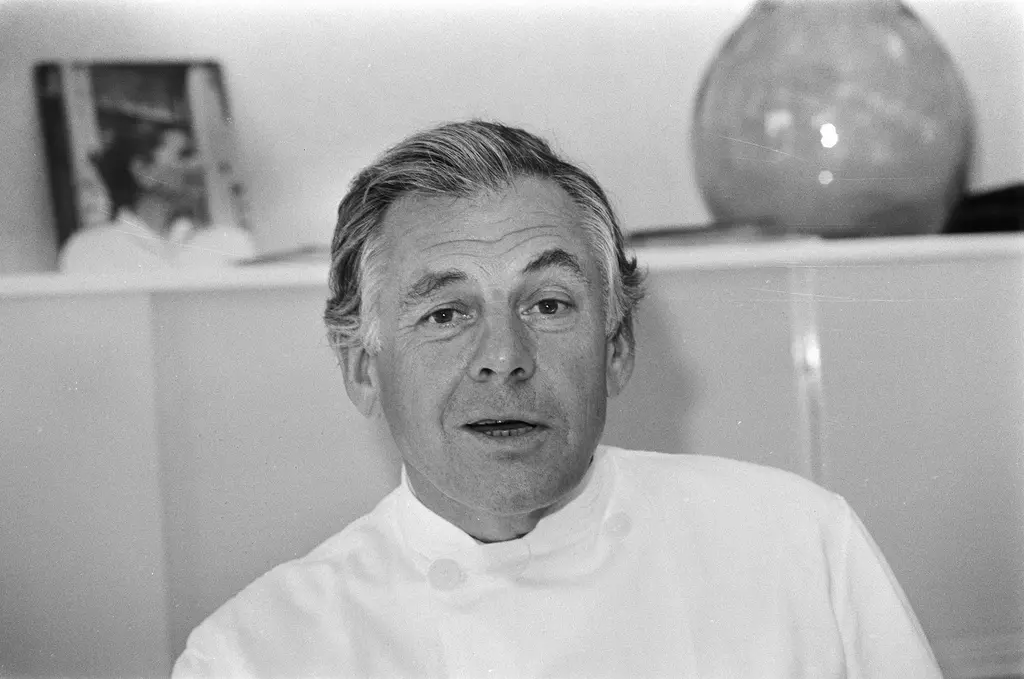
In the 1960s, abortion* slowly moved out of the taboo. The discussion began in 1960 among doctors. In 1967, thanks to a TV broadcast, abortion came to the attention of all Dutch people at once. With this, the abortion debate, which had died down after the 1911 law, flared up. Based on the sources below, these topics are highlighted in more detail.
In the 1960s, abortion* slowly moved out of the taboo. The discussion began in 1960 among doctors. In 1967, thanks to a TV broadcast, abortion came to the attention of all Dutch people at once. With this, the abortion debate, which had died down after the 1911 law, flared up. Based on the sources below, these topics are highlighted in more detail.
1962: The pill and the sexual revolution
The emerging abortion debate played out against the backdrop of what is known as the 'sexual revolution'. During the 1960s, sexuality became increasingly discussable.
This was strongly related to the introduction of the pill in 1962. The pill was a very effective way of birth control. This helped to stop people seeing birth control as the stepping stone to abortion. The pill caught on rapidly: after the first half of the 1960s, contraception was almost universally accepted. Women could now choose how many children they wanted.
Freer sexual morals and the introduction of the pill created the conditions for breaking the abortion taboo. However, that taboo had not disappeared overnight. After all, despite greater tolerance in progressive circles for sex outside marriage, getting pregnant without being married was usually still a disgrace.
GPs counseled women on the use of contraception. When something went wrong with the contraception and the woman did get pregnant, the GP was also involved. This was one of the reasons that the discussion on legalising abortion began among medics. In addition, with the development of faster pregnancy tests, more women came to the GP early in pregnancy.
1965 - 1968: Scientific research in Amsterdam
The abortion debate among doctors began at the Wilhelmina Gasthuis in Amsterdam. During the 1960s, scientific interest among doctors about abortion increased. Thus, scientific studies on abortion appeared again for the first time in years (e.g. Treffers, 1965; De Winter, 1966; or Chabot, 1968).
These publications attracted the attention of other doctors and sparked debate. Yet the debate was still mainly limited to the Amsterdam medical community. This was partly because Amsterdam hospitals saw the most patients with injuries caused by illegal abortion.
The fact that scientific research on abortion was tolerated in Amsterdam was partly due to gynaecology professor Gerrit-Jan Kloosterman. Back in 1960, Kloosterman, together with Amsterdam psychiatrist-sexologist Coen van Emde Boas, had attended an international congress on abortion in East Germany. In several Eastern European countries, abortion had been legal for years. Despite not being in favour of legalisation, Kloosterman considered abortion a topic that could not be avoided.
1966: Enschedé's article: abortion still allowed?
After the 1911 Morality Act, uncertainty reigned among doctors. Was abortion for medical reasons allowed or not? This was changed by Professor of Criminal Law Christiaan Justus Enschedé in 1966. In his article Abortus Provocatus and Criminal Law (which he wrote in response to a question from Kloosterman), he argued that abortion for medical reasons was not punishable, because the courts had long since ceased to consider only the letter of the law. A doctor who saw abortion as necessary for the overall health of the patient could not be punished. Enschedé thus paved the way for a broader definition of medical abortion, which also included psychological and social reasons.
This influential article supported doctors who did want to perform abortions. Doctors who were against abortion actually took a clearer position in it. Debate increased, including the desirability of broadening the definition of medical abortion.
1967: Taking the bus to the UK
The first country in Western Europe to legalise abortion was the UK. From 1967, women there could have abortions in private clinics. Not only British women were treated there. Women from other countries, including the Netherlands, could also go if they could afford the treatment. They travelled to London by bus and stayed at the clinic for several days. Women could be referred to this 'England route' by their GP.
9 May 1967: The television debate that changed public opinion
What would have been completely unthinkable just a few years earlier happened on 9 May 1967. In the VARA television programme Achter het Nieuws, the two Amsterdam doctors Van Emde Boas and Kloosterman openly debated the question on what grounds abortion was possible in the Netherlands. Van Emde Boas took a position in favour of legalising abortion; Kloosterman in particular had arguments against. Yet he was very nuanced and stated:
"A doctor in the Netherlands who wants to help someone and believes he has very good motives to do so, he can help someone."
He even said that at the hospital, he sometimes performed abortions if the woman requested them, even when there was no strict medical reason.
The broadcast also featured women who had experienced abortion themselves. As a result, the discussion was no longer conducted only by experts: women also gave their own opinions.
After the broadcast, there was a flood of abortion requests. Women now knew that abortion would be medically and legally just fine. Immediately, the hospital was flooded with calls from women across the country seeking abortions. Even Kloosterman's personal phone stopped ringing. His waiting room was full of women the next day who wanted to talk to him about abortion. The televised debate made the whole of society aware of the abortion debate that had begun a few years earlier in medical and legal spheres. In the years that followed, many Dutch people's attitudes about abortion would ease.
* By 'abortion' in this timeline, we refer to 'abortion provocatus', or the deliberate termination of a pregnancy.