Abortion* had been tolerated under certain conditions with the introduction of the Termination of Pregnancy Act. However, in politics, abortion was hardly discussed after 1984. For a long time, therefore, nothing changed in Dutch abortion policy, with the exception of the introduction of the Abortion Act on the BES islands in 2011. New initiatives by abortion activists mostly focused abroad. Based on the sources below, these issues are further highlighted.
Abortion* had been tolerated under certain conditions with the introduction of the Termination of Pregnancy Act. However, in politics, abortion was hardly discussed after 1984. For a long time, therefore, nothing changed in Dutch abortion policy, with the exception of the introduction of the Abortion Act on the BES islands in 2011. New initiatives by abortion activists mostly focused abroad. Based on the sources below, these issues are further highlighted.
Although abortion was tolerated, this still did not make it an easy topic to discuss. Frederieke, for example, had an abortion in 2008 at the age of 22, but hardly spoke to anyone about it afterwards. 'I have two close friends, with whom I am really close, and all three of us did not tell each other that we had an abortion during the same period. While we could have supported each other.'** Only many years later did she start talking about it with others. If the taboo on abortion had been less, Frederieke thinks she could have talked about it more easily.
1984 - c. 2017: Silence in politics
After the Termination of Pregnancy Act came into force in 1984, there was silence in politics around the issue of abortion. Until 2022, the law would remain unchanged. How could it be that an issue that had caused such fierce political strife for more than a decade was now barely brought up?
A major reason was that abortion was a major obstacle in cabinet formations. Confessional parties were badly needed for a majority, therefore coalition parties did not take the risk of revisiting the controversial topic.
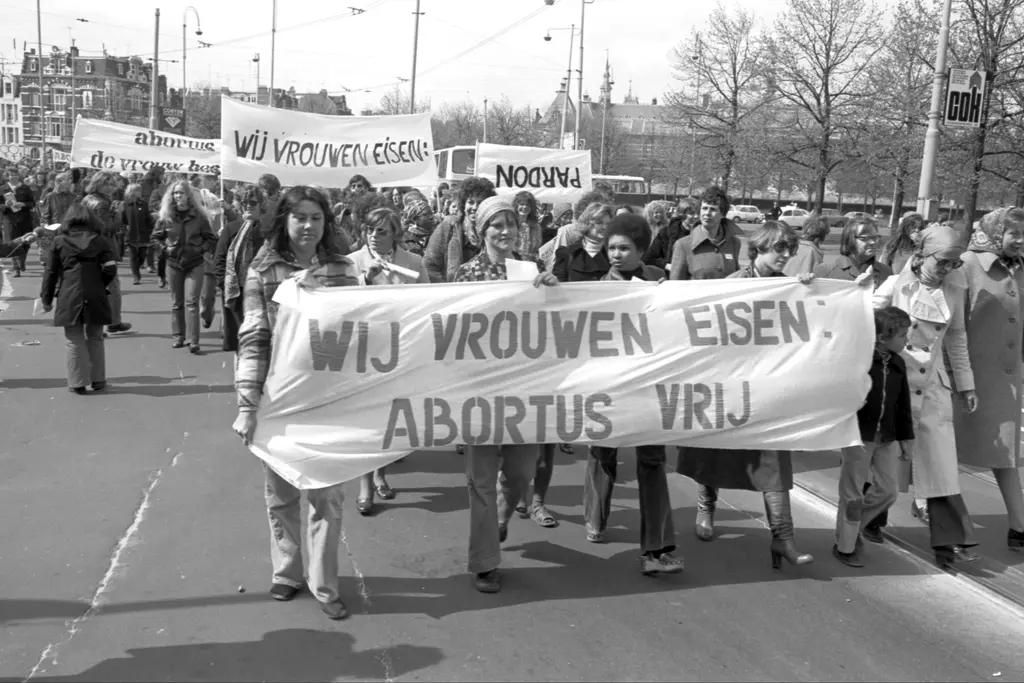
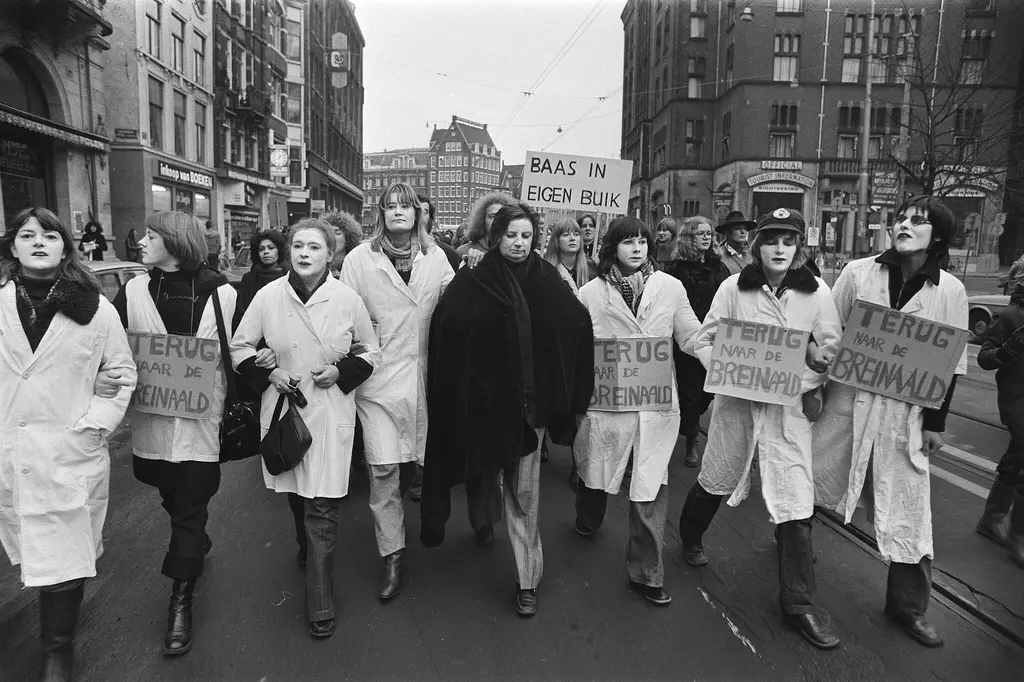
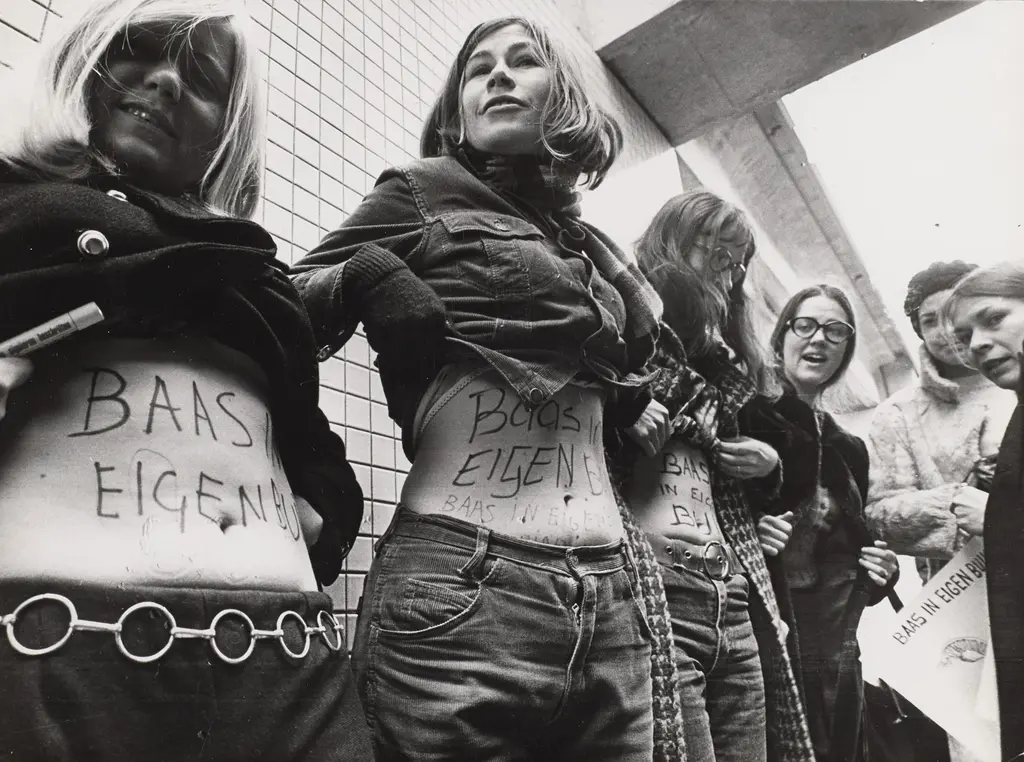
The road leading to the Termination of Pregnancy Act was arduous with lengthy negotiations. There was open criticism from the women's movement, including the five-day reflection period. They showed this with actions, as shown in the poster below.
The high level of Dutch satisfaction with existing abortion practices also contributed to the fact that abortion hardly led to political discussions.
1985: Scream for Life founded
Shortly after the Termination of Pregnancy Act was introduced, the counter-movement reorganised itself. In 1985, Bert Dorenbos, director of the EO, founded the Christian foundation Scream for Life. The organisation has been fighting against abortion with other anti-abortion organisations ever since, basing itself on Christian values and norms. As early as conception, there would be unborn life to be protected. Scream for Life uses various strategies, such as demonstrations at abortion clinics. Plastic foetuses were also sent by post to MPs, which gave a misleading picture of what a foetus looks like at 12 weeks. Scream for Life is co-organiser of the March for Life, which has been organised annually since 1992.
1987-1988: Women's Continuing Demands Committee
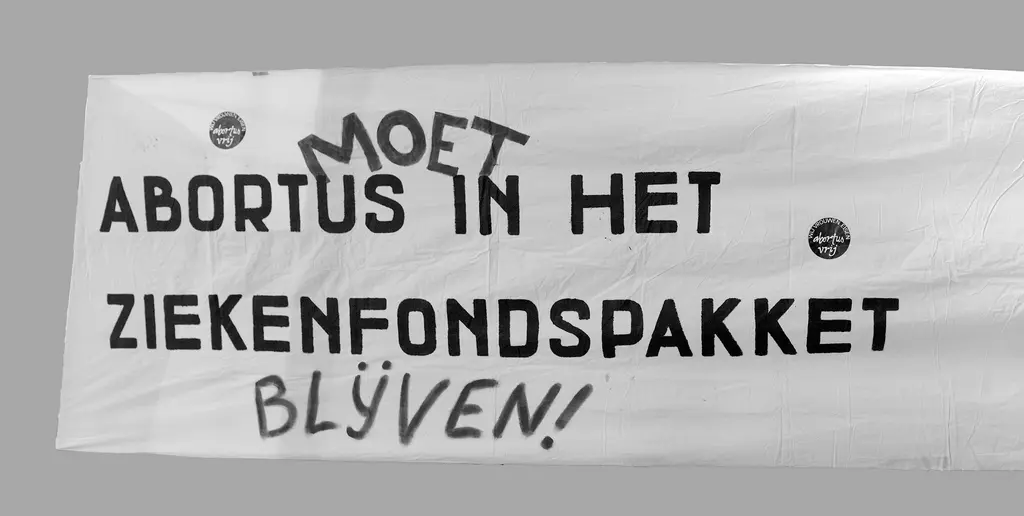
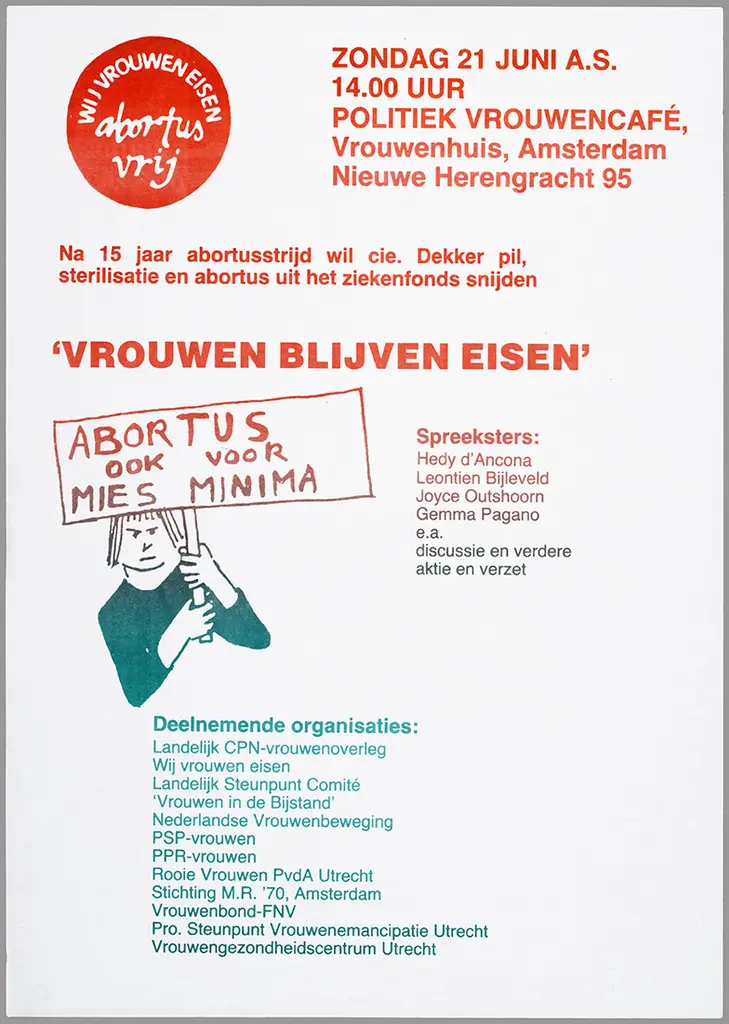
"Women continue to demand: the pill, abortion, sterilisation and pre-school/consultation care in the health insurance fund."
That was the headline on the bright red poster of the Comité Vrouwen Blijven Eisen in 1987. The initiative had been set up that same year to take action against the Dekker Commission's plans to reform the Dutch healthcare system. Under these, abortion would disappear from basic health insurance. Women from trade unions, political parties, women's organisations and the healthcare sector therefore organised themselves together in Vrouwen Blijven Eisen.
1999: Women on Waves founded
Abortion in a sailboat on international waters: it sounds like an impossible task, but Rebecca Gomperts does it. Since 1999, the Dutch doctor has been carrying out early abortions off the coast of countries where abortion is banned with her organisation Women on Waves. Women are picked up at the port and taken to the larger ship, where a mobile abortion clinic is on board. Here the woman can legally get an abortion in a safe way, as on international waters, Dutch abortion law applies to the Dutch boat. The boat has already sailed out to many different countries, including Ireland, Poland, Portugal and Mexico. In 2005, Gomperts started the Women on Web initiative, which offers online consultations on abortion and sends abortion pills through the post.
2005: First evaluation of the Termination of Pregnancy Act
In December 2005, the Termination of Pregnancy Act was evaluated for the first time. A survey of 95 professionals (such as abortion nurses and heads of abortion clinics) and 57 women who had had abortions showed that the law worked well and was well respected. The law was not changed. However, the enquiry committee did recommend abolishing the five-day reflection period, but the government did not adopt that advice.
2011: Abortion Act introduced on BES islands
In 2010, the Netherlands Antilles ceased to exist as a country within the Kingdom of the Netherlands. Curaçao and Sint Maarten, like Aruba before, continued as separate countries within the Kingdom of the Netherlands. Abortion remained illegal there, as the Netherlands had decided in 1981, but in practice it was tolerated. In Curaçao, women can visit their GP up to 12 weeks. On St Maarten, abortion is also done in the second trimester by both GPs and gynaecologists.
On Bonaire, Sint Eustatius and Saba, also known as the BES islands, abortion legislation did change after 2010. These islands were incorporated into the Netherlands as special municipalities. Until then, abortion was tolerated there. On Bonaire, women could go to their GP for an abortion up to 9 weeks. Women from Sint Eustatius and Saba were referred to Sint Maarten. Sometimes women used illegal drugs or herbs.
On 10 October 2011, the 1984 Dutch abortion law was introduced in the BES islands. General practitioners had to apply for an abortion licence. Abortion was now legal up to 24 weeks, but there were no doctors on the islands who could perform abortions after 12 weeks. The new law met with resistance from some: it was felt that it had been imposed without consultation and that local norms and values had not been taken into account.
2017: SheDecides established
In January 2017, then US President Donald Trump introduced the'Mexico City Policy', also known as the 'Global Gag Rule'. This law had been in place off and on since 1984 and stated that foreign NGOs were no longer entitled to US government funding if they performed abortions in developing countries, disseminated information on safe abortion, or conducted research on abortion.
In response, Rutgers wrote a letter to Foreign Trade and Development Minister Ploumen calling for action. As a knowledge centre for sexuality and sexual health, Rutgers is also active in developing countries and was concerned about the impact on women there.
That same month, Minister Ploumen founded SheDecides: an international organisation dedicated to ensuring women and girls' access to sexual education, contraceptives and safe abortion. The cabinet gave a start-up donation of 10 million euros. The initiative also received considerable international attention and donations poured in. By September 2017, more than 60 countries supported SheDecides and three hundred million euros had been raised. Even after President Biden withdrew the Mexico City Policy in 2021, SheDecides remained active.
* By 'abortion' in this timeline, we refer to 'abortion provocatus', or the deliberate termination of a pregnancy.
** From a brief telephone conversation with Frederieke, with whom I came into contact through a call to speak to individuals who have experienced an abortion in recent years or who have come into contact with the issue of abortion.