Dolle Mina was bold, playful and media-savvy, but also very white and straight. As a result, not everyone felt at home there. How do representatives of two other feminist action groups from that era view Dolle Mina?
Dolle Mina was bold, playful and media-savvy, but also very white and straight. As a result, not everyone felt at home there. How do representatives of two other feminist action groups from that era view Dolle Mina?
Gharietje Choenni (69) usually wears trousers. So when she turned up at a party wearing a skirt, it caused a stir. “Hey, Dolle Mina,” people called out, “aren’t you a feminist any more?” Choenni, who was mainly involved in the Surinamese women’s movement in the 1970s and 1980s, laughs at the memory. “In the Surinamese community, too, Dolle Mina is synonymous with the second wave of feminism,” she says now. “Even though people might not even know what that term actually stands for.”
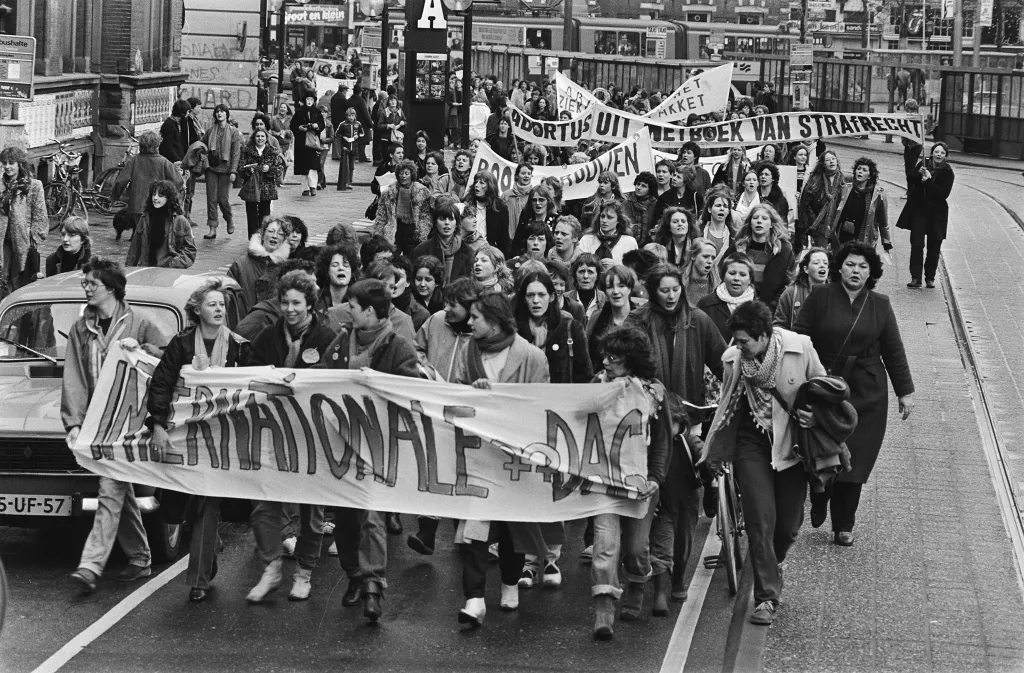
And so it is that Choenni, too, is mistaken for a member of Dolle Mina, even though she was never part of that group. The feminist action group Dolle Mina carried out its first protest in January 1970. Around ten women and men stormed the all-male Nyenrode University, demanding that it be opened up to women as well. Choenni felt drawn to the Dolle Mina’s playful protests. “I thought their directness had a certain appeal. They achieved much more than some other groups, which were a bit more laid-back.”
Dolle Mina has managed to etch itself into the collective memory, perhaps more so than other feminist action groups of that era. The group’s media-friendly actions – such as whistling at men in the street, storming Nyenrode and the still-famous slogan ‘boss of my own womb’ – have certainly played a part in this.
At the same time, these actions distract from the fact that Dolle Mina was a predominantly white, young, middle-class and heteronormative group. And not everyone felt at home within that group. How do the leading figures of two other feminist groups from that era view Dolle Mina?
"But our Black sisters do not share the experiences of racism that we Black women have"
Racism
She is now conducting research into the history of Surinamese people of Indian descent; in the 1970s, Gharietje Choenni was a student in Leiden. At that time, she was the only Black student in her faculty. Around that time, during the second wave of feminism, ‘women’s discussion groups’ became a phenomenon.
In these groups, women shared their experiences of being women and the challenges that came with it. “At my university, I ended up in a discussion group with Black women, mainly of Surinamese and Antillean descent,” says Choenni. “The group had been set up by a Black woman from another faculty.”
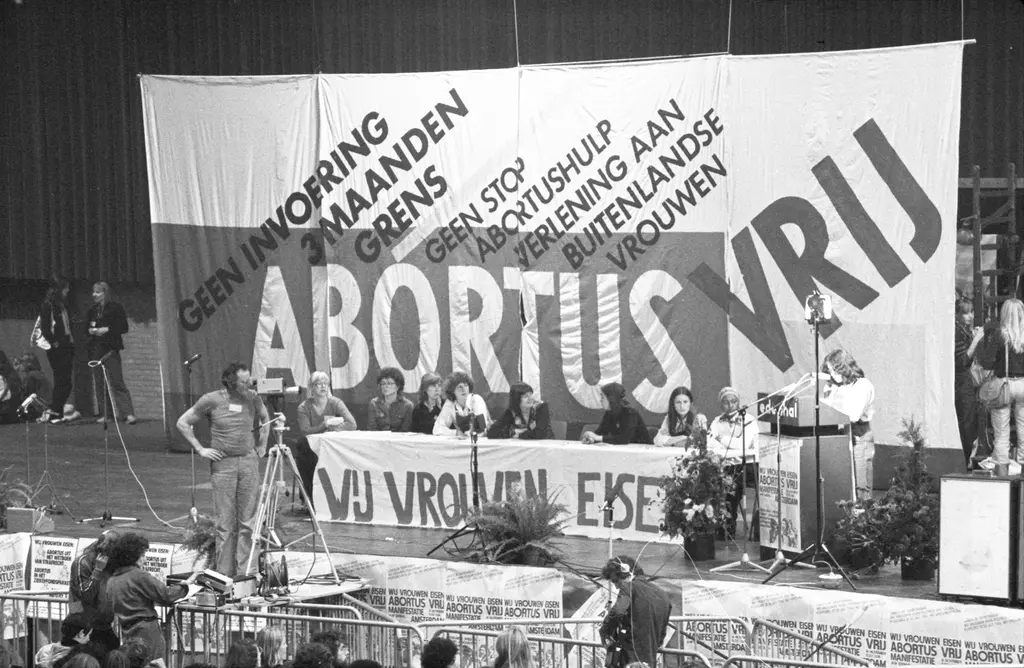
Many of the issues discussed in women’s discussion groups – such as the right to abortion – are universal to the female experience. “At university, I also worked exclusively with white people; I was used to it. I might well have felt at home in a group like Dolle Mina.” But for Black women who weren’t used to that, joining a group consisting mainly of white women was a huge hurdle, explains Choenni.
"At that time, there was no such thing as a dignified, visible life for lesbians"
Lesbian feminism
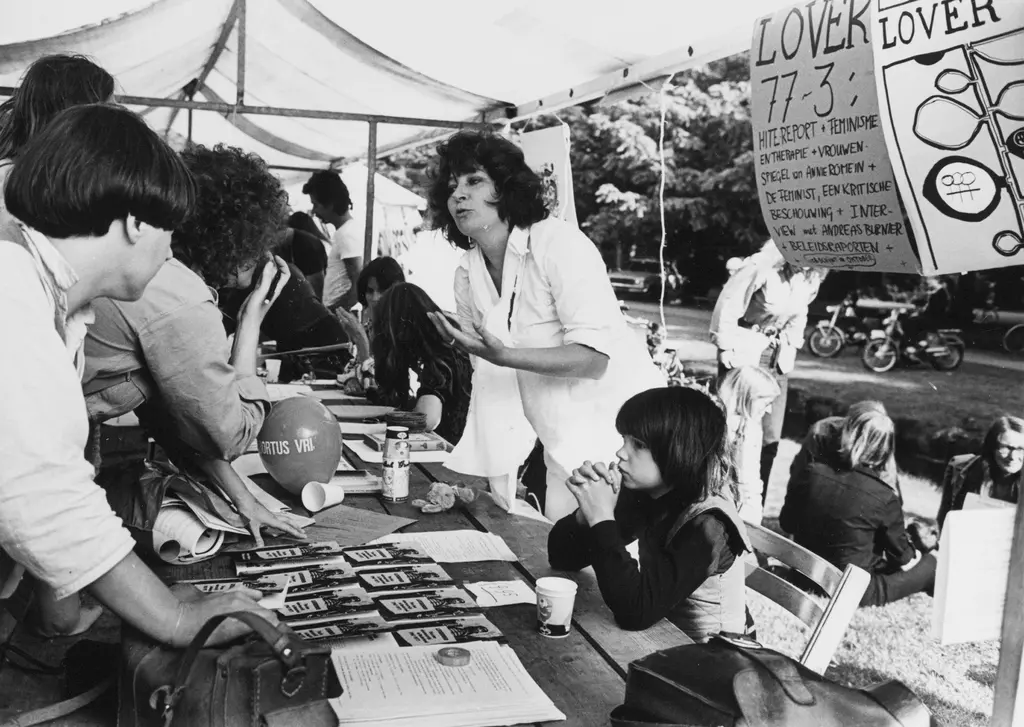
Choenni isn’t the only one who decided to pursue her feminism outside Dolle Mina. “I heard from others that women’s discussion groups were exciting and fun,” says Maaike Meijer (71). “But you were all just sitting there solving hetero problems.” Meijer – a student in Amsterdam during the second wave, later a professor of gender studies and now a biographer and publicist – wanted to combine her lesbian identity with feminism.
During her student days, she sought out radical feminists and joined the lesbian discussion group Purperen Mien. In 1972, four members, including Meijer, founded the lesbian action group and the magazine of the same name, Paarse September, from within that group.
Paarse September explicitly rejected the prevailing heteronormativity and spread the deliberately provocative message that being a lesbian is a political choice. “We no longer believe in feminists who are unwilling, on principle, to give up their heterosexuality…”, writes Meijer in the magazine’s first issue, “…and who, as a result, will simply be more subtly integrated into the existing oppression of women.”
'We need to be more radical'
Dolle Mina, Paarse September and the black and migrant women’s movement agreed on some issues. “Lesbian women can also be raped and become pregnant against their will,” says Meijer. And Choenni herself took part in Dolle Mina’s abortion demonstrations.
There were plenty of differences too. “Dolle Mina tried to avoid any association with lesbianism,” says Meijer. “That wasn’t sexy. The image of lesbians at that time was very negative: unattractive, man-hating women.” She believes that, during the second wave, nobody questioned the naturalness of heterosexuality – not even Dolle Mina. “It was a fun group with a brilliant flair for provocative actions and symbolic politics,” says Meijer. “But they were also incredibly straight. They even made use of their attractive female figureheads. And we thought: it needs to be much more radical.”
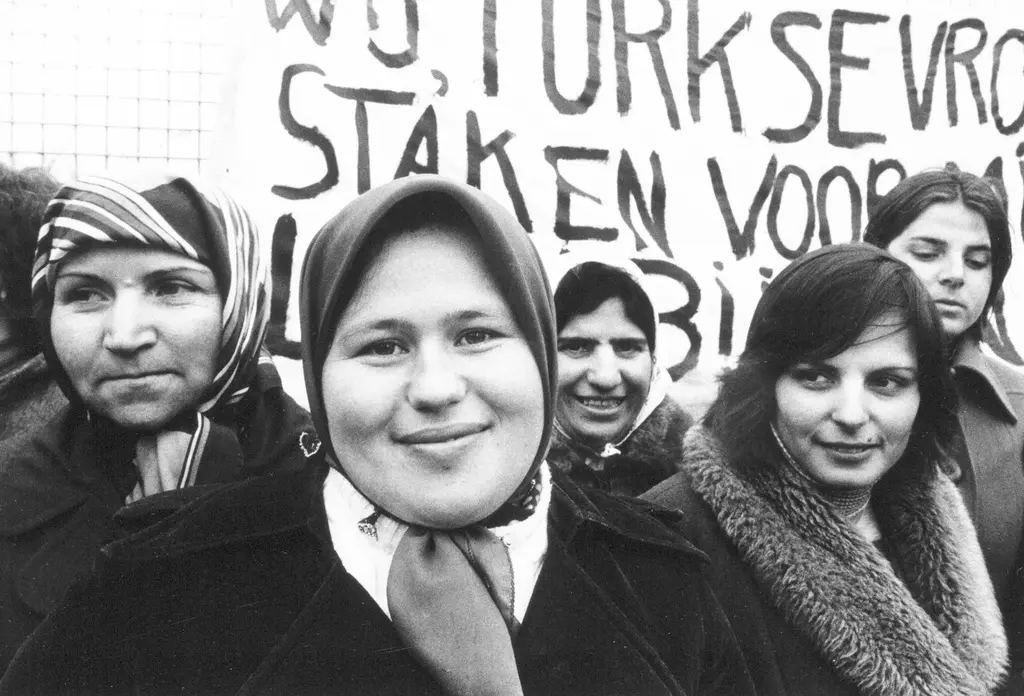
In 1980, Choenni was one of the founders of Ashanti, an independent Marxist women’s magazine for and by Surinamese women. That group had different causes than white feminists. “We felt more connected to other countries outside the West, where there was widespread poverty,” says Choenni. “Ashanti focused mainly on poorer women. That was something Dolle Mina, for example, didn’t really concern itself with at the time,” says Choenni.
Choenni also believes that the reason Dolle Mina in particular stuck so firmly in the collective memory was down to its style of activism. “The Dolle Minas appeared in public. And they were also attractive young women and men. That attracted attention.”
“The fact that movements are reduced to the tip of the iceberg and everything is scaled down and narrowed is characteristic of historiography,” says Meijer. And, unlike Dolle Mina, Paarse September disbanded after a relatively short period. “After a year and a half, it became very tiring,” says Meijer. “We realised that our ideas were getting stuck with us. Other groups could always invite one of us to their meetings, where you could then disagree with them. After a while, we thought: let’s do it ourselves!”
Blindness
Can you really blame Dolle Mina for the lack of diversity? The current feminist movement is no longer nearly as white and as straight as it used to be. “Dolle Mina simply shared the same blindness that everyone had back then,” says Meijer. “Is it understandable that my own mother thought it was a disaster when I told her I was a lesbian? That generation was indoctrinated with an image of what was ‘normal’. It’s all too easy to pass judgement on that with the benefit of hindsight.”
It would have been nice if Dolle Mina had paid a bit more attention to women of colour, Choenni thinks, but that’s easy to say with the benefit of hindsight. “Thanks to the Black Lives Matter movement, racism has really become a topic that can be discussed,” says Choenni. “It wasn’t until the second half of the 1970s – five years after the first Dolle Mina members stormed Nyenrode – that the first movements of Black and migrant women emerged.”
That makes sense, Choenni believes. “Many women from Suriname or Turkey, for example, were still trying to find their own place in society in the early 1970s,” she says. “Only once you’ve put down roots can you start organising your own initiatives. Had Dolle Mina emerged back then, I would have been furious about the lack of diversity.”
And yes, racism certainly existed in the 1970s too, says Choenni. But Dolle Mina must be seen in the context of its time, she argues. “Diversity was simply too far-fetched for them. And you can only stand up for others if your own position is strong.”