Aletta Jacobs is the most famous feminist in Dutch history. She is known as the first female doctor and an ardent advocate of women's suffrage. At the beginning of the 20th century, Jacobs travelled around the world to stir up the suffrage struggle beyond Europe. Ena Jansen read the travel letters she wrote from South Africa and the Dutch East Indies.
Aletta Jacobs is the most famous feminist in Dutch history. She is known as the first female doctor and an ardent advocate of women's suffrage. At the beginning of the 20th century, Jacobs travelled around the world to stir up the suffrage struggle beyond Europe. Ena Jansen read the travel letters she wrote from South Africa and the Dutch East Indies.
The forceful, authoritarian attitude that made Jacobs so memorable as a feminist takes on a sour undertone in light of colonial relations in both countries. Her stories of energetic whites, racialised blacks and civilised natives betray an unadulterated colonial outlook.
Between the summer of 1911 and the winter of 1912, Dr Aletta Jacobs made a 16-month trip to Africa and Asia. She was accompanied on this by Carrie Chapman Catt, a wealthy American widow and chairwoman of the World Confederation for Women's Suffrage. The purpose of the trip was to stir up the struggle for women's suffrage beyond Europe. The ladies' audience, however, consisted largely of white settler women. There were hardly any attempts to involve black and Asian women in their awareness campaign. However, the travellers did conduct a lot of research along the way on education, work and health of African and Asian women. Jacobs reported her experiences in a series of letters, which were collected in 1913 in Travel Letters from Africa and Asia - along with some letters from Sweden and Norway.[1]
Jacobs and Chapman visited South America, some East African countries, Egypt, Palestine, Ceylon and the British East Indies, the Dutch East Indies, the Philippines, China, Japan and Russia. Travel Letters from Africa and Asia consists of two thick volumes, totalling 715 pages. Proportionately much attention is paid to South Africa and the Dutch East Indies: a token of Jacobs' personal interest, but also a sign of the importance of these countries to the Dutch people at the beginning of the twentieth century.[2]
I therefore concentrate in this article on the letters from South Africa and the Indian archipelago. The travel letters were originally published in article form in De Telegraaf, a way to finance the trip, which must have cost a fortune.[3] Shortly after Jacobs' return, the articles were published in book form. By his own admission, Jacobs wrote for hours every day, and the travel letters "have therefore become (...) pure prints of the impressions I received". That the letters were intended for a general readership limited her in terms of topics and digressions 'less appropriate in newspaper articles.'[4]
However, Aletta Jacobs' travel journals have received very little publicity and have never been reprinted,[5] perhaps because this trip was only one of Jacobs' many achievements. In the collective Dutch memory, she plays a particularly important role as a doctor and as a (domestic) feminist. As her biographer Mineke Bosch recently pointed out, Aletta Jacobs (1854-1929) is impossible to imagine our cultural heritage without.[6] Completely against the spirit of the times, she finished high school, went to university and became the first female doctor in April 1878. She obtained her doctorate and had a medical practice in Amsterdam for twenty-five years - until 1904. She then put all her energy into the fight for women's suffrage, which, incidentally, she had championed since 1883. It was only in 1919 that parliament agreed to women's suffrage and Queen Wilhelmina gave her approval to the law. Seven years before Aletta Jacobs's death, during the 1922 elections, women were allowed to vote for the first time.[7] Thus, although Jacobs was an extraordinary woman, she was not an "indomitable, eccentric blue-collar" whose only merit was her travelogues, as was sometimes true of other travelling women at the beginning of the century.[8]
The book Travel Letters from Africa and Asia Ruler's View
A few years ago, Sara Mills published the book Discourses of Difference: An Analysis of Women' s Travel Writing and Colonialism. In it, many post-colonial ('post-Said') standpoints can be found, providing a useful handle for analysing Jacobs' Travel Letters.[9] Mills distinguishes between the texts of men and women; after all, production and reception took place in different contexts. Texts by women often contain a strange mixture of femininity and colonialism. Femininity in the sense that women do not speak with the same unflattering colonial voice as men, nor look around with the same 'ruler's gaze'. [10] Colonialism in the sense that women's texts are often as stereotypically colonial in content and imagery as men's texts.
Analogous to the contradictory mixture of feminism and colonialism, the writers of the nineteenth centuries faced different power structures in the early twentieth century. On the one hand, as middle-class women, they faced patriarchal power; on the other, they themselves exercised colonial power over the peoples in the countries they described. The simultaneous coincidence and conflict of these two power structures largely define the style of the travel accounts written by women.[11]
Several aspects of Jacobs' texts are characteristic of female discourse. For example, like other traveller women, Jacobs cannot help emphasising that she and MrsCatt are travelling around chaperoned and that 'in spite of this' nothing happens to them. As Mills states, this seems intended 'to point out to the reader that the colonised country is so much under (...) control that even women can travel around it without the "natives" daring to bother them.'[12] This is true of Rhodesia, where the two women travel by train to Victoria Falls. But it is even more true of the Dutch East Indies, where Jacobs is extremely pleased with the behaviour of "our natives" among whom they venture. Everything seems safe and under control. It may be assumed that this situation is due to the omnipresent colonial power, which manages to put a check on the 'uncivilised tendencies' of the natives.
A good example of this is a trip to Java. Jacobs and Catt are each carried by six men in so-called 'tandoes' (palanquins). The trek goes from the mountain village of Nongko Djadjar to the Ramboetmajo waterfall and back again. Once they have been safely delivered to their hotel and are sitting on the veranda, Jacobs remarks: 'In what country in the world is it possible that two ladies, completely unarmed, with a dozen men from the people, could dare to wander through a dense forest for six hours without feeling a moment's fear that something untoward might happen to them.' Then she lists the opportunities the men had to do something to them, to conclude: 'From a people that is so civilised, moral and high-minded by itself, some good can grow with good leadership. On that leadership, however, it comes down to it.'[13]
Mutiny breaks out the following day. Jacobs travels on horseback this time, finding the sedan chair too uncomfortable, but suddenly the porters transporting Mrs Catt refuse to take her any closer to the volcano Bromo. Jacobs looks for the cause of the refusal to be the natives' fear of supernatural powers inside the crater. The possibility of mutiny does not occur to her. Thanks to this 'explanation', her rock-solid faith and trust in colonial rule remains intact.
Worldly
The fact that Jacobs pays extraordinary attention to children and women, and to their mundane but no less important life circumstances, can certainly be called feminine. 'Unfeminine', on the other hand, is that she only very sporadically refers to her own clothing and physical weakness. In South Africa, she always attributes her fatigue to her performance as a public speaker - verily not the most feminine occupation in those days - while in the Dutch East Indies she is understandably languid from the heat. If in South Africa she barely mentions hotel rooms and meals, in the Dutch East Indies she brings them up a little more often. But then very positively, as an indirect compliment to the civilising influence of the Dutch.
Timidity and 'super-feminine' behaviour are far from Jacobs' mind; her attitude is confident, sometimes even bossy. While this argues in her favour, anyone reading the travel letters will soon realise that Jacobs presents a much more forceful colonial sound than most other travel writers. Once in the colonies, this advocate's stance in the struggle for suffrage seems to change dramatically. Her utterances suddenly show great similarities with imperialist and nationalist thinking.
She often describes the people of South Africa and the Dutch East Indies in detail, in a way that sometimes even looks ethnographic.[14] Remarkably, at the same time, she maintains a great distance from the people one would expect - from a modern point of view - to see as her peers; as marginalised brothers and sisters, people without political power. But on closer inspection, Jacobs' authoritarian attitude is an extension of the way she operated in Europe. There, for instance, she was heavily disapproving of the behaviour of British suffragettes. This once elicited this comment from the Dutch critic Aukje Holtrop: 'Aletta Jacobs, the successful fighter against authorities, had herself become an authority, a very old-fashioned, world-weird authority by our standards.'[15] Jacobs' discourse is dominated by a typically colonial voice: self-confident, emphasising knowledge, authority, action and fearless action.
While there are many similarities in the way Aletta Jacobs describes South Africa and the Dutch East Indies, there are also major differences. This is mainly due to the political relations at the time. Formally, the Netherlands no longer had anything to do with South Africa, since it had lost the Cape Colony to the British in 1804. By contrast, the Indian archipelago was still a precious pearl in the Orange's crown.
In South Africa, Jacobs describes how she found herself among the once-proud Republican Afrikaners, who had become British subjects after losing the Boer War in 1902. Like many of her compatriots, Jacobs had been deeply concerned about the fate of the Boers during the War of Freedom from 1899 to 1902. She had even wanted to travel to South Africa to provide medical assistance in the women's concentration camps.[16]
But although she is clearly very elated to meet ex-generals from the Boer army - such as old President Stern, Louis Botha and J.C. Smuts - she does not support the Afrikaners unconditionally. On numerous issues, she distances herself from them and makes disparaging remarks about South African conditions compared to those in Europe. Being part of the cultural and intellectual elite of a colonial power renowned at the time, she looks at white South Africans with a mixture of solidarity and colonial contempt. This attitude partly explains the detached, reprimanding and accusatory tone of her commentary on race relations in South Africa.
Jacobs claims that her "speaking to coloureds, or fondling the black Negro children" means that she "maintains herself with a coloured person on a footing of equality."[17] This self-perceived equality is highly relative. A few times her attitude even leads to, in our modern eyes, extremely insensitive remarks. For example, Jacobs writes somewhere, without a trace of irony: 'Mrs Catt has already expressed the wish to get such a little nick on her birthday from us, but it must not get any bigger.'[18] Someone who consistently describes the black population as 'little children' and wants to keep them small, makes a sharp distinction between their own, civilised identity and the immature or 'not-yet-humanised Other'.[19]
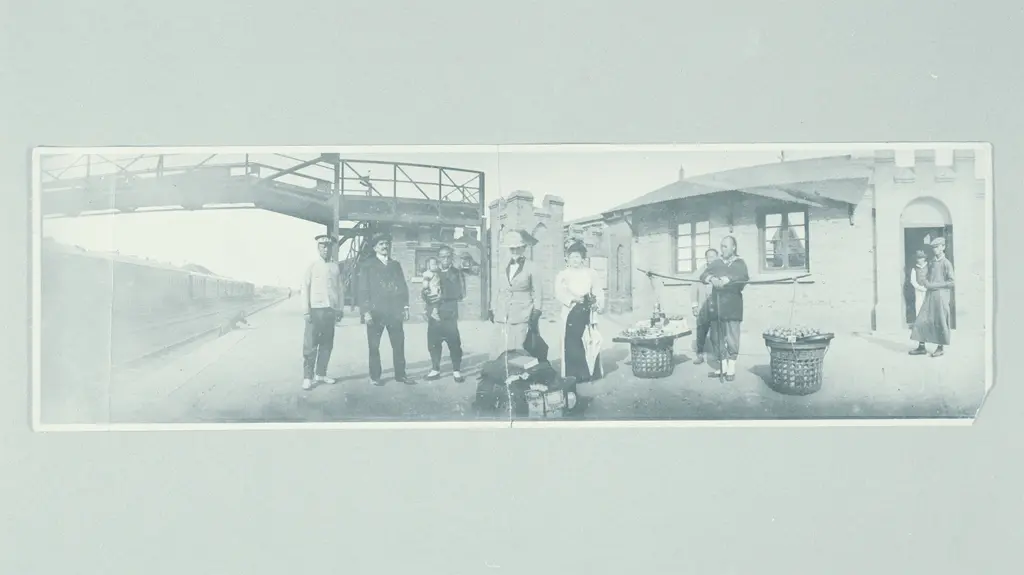
Aletta Jacobs and Carrie Chapman in China, 1912 Apartheid
Regarding the Dutch East Indies, Jacobs strikes a different tone. As soon as the doctor sets foot in the Dutch East Indies, she immediately falls prey to a proud unstoppable possessiveness that colours all her perception of the people of Java and Sumatra. She does not doubt for a second the legitimacy of Dutch rule over the distant Asian islands. She powerfully expresses the colonial voice by characterising the East Indies as the self-evident and 'natural' object of colonial rule. When Jacobs criticises certain aspects of colonial rule, it is only to improve colonialism, not to eliminate it.[20]
Many comments show how proud she is of the Dutch administration of the East Indies. For example, she writes: 'What a power of uncultivated gifts lies yet to be reaped for our country, if we open to the Javanese women, as well as to the men, the opportunity for development.'[21] She also believes that 'the Netherlands (...) has made of the still much hotter Java a country, where one can live as peacefully and safely as in any other civilised country'. She calls the Javanese 'satisfied'. 'All praise the way this country is governed by the Netherlands,' she stressed.[22]
Her comments on race relations in the East Indies are much less condemnatory in tone than her critical reflections on South Africa, Mozambique and the British East Indies. This is probably due to her belief in the righteousness of the Dutch regency. In South Africa, Jacobs perceived herself "as a maternal friend" and the natives as "children ... who need only guidance."[23] In the Dutch East Indies, on the other hand, she only rarely refers to the locals as "children"; she even refers to them as "her native sisters."[24] In general, however, her attitude is very possessive ("our natives"). Her writing is full of parental imagery: a sample of rhetoric more often used to justify colonial rule.[25]
So is there nothing to shake Aletta Jacobs' belief in the legitimacy of European rule in South Africa and the Dutch East Indies? While Jacobs has a disapproving attitude towards strict apartheid in the countries she visits (e.g. South Africa and the British East Indies), she never seriously considers the possibility that the indigenous people might revolt and one day want to govern their own country.[26] She is completely upset when she reads about a political movement pursuing 'the Indies for the Indos' in the Dutch East Indies Sindanlanka in The Magazine. She later learns to her relief that it is 'fortunately' only a fictitious party, conceived by editor-in-chief Douwes Dekker. However, this incident does spur her to become an even more outspoken advocate of Dutch guardianship of the Indians. Now if only the Javanese and Malaysians could be persuaded to consider themselves primarily Dutch. Then the problems would be out of the world, Jacobs reasoned, following the lead of the Dutch Orientalist Snouck Hourgronje.[27]
'Clothed natives'
Two issues that animated Jacobs' heart and pen deserve special attention. These concern, firstly, the 'coloureds' - the people of mixed race - she saw in South Africa and, secondly, the landscape of the Indian archipelago. Both subjects are important stylistic figures in colonial discourse. In South Africa, Aletta Jacobs speaks rather obsessively and in negative terms about mixed-race people, while she speaks relatively admiringly of blacks as 'upright children of nature'. Furthermore, she does not have a good word to say about blacks who dress in western attire and try to adopt western customs. She describes them as 'all-mocking' and 'all-delusional'. She even readily adopts Mrs Catt's comment that '[a] dressed-up native looks unpleasant'. Only to then turn decidedly lyrical: 'Our beautiful, slender, naked men and women, with their smoothly polished, ebony skin, dressed only with coral strings, were infinitely more interesting.'[28]
After Jacobs spoke out in glowing terms about racially pure blacks and 'half-breeds' in South Africa, there could be no misunderstanding among Dutch readers about her position on racial purity and racial mixing. The superiority of Europeans was to be maintained by negatively treating mixed-race people. After all, they threatened the colonial idea of two separate worlds - one for Europeans and one for indigenous people.[29]
A few months later, in the Dutch East Indies, she cleverly managed to sidestep an explicit discussion on the thorny issue of racial mixing. After all, a - large part of the Indo-Dutch community already consisted of descendants of Dutch fathers and indigenous mothers. Only once does she write about this, when she visits an agricultural school attended by 'half-blood children'. She describes the school in such a way that it becomes clear that, in her view, these children need special treatment before they can be included in society. She sees them as a social problem and even calls them "poor victims."[30]
Overall, Aletta Jacobs' style is journalistic. Therefore, what makes her Travel Letters worth reading are mainly the interesting topics, occasionally her humour and the clear way she presents her observations. Still, it is possible to pinpoint passages in her text where style rather than content comes to the fore. In such pieces, practical language does not always manage to overpower 'poetic' twin sister. Jacobs then makes use of all sorts of artifice defined by the formalists, such as patterning, the coarsening mechanism and delaying effects.[31] In certain places, Jacobs' text is even clearly 'poetic': stylistic features take over, adjectives pile up and sentence rhythm speeds up. Thus, the travel letters are full of enthusiastic descriptions of the landscape of the Indian archipelago.
However, the landscape did not only touch Aletta Jacobs in an aesthetic sense. She considered at least as important the potential usefulness of the land for the Dutch. She discusses the bays, towns and climate with this utility idea in, mind. The 'pure' native population serves to embellish the exotic but manageable environment. Their traditional dress, music and dance and their 'high level of civilisation' confirm that they remain in their assigned place in the colonial hierarchy. But more than their appearance, Jacobs is interested in their natural tendencies, such as varying degrees of obedience and industriousness, because these 'tendencies' determine the benefit they can bring to the Dutch.
Clearly, Jacobs travels around the Dutch East Indies as a representative of Eurocolonial entrepreneurialism. She tends to take a panoramic view; 'views' are frequently emphasised. Pratt argued a few years ago that such a European gaze, "taking in the spatial possibilities, at the same time consciously knows how to evaluate the possibilities over time - assessing the potential for a Eurocolonial future, in the form of raw materials that can be tapped, surpluses that can be traded, cities that can be built."[32] Jacobs, for example, makes serious proposals for the best location for a future university and for moving the main city from Batavia to Bandung. It is also worth noting that she finds farmland as beautiful as virgin landscape: the fulfilled promise alongside the (pre-)prospect of fulfilment.
'Negro star'
So how does Jacobs' colonial voice and her rather heartless ruler's view relate to the purpose of her world tour with Mrs Catt: the fight for universal suffrage? Her text shows that Jacobs - who was very successful in disregarding power restrictions on big-city women - made few efforts to help the colonies' inhabitants gain more power. The reason for this contradictory attitude lies in the fact that Jacobs, on the contrary, wanted to see the natives as "little children" and their land as "one vast, desolate plain, inhabited for the most part by natives, waiting, as it were, for energetic whites to bring it to cultivation."[33]
There remains a conspicuous silence in the Travel Letters around voting rights for the indigenous people of the colonies. This clearly shows that Aletta Jacobs never considered them her equals. It is tempting to dismiss this as an expression of the zeitgeist. However, a comparison with Jacobs' contemporary and I 'kindred spirit' Olive Schreiner shows that this is incorrect. Even before Jacobs sought out Schreiner (with great difficulty) in the small Karoo village of De Aar in South Africa, she was already describing her as a "blind negro woman."[34] During their meeting, which lasted a full day, Schreiner will certainly have been outspoken about the rights of black people. Her position on this was not ambiguous: 'What we strive for (...) is a South Africa (...) great in freedom (...), which offers every man and woman in the country, regardless of race, sex, language or colour, the greatest possible freedom and justice, greater than anywhere else in the world.'[35]
Jacobs' attitude towards indigenous people and their land led her to advocate suffrage for white South African women, conscious of simultaneously serving the cause of white South African men. These were bent on eliminating the few black men who did have the right to vote in the Cape Colony.[36] She apparently did not care about the political rights of indigenous people. Ironically, her visit to South Africa practically coincided with the founding of the ANC in 1912.
The section of the Travel Letters dealing with the Dutch East Indies proves that Jacobs' attitude towards the non-universality of suffrage was not limited to South Africa. Exceptionally, a suffrage meeting in Javanese Djokja is attended not only by Dutch and some Indo-Dutch women, but also by four Javanese princesses and two young Javanese trainee teachers. Of course, Jacobs does not take their presence as a sign that they seek self-determination and even independence from the colonial administration. According to her, it proves "that the Indian public is receptive to justice and eager to help support the struggle for women's suffrage in the Netherlands."[37] She thus explains the presence of the Indian women as a gesture of solidarity with the women in faraway Holland!
Such comments make it clear how Eurocentric Jacobs' thinking was. Despite the fact that she was a feminist and in many ways a progressive woman, a detailed reading of her travel letters shows that she was trapped in a colonial view of the world, like most of her contemporaries.