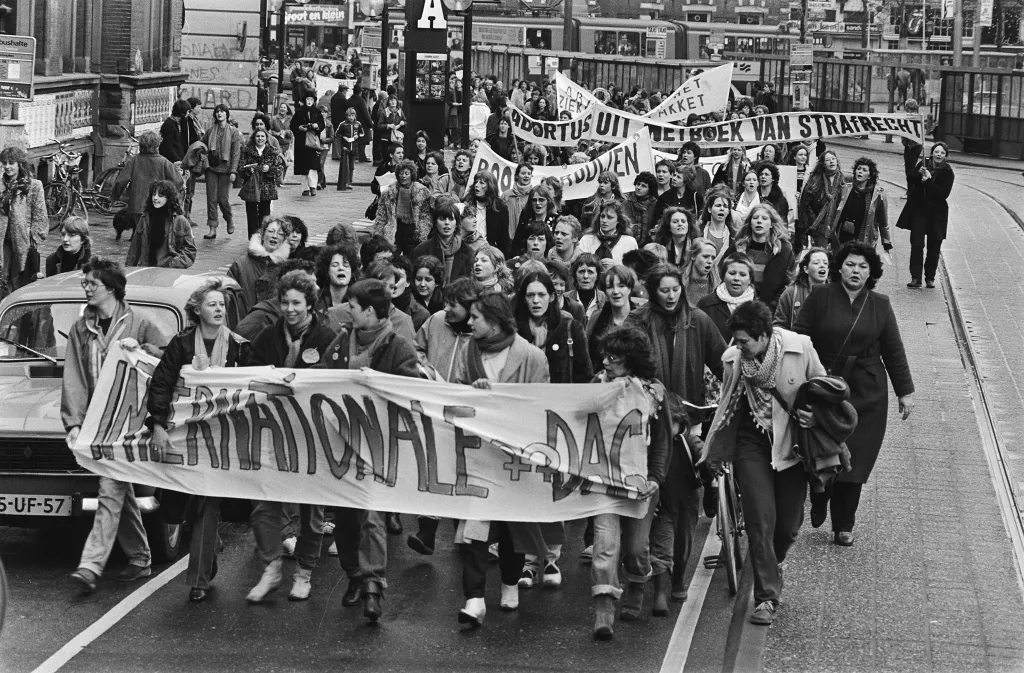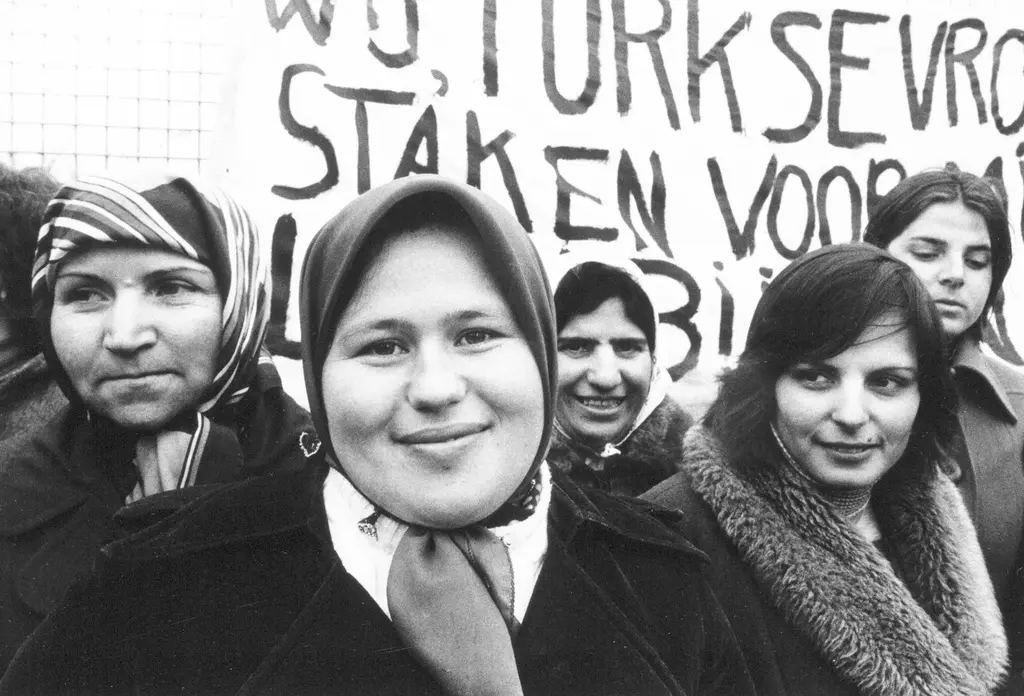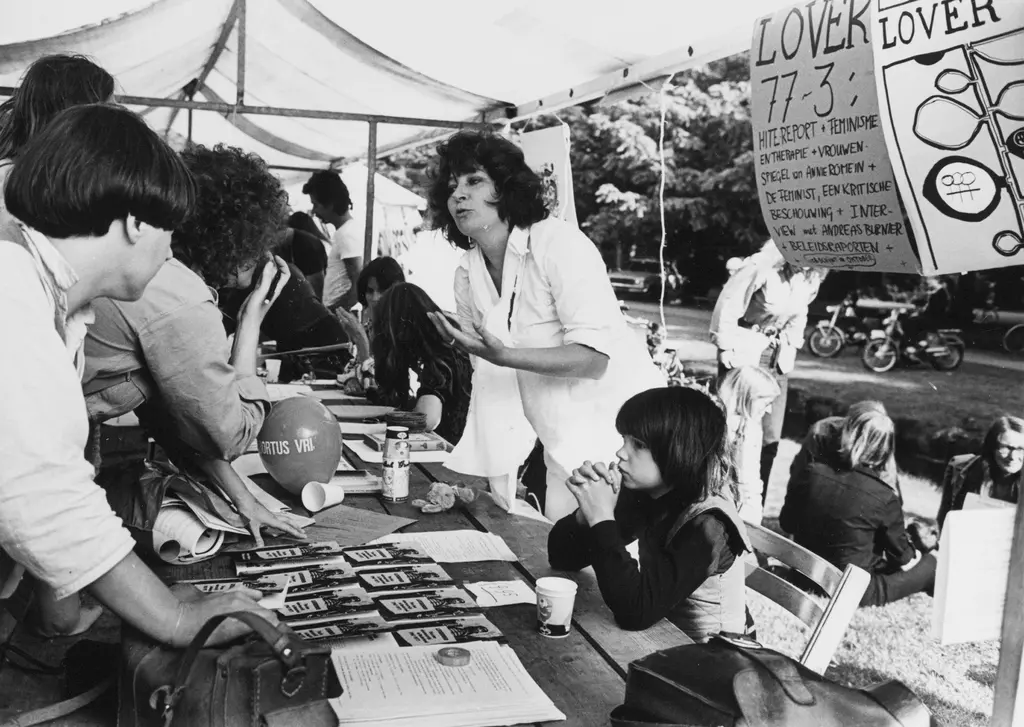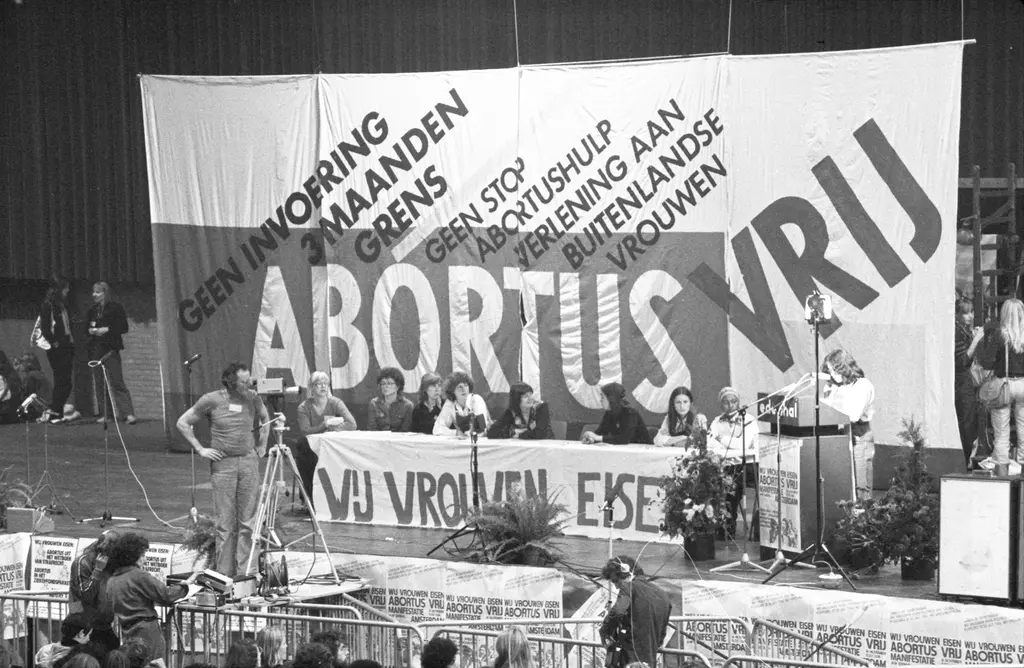
Much has changed in recent years when it comes to acceptance of differences between people and equal rights. Think more attention to gender equality, the rights of lhbti+ persons and openness about sexuality. Many people perceive these developments as a step forward. Yet there is also a growing movement that opposes them: the anti-gender movement. This article explains what exactly the anti-gender movement is, where it comes from and how it operates.
Much has changed in recent years when it comes to acceptance of differences between people and equal rights. Think more attention to gender equality, the rights of lhbti+ persons and openness about sexuality. Many people perceive these developments as a step forward. Yet there is also a growing movement that opposes them: the anti-gender movement. This article explains what exactly the anti-gender movement is, where it comes from and how it operates.
What makes this movement remarkable is that they are not only active locally, but also cooperate globally. With campaigns, political influence and spreading disinformation, they try to convince people of their views.
What is the anti-gender movement?
The anti-gender movement is an international movement of various conservative groups that oppose ideas about gender equality and diversity. It involves a broad network including radical right-wing politicians, political parties, religious and civil society organisations, academics, funders and opinion makers. While these groups are not all the same, they share a common vision: they want to preserve or restore a society in which traditional roles are central, with the family as the basis and clear differences between men and women.
According to researchers studying the anti-gender movement, David Paternotte and Neil Datta, it is misleading to see this movement as a reaction to gender equality (Botje, 2025). Instead, these groups use the term 'gender ideology' (term for everything they believe is wrong with gender) strategically to achieve their own political and social goals. In doing so, the movement spreads the idea that gender equality and thinking about gender and diversity have gone too far. gender equality is framed as a zero-sum game: the progress of one group comes at the expense of another. In addition, by gaining rights for one, other rights would be threatened, such as freedom of expression and 'men's rights'.
The movement is better understood as a form of mobilisation and campaigning. Indeed, it is not a local phenomenon, but an international movement mobilising people and groups against gender, sexual equality and diversity (Kuhar & Paternotte, 2017).
The anti-gender movement mounts attacks on various issues, including:
gender and gender equality
sexual and reproductive rights, including contraception and abortion
lhbti+ rights
human rights and diversity and inclusion policies
rights for children
laws against discrimination and hate speech
'Gender ideology'
A key term within the movement is 'gender ideology'. This is not a clearly defined term, but a catch-all term for everything the movement believes is wrong with modern ideas about gender and diversity. Precisely because the term 'gender ideology' is so vague and leaves room for interpretation, it can be used flexibly in different situations.
The movement opposes the idea that gender is more than just biological sex. It takes a binary view: there are men and women, and they each have their own role, with women seen as subordinate to men.
The birth of the anti-gender movement
The roots of the anti-gender movement lie in the 1990s. During that period, important international conferences took place, such as Cairo (1994) and the World Conference on Women in Beijing (1995), where agreements were reached on women's rights and sexual and reproductive health and rights. Conservative groups, led by the Vatican, opposed these developments on the grounds that they would threaten the binary distinction between men and women and the patriarchal division of roles.
From the 2000s, the movement continued to grow in Europe. Campaigns against, for example, sex education or open marriage emerged in several countries. During these years, the anti-gender movement began to use the term 'gender ideology'. The term is used to create doubt and resistance to new ideas about gender and equality.
The anti-gender movement focuses on limiting sexual rights, touching on what Richardson refers to as 'sexual citizenship'. This refers to the right to express oneself sexually, enjoy sexuality, and have access to sexual education and protection. Yet in many countries, citizenship is closely associated with heterosexuality. It is considered 'natural' and 'normal', which is reflected in policies and debates on sexual rights. This creates a situation where deviations from this ideal are seen as threatening (Richardson, 2000).
Since the 2010s, the movement has grown even stronger, partly due to the rise of right-wing populist politics. Right-wing populist parties and anti-gender movements share their discourse: they warn of the decline of traditions and family, and spread moral panic about the future of children (Kourou, 2020). According to them, 'gender ideology' is a product of Western elites who want to disrupt traditional society.
Disinformation and framing
A key strategy of the anti-gender movement is the use of disinformation to influence opinions. This is often done subtly, for instance by sowing doubt or portraying certain topics in an overly negative light. The term 'gender ideology' plays a major role in this. Because it is such a broad and vague term, it can be used to criticise all kinds of changes in society.
The spread of subtle disinformation - often presented as the voice of 'ordinary citizens' - is adopted and reinforced by right-wing parties. (Linders & Spierings, 2026) Ultimately, this leads to an apparent and sometimes actual shift in the social norm, to the detriment of all those outside it.
Examples from the Netherlands
In the Netherlands, too, we see how these strategies work. One example is the debate around the transgender law. In 2022, campaigns that suggested that changing gender would become very easy created a lot of controversy. This image was not true, but did create a lot of resistance. Eventually, the bill was withdrawn in 2025.
Another example is the controversy surrounding the age-appropriate sex education classes Spring Tickles (Duin, 2024). The organisation Civitas Christiana spread hatred and disinformation online about the Spring Fling.In doing so, the anti-gender movement deliberately played on parents' concerns.Scientifically based knowledge was undermined by dis- and misinformation. In the end, Civitas Christiana lost the lawsuit against Rutgers, expertise centre on sexuality.
Impact on acquired rights
The impact of the anti-gender movement can have major consequences. Rights previously accrued may come under pressure. Think of:
the right to abortion
equal distribution of work and care responsibilities
rights of trans people
freedom to express one's identity and sexuality
By influencing public opinion, the movement can ensure that what once seemed self-evident is once again the subject of discussion.
International influence
The anti-gender movement is strongly organised internationally. Groups cooperate across national borders and influence high-level policies, such as within the European Union and the United Nations. Funding and cooperation play a major role here. This allows the movement to grow globally and spread its ideas. Read more about how Atria researcher Maya Declich encountered the anti-gender movement at the UN Women Summit in March 2026 at a meeting organised by the Vatican.
Conclusion
The anti-gender movement is a broad and well-organised international movement that opposes developments in gender and equality. Through clever strategies, such as using disinformation and capitalising on feelings of insecurity, it manages to influence both public opinion and policy.
That is why it is important to understand this movement. After all, it is not just about an ideological debate, but also about which rights and freedoms will be preserved in the future.