...was never cooked because the ingredients were not available at all in the Japanese camps. It was created by the collective of imprisoned women who yearned for the normality in which their colonial food culture was the basis. Together with Van Dorp's diary entries, these documents form the complementary colours of a part of our colonial past.
...was never cooked because the ingredients were not available at all in the Japanese camps. It was created by the collective of imprisoned women who yearned for the normality in which their colonial food culture was the basis. Together with Van Dorp's diary entries, these documents form the complementary colours of a part of our colonial past.
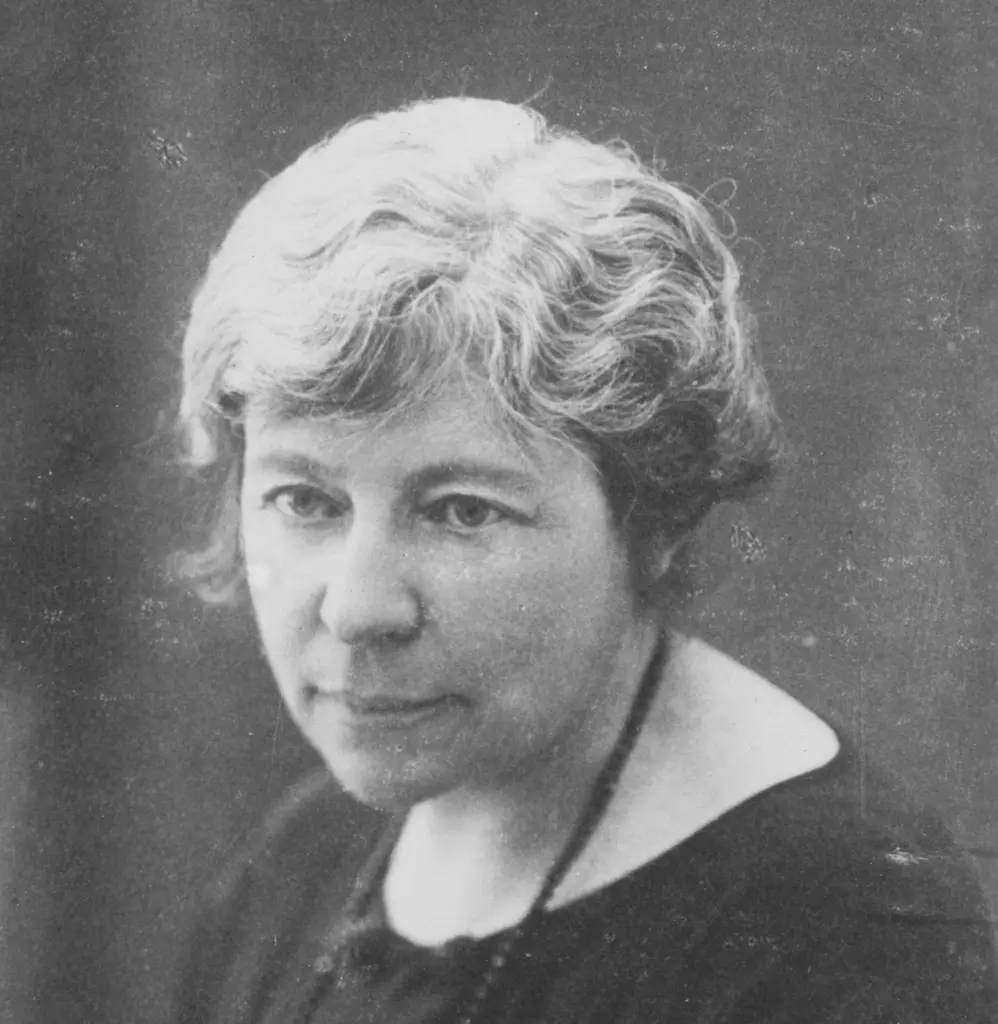
Lizzy van Dorp
Elisabeth Carolina van Dorp, born in 1872, was one of the first women in the Netherlands to enter hitherto male-dominated fields as a lawyer, economist and politician. Van Dorp had founded the Nederlandsche Bond voor Vrouwenkiesrecht in 1907 and published an English-language economic monograph in London in 1937, and planned to go to the United States after the war to continue publishing on economic theory. In 1940, she travelled to then-Dutch East Indies. She had hopes that World War II would pass the Dutch colony by. In 1942, she ended up as one of about 100,000 Indo-European and European civilians in various Japanese camps on Java. She died, aged 73, completely weakened, in camp Banjoe Biroe on 6 September 1945, two weeks after the Japanese surrender. Her archive is fully digitally accessible.
Recipes for the future
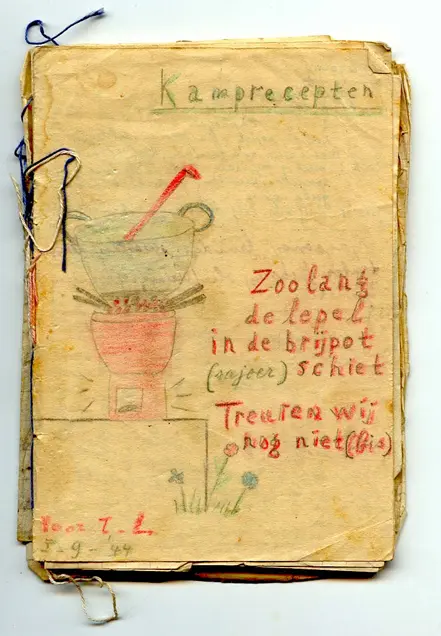
In Van Dorp's estate was a collection of recipes. She had received it as a present from her camp mates for her 72nd birthday on 5 September 1944. The collection consists of loose leaves; a jumble of paper that was scarce at the time, such as recycled envelopes, pages from books, manuals or forms. Some recipes were written down together or later commented on, as evidenced by different manuscripts in the same recipe.
Those who think the camp recipe book reflects what people ate in the camps are profoundly mistaken. It mainly featured ingredients that were actually missing in the camps: milk, cheese, eggs, meat, fruit, biscuits and desserts. A random page from the cookbook lists recipes for noodles, noodles, tomatoes with herring, cheese biscuits, cheese crackers, chicken soup belazer (with coconut milk), cheese and ham croûte, cottage cheese and bird's nest (mirror eggs in a ring of meat).
Collecting recipes was a collective and social activity through which women maintained the illusion of the ordinariness and temporality of camp existence and sublimated their constant hunger pangs. By talking and writing about what they liked and how they would prepare it, how they would set the table and feast together on all kinds of delicious food, women nurtured their hopes for a future in freedom without hunger. Van Dorps camp cookbook mirrors a colonial food culture that stands in stark contrast to the notes in her camp diaries.
Hunger, hunger, hunger
From September 1943, Van Dorp lived in the European camp Tjihapit II in Bandung, West Java, which housed 13,000 people. Cooking was done in communal soup kitchens or under the open sky on a wadjan (wok pan), as the image on her camp cookbook also shows. In her diary, on her birthday in 1944, she wrote: 'I have now happily learned to cook independently, of which I am very proud!' She also noted the daily portion of food:
"200 g of bread, 90 g of rice, occasionally a few stalks of celery, on medical prescription ¼ l of milk, 1 ounce of sugar a week, sometimes a little coffee, oil or a small amount of flour."
By January 1945, she had by now been transferred to Camp Ambarawa 9 near Semarang, the situation had deteriorated considerably. 'We all find life here increasingly unbearable,' van Dorp wrote in her diary that month. 'The main feeling is hunger, hunger, hunger. Always longing for the next meal, and always the knowledge that one will be equally hungry then. All the food consists of a 95-gram portion of rice with a small scoop of vegetables and a roll that is completely undercooked. Everyone gets weaker and weaker. The lack of sugar (+/- 350 grams per month) means we can hardly walk. Fruits almost never, for instance a sour rambutan (lychee) or nangka (Jackfruit), a delicious fruit! The extra tomato has also ended! I only get a little milk now.'
Snail soup
In May 1945, all women and children from Ambarawa were redistributed to other camps. Van Dorp ended up in Camp 10 in Banjoe Biroe, ten kilometres away from Camp Ambarawa. A military camp with prison rooms and barracks, even more sick and even less food. 5,400 people were detained here. After her arrival in Banjoe Biroe, Van Dorp reported in her diary about almost daily funeral processions from the camp.
She herself ended up in hospital again and from that point on, her last notes were only about food. On 25 May 1945, for instance, she noted that she had eaten a delicious snail soup. Her last notes are about a removal notice from her brother from July 1945, sent through the Red Cross. In August, she produced two emergency proxies in which she wished the contents of her camp bag to be returned to her brother in the Netherlands via survivors. This handbag was full of documents, utensils and her last birthday present, the camp recipe book. The camp bag reached her family in the Netherlands two years after the war. In 1999, the bag, along with the rest of Van Dorp's estate, was included in the IAV collection, now managed by Atria.