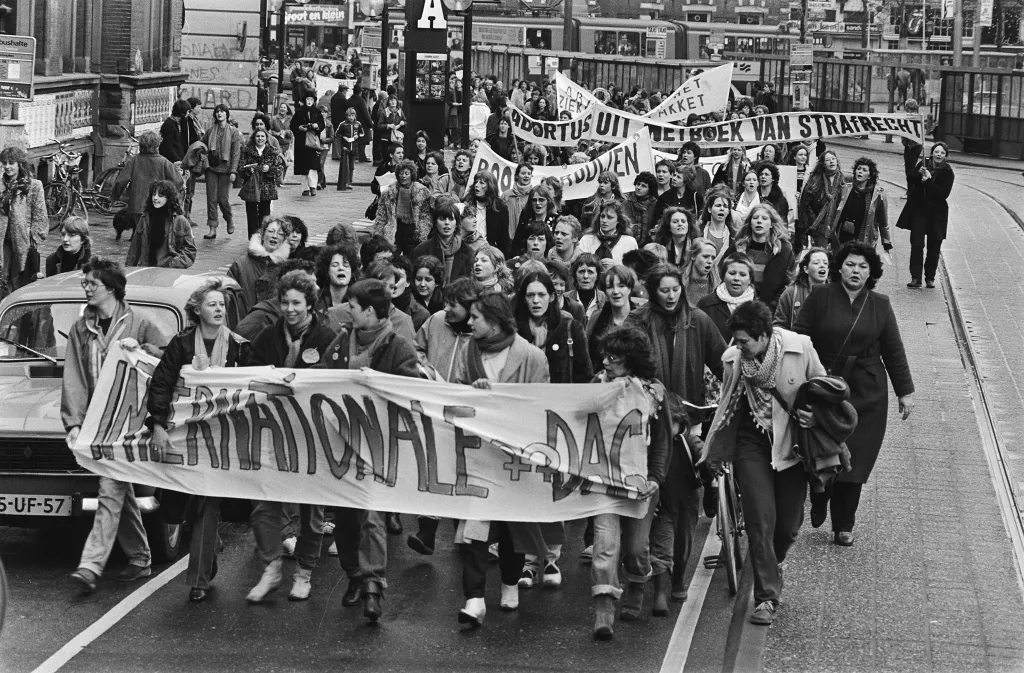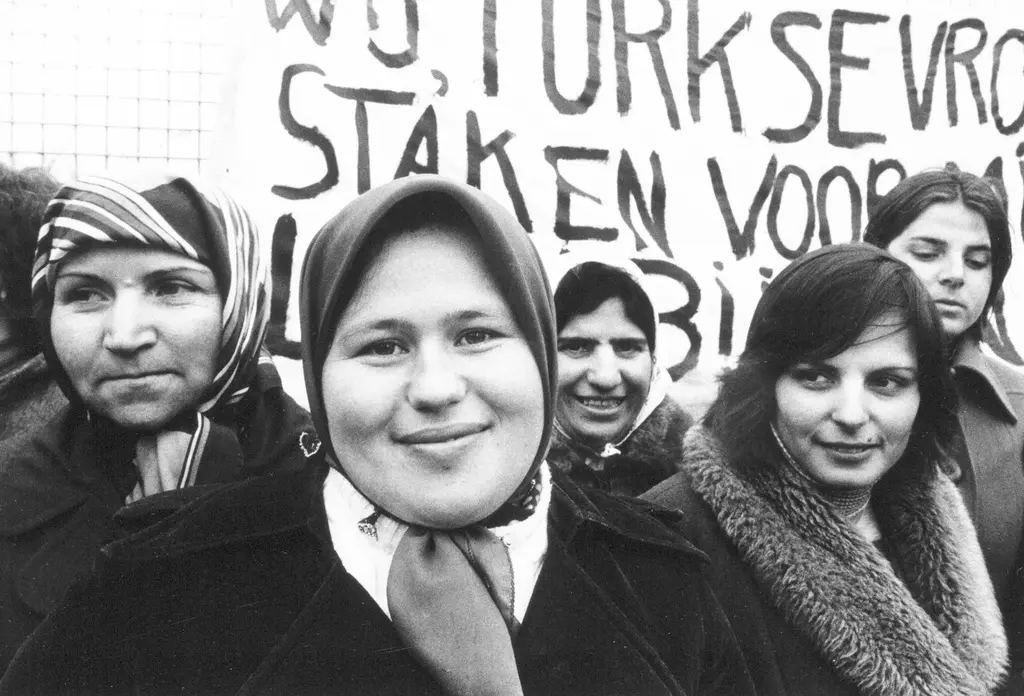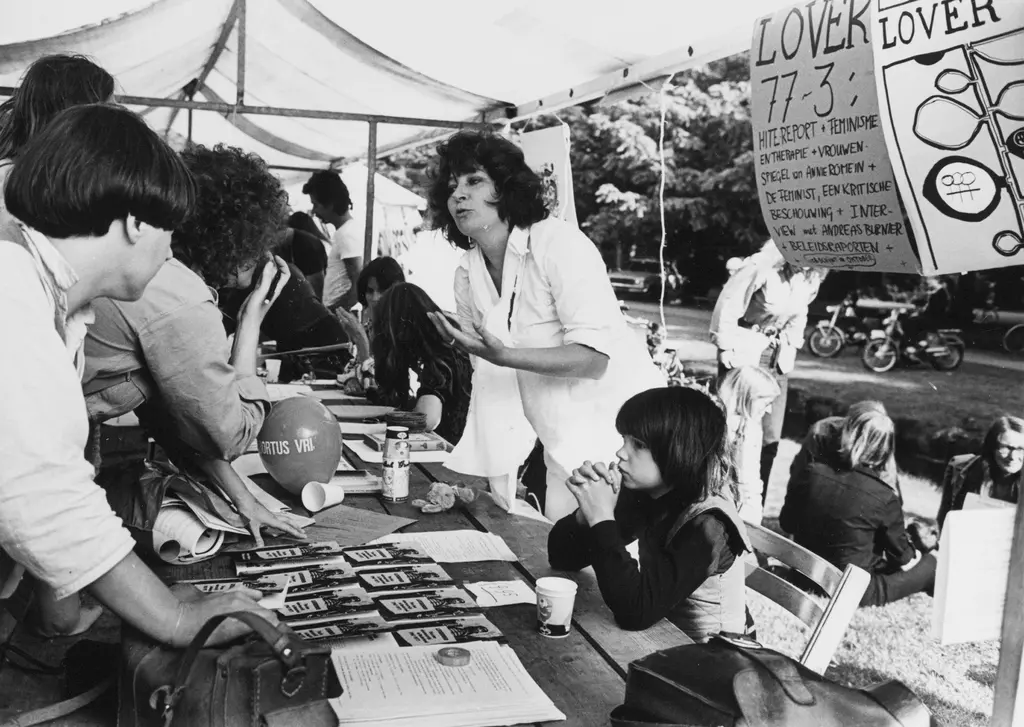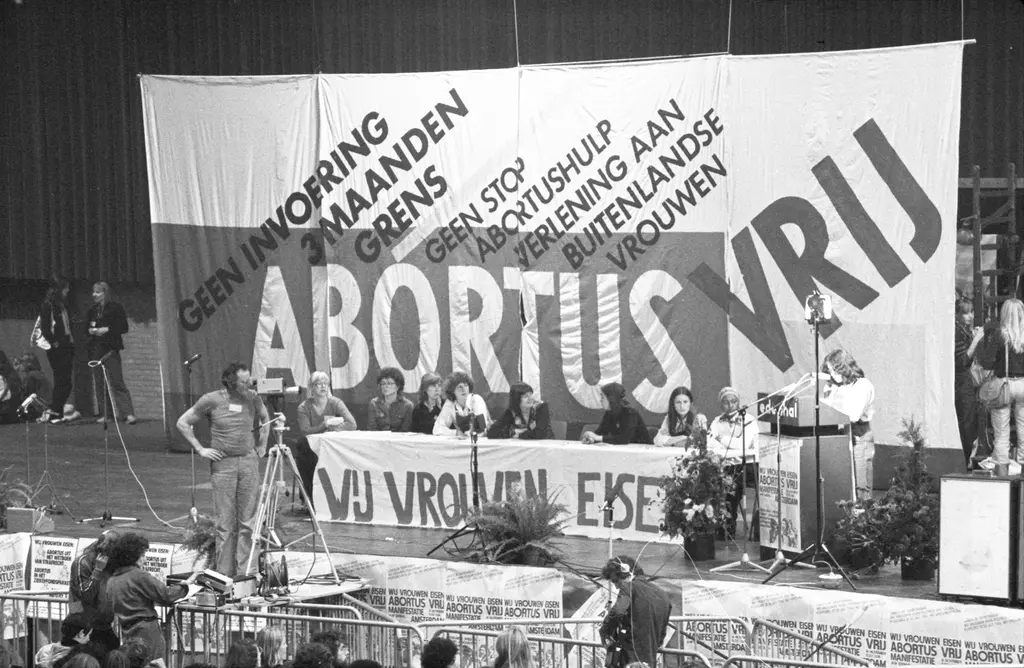
Anno 2023, the climate issue can no longer be left out of newspapers and talk shows. Climate activism also plays a prominent role in women's movements. That role may seem new, but already in the 1970s and 1980s women's organisations were very involved in 'the environmental issue'. And that long before the issue was high on the political agenda. What is their story?
Anno 2023, the climate issue can no longer be left out of newspapers and talk shows. Climate activism also plays a prominent role in women's movements. That role may seem new, but already in the 1970s and 1980s women's organisations were very involved in 'the environmental issue'. And that long before the issue was high on the political agenda. What is their story?
On 29 November 1985, six women meet at Thorbeckestraat in Zaltbommel. Together, they raise a glass to the very first board meeting of the Environmental Quartet Foundation, founded in 1984. The aim: "To make women aware of environmental issues as members of a women's organisation and as people who feel responsible for society," they tell themselves. This makes Stichting Milieukwartet (later: Centrum Vrouw en Milieu) one of the first women's organisations to focus specifically on environmental issues.
Not one at a time
Women's inequality and the climate issue are an extension of each other. Climate activists often support the women's movement and vice versa. This is all based on the idea that different social problems have the same causes. As Canadian publicist and activist Naomi Klein noted recently in The Guardian :
"We are living in a time of multiple, overlapping crises: we have a health crisis, a housing crisis, an inequality crisis, a racial inequality crisis and a climate crisis, and we will get nowhere if we try to fight them all one by one."
Dutch women's organisations of the 1980s and 1990s also knew that you could not separate environmental and women's issues.
(Sub)separating
Environmental Quartet Foundation organised information sessions to raise awareness about the environment among (domestic) women. The focus was on actions women could do in their own environment to benefit the environment. These included education on separating waste, buying environmentally friendly products and working for a liveable environment.
"With our education, we hope to get women to the point where every baker will be mad at us because we will all ask for paper bags, refuse all plastic bags, relieve cucumbers from plastic, avoid aerosol cans and start throwing all peels back in a pile."
This distinguished Environmental Quartet from ecofeminists of the 1970s. They saw women not only as victims of environmental problems, but also as people who have their own influence on solving environmental issues.
What is ecofeminism?
Some women's organisations concerned with climate call themselves 'ecofeminists'. Traditional ecofeminism assumes a link between capitalist exploitation of nature and oppression of women. The movement opposes a dualistic view of the world in which man and woman, human and animal and culture and nature are strictly separated. That dualistic view would legitimise 'rational' men to oppress 'emotional' women, who would be closer to nature. By no means all women's organisations identify with this ecofeminism. Indeed, there is also criticism of what some see as the essentialist idea that women would be closer to nature than men. Current ecofeminist movements therefore sometimes hold different views.
Environmentally damaging disposable packaging
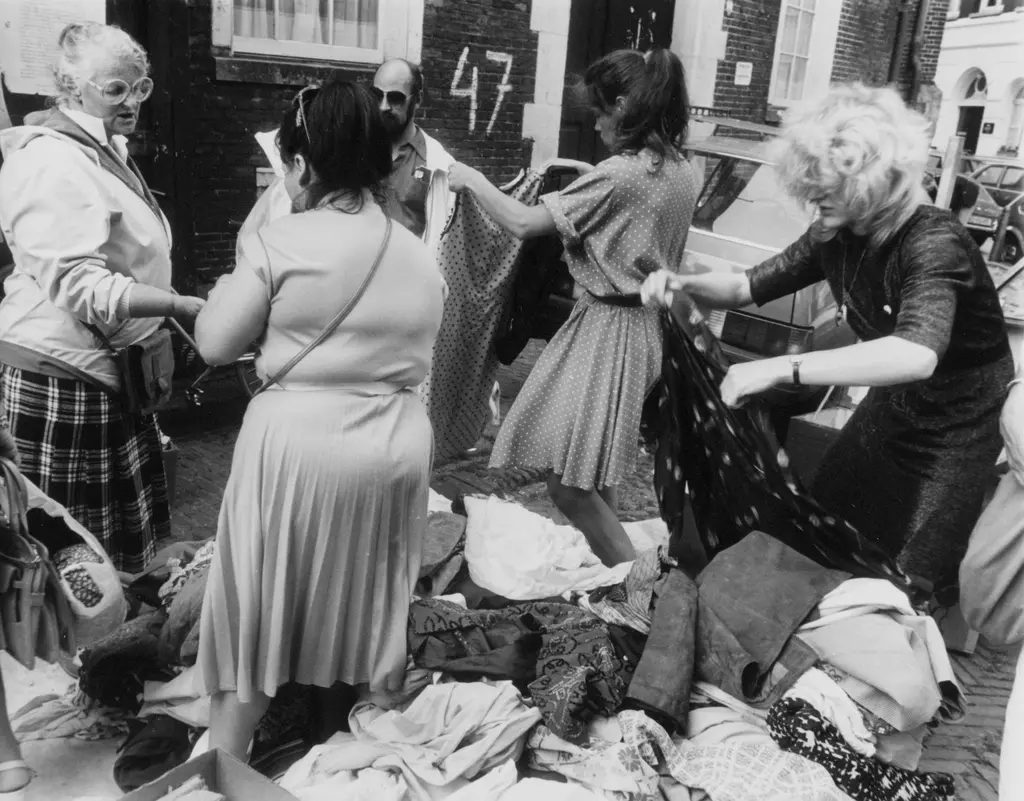
Women's movements took a leading role in combating environmental problems in the 1970s and 1980s. 'Women decorate 't', flaunts a poster from 1975. That year, environmental action group Alle Hens organised an information evening on recycling in Bussum on 31 January. The action group, according to an NRC article on the eve of the meeting, was committed to a 'saving circular economy' and organised actions to promote recycling of waste materials such as glass, paper and cans. The driving force behind the action group was former advertising writer Margaret Benning. She saw it as her educational task to get people - young and old - to handle their resources better. Thus, together with high school students from Leidschendam, she succeeded in getting the municipality interested in a waste separation trial. And at the end of 1973, she caused a stir by turning up at the Bols gin factory with a car full of empty gin bottles - those bottles were unbreakable, so why use them only once? During the information evening in Bussum, Alle Hens handed out a Koopwijzer, to "give buying housewives and househusbands something to hold on to in the maze of environmentally harmful disposable packaging" (NRC, 30 January 1975).
Sustainable battle song
Women's movements also organised environmental conferences that went beyond exerting impact in the domestic sphere. The 6th Broad Women's Conference, on 12 November 1988 in Utrecht, argued that environmental problems particularly affected women. The conference was attended by over 450 women; the organisation provided childcare. The aim was to make women aware of the relationship between economics, environmental degradation and poverty in the Netherlands and 'the Third World'. Klarissa Nienhuys, a chemist and activist who had been involved in women's rights organisations as well as the environmental movement since the early 1970s, introduced the day.
Among other things, Nienhuys was an important figure in the successful struggle against nuclear energy. During her speech in Utrecht, she argued in favour of improving the position of women and valuing biodiversity. Peace, women's and environmental movements needed to work together, she argued. Indeed, Nienhuys called contacts between women activists crucial to bring about structural changes. Following this, the women present discussed topics ranging from waste and radiation to the greenhouse effect, agriculture and involving lower-income people. The conference also featured policy advice. There should be stricter environmental standards for discharge of environmentally hazardous substances, domestic waste should be collected separately and women (organisations) should have a say in international environmental policy. Finally, to reinforce these recommendations, the fight song was deployed.
Final song Sixth Broad Women's Conference, last verse
(Text: Kokkie Achterberg and Ineke van Zweden)
'Take care of our earth
Which feeds and carries every one.
For the beauty she gave birth to
Is wasted and besieged.
And what man still spared,
We all cry aloud:
'Get rid of Mother Earth
she must not be exploited!
Blame the system
The poster also shows that the focus of women's movements on climate issues was slowly but surely shifting. When it was founded, the Environmental Quartet Foundation still explicitly focused on the individual. As long as enough (domestic) women were aware of their role in pollution, this would lead to a better environment and a cleaner living environment, was the thought. But as often happens in activist movements, 'capitalism' for today's climate activists and 'patriarchy' for feminists, the focus shifted from the individual to the system. So too with the women-and-environment movement. From the 1990s, alongside attention to eco-friendly detergents and plastic-free packaging, 'climate justice' for women came into visible focus. More specifically: for women who are hit hardest by climate change, for instance from countries like Afghanistan, Pakistan, Bangladesh, Somalia, or Sudan.
A disaster for women
These countries, also called the Global South, are being hit hardest by the effects of the climate crisis. This particularly affects women. They have fewer resources at their disposal to adapt to conditions changed by global warming and have less say in climate policies. We see this reflected in hard numbers. Globally, 80% of people displaced by climate change are women. Women are more likely to lose their income, experience violence or perish in natural disasters due to climate change. In addition, women are more likely to depend on natural resources, such as clean drinking water, which are under pressure from the changing climate. The focus on the global south is often accompanied by systemic criticism. Capitalism encourages exploitation of our planet and favours western countries.
Gender equality bad for the environment?
The gender equality and climate movement are on the same side. Right? In the early 1990s, there were concerns within organisations like the Emancipatieraad (Gender Equality Council) and the Environmental Quartet Foundation: gender equality would have a negative impact on the environment. If women were more likely to have jobs, for example, it would mean that they would have to travel to work by car more often - especially if they combined their jobs with caring responsibilities. The solution, according to the gender equality Council, was to introduce a better public transport system. This also immediately solved another problem, according to notes on a 1989 workshop by the Environmental Quartet Foundation: "Shifting the use of planes in favour of public transport could also prevent a lot of air pollution."
Also in the Netherlands
Here, too, climate change has a disproportionate impact on the daily lives of various groups of women. For instance, there are more single women than men in the Netherlands, they more often live in poorly insulated (social) rented houses. Rising energy prices are therefore extra burdensome for them. These women are more likely to face energy poverty. In tackling the climate crisis, women's representation could also be much better. Only 22% of employees in the energy and climate sector are women. Women are also at a disadvantage in decision-making positions on climate. For example, in the water boards, where 34% of administrators will be women after the 2023 elections. The highest amount ever, but still far from half. This leaves women largely sidelined in tackling one of the biggest challenges of our time.
Stay off Mother Earth
Movements such as the Environmental Quartet Foundation and All Hens offered women tools to do their own bit for a better climate. They also helped women hold influential board positions and would always continue to highlight women's interests in environmental policy. To this day, movements like Fossil Free Feminists and Queers for Climate fight for a more diverse representation of voices in climate policy. This is still desperately needed. Because that influence, at the tables where big decisions are made, is crucial. When everyone gets a place at the negotiating table, we ensure that it is not only about women who are victims of climate problems, but they can also have a say in appropriate solutions. After all, we have to take care of our planet.