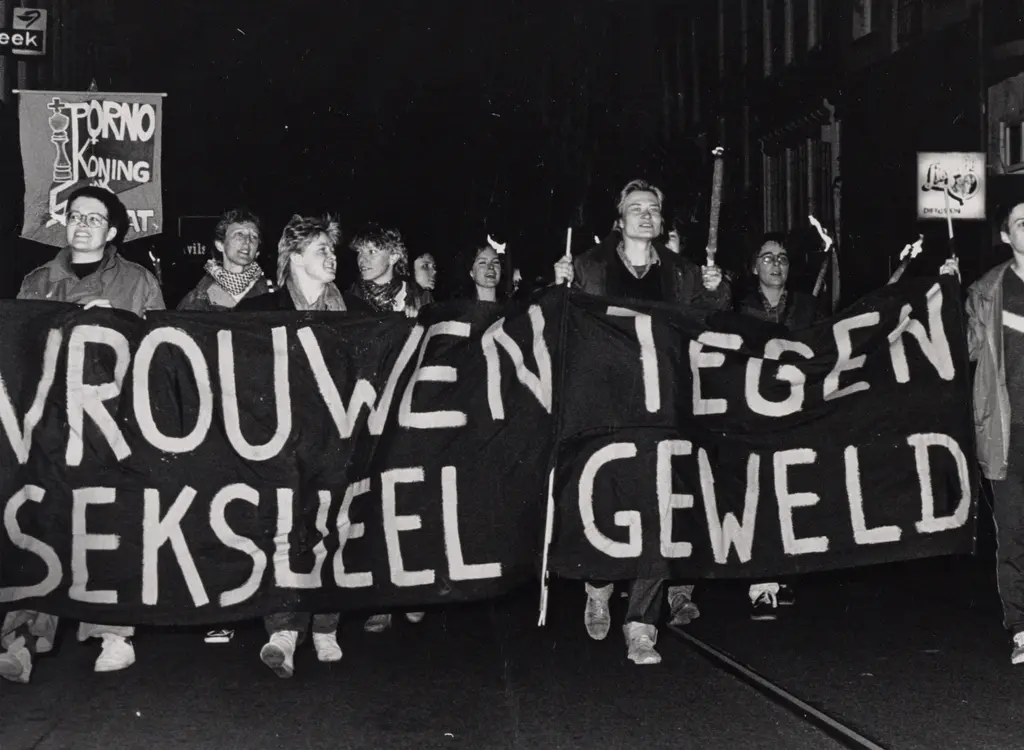
From 16 to 29 May 2026, Dolle Mina organised a Heksennacht (Take Back the Night) at various locations in the Netherlands to draw attention to street harassment and general oppression of women, gender diverse and queer people. Read about the origins of the first Heksennachten (Witch Nights) in this article.
From 16 to 29 May 2026, Dolle Mina organised a Heksennacht (Take Back the Night) at various locations in the Netherlands to draw attention to street harassment and general oppression of women, gender diverse and queer people. Read about the origins of the first Heksennachten (Witch Nights) in this article.
How did the first Witch Night come about?
The first Witch Night, called a Take back the Night event, took place in Philadelphia, USA, in October 1975 as a protest following the murder of microbiologist Susan Alexander Speeth. She had been stabbed while walking home alone, just a street away from her home. Witch Night is also said to have originated when a large group of women spontaneously entered a pub where a woman had been raped by a group of men.
Witch nights in Europe
A Reclaim The Night March was held in Belgium in March 1976, when women there visited the International Tribunal on Crimes against Women. This tribunal was set up to make visible the types of violence women face worldwide. More than two thousand women from 40 countries visited the tribunal. During the march, participants carried torches.
Other protests were in Rome in 1976, in Germany in 1977. And in Britain in 1977, in response to the Yorkshire Ripper in Leeds (convicted of murdering 13 women).
End of obviousness
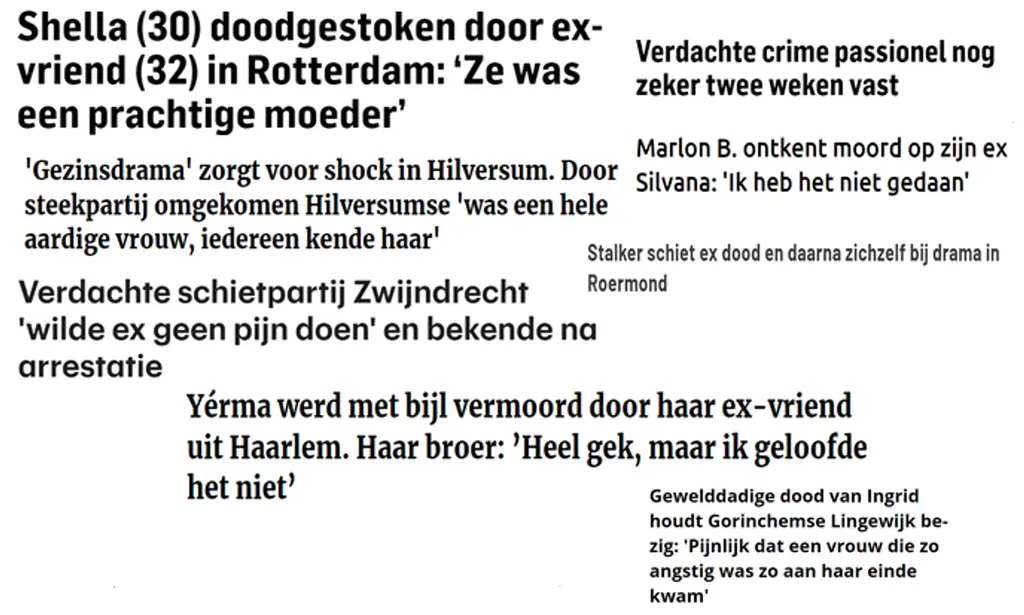
The street and the night are traditionally male domains. The aim of these night demonstrations was to end the self-evidence that the street belongs to men at night. But even today, many women, gender diverse and queer individuals still cannot walk the streets without fear, although some of this also applies to men. The difference remains, however, that the former groups themselves also seem to be held responsible when something nasty happens.
Witch Night in the Netherlands
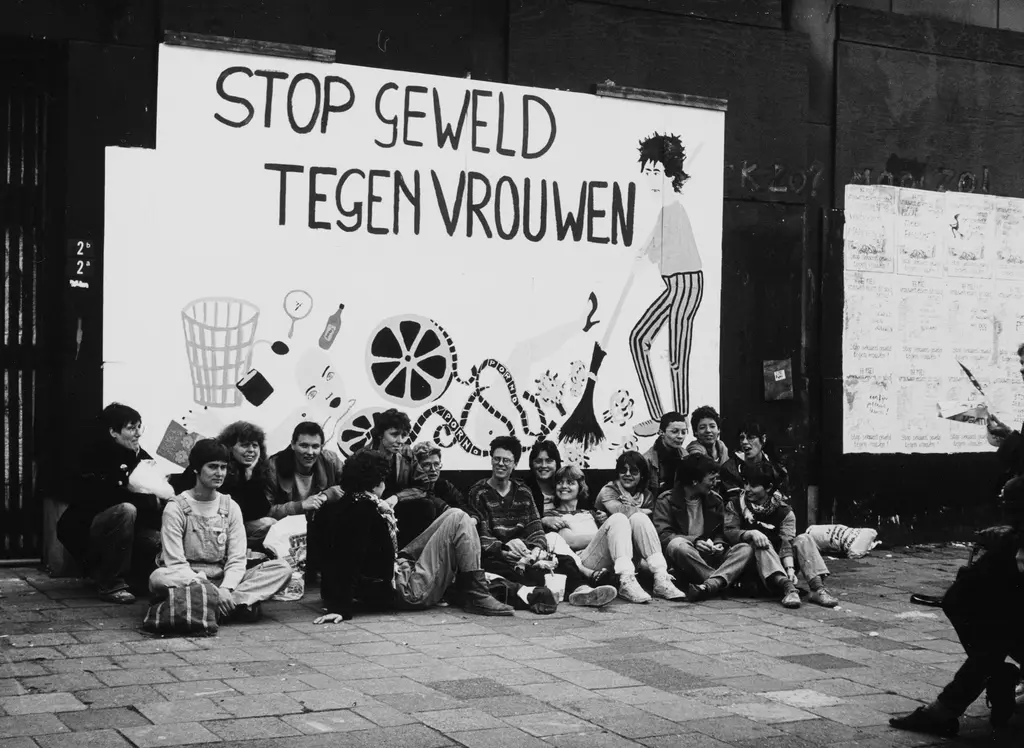
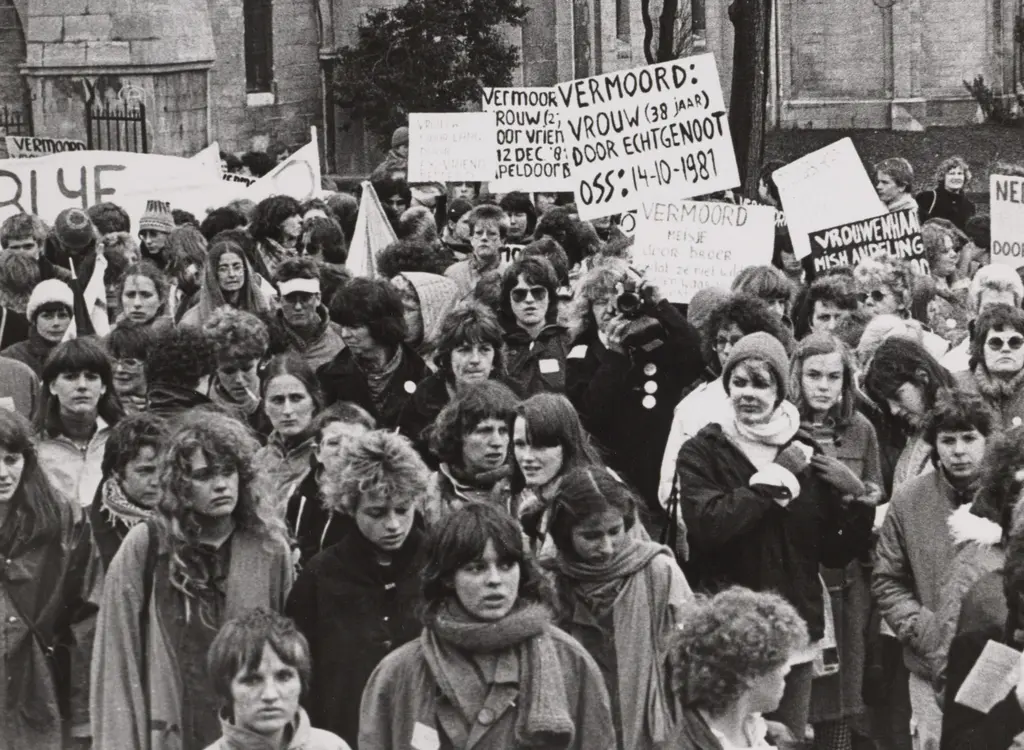
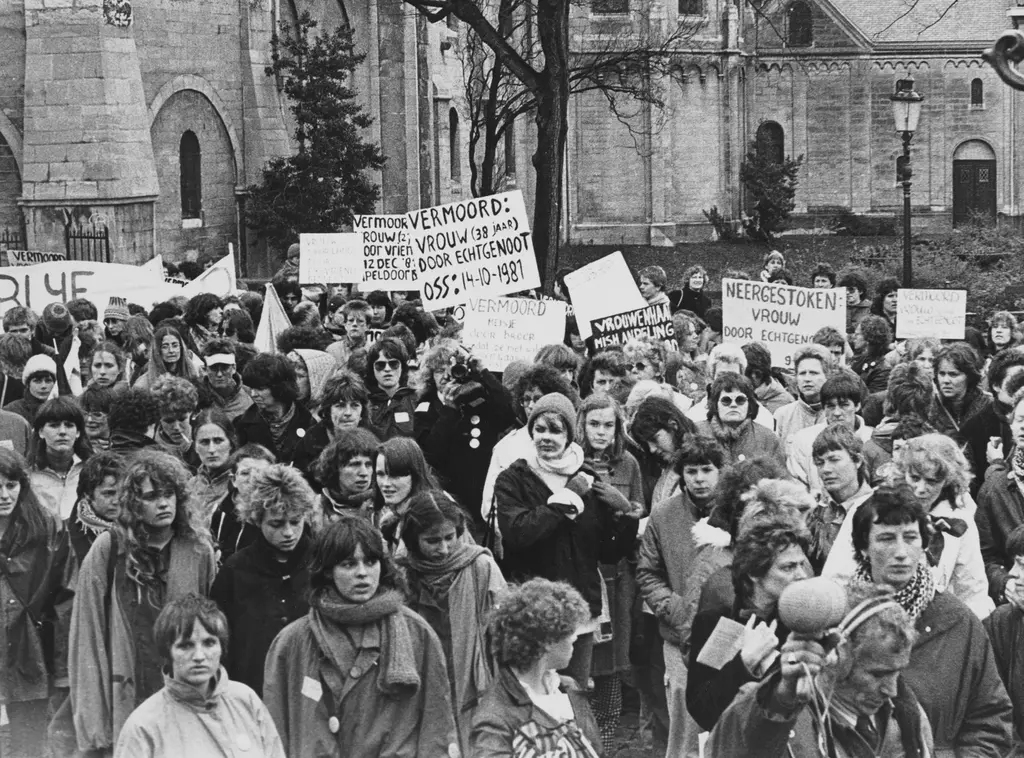
In the Netherlands, the first Witch Night was in 1978. Women Against Sexual Violence from Amsterdam organised the action, which took place in more than ten cities simultaneously, including Amsterdam, Utrecht, Nijmegen, Groningen and The Hague. More than eight thousand women took to the streets with torches and banners. They sang the Witch Song, which included a reference to medieval practices in which 'a woman alone or with other women' was accused of malicious witchcraft.
Witch Song
The witches are back, straight from hell, the witches are back, with flaming hair
the witches are back and they are unstoppable!
Came from the ancient matriarchy with wisdom far older than of the man-state
The man's power was death and not the word
He couldn't beat her at that, so she was killed!
refrain
In the Middle Ages, a woman alone doing her work with women around her
was suspected of evil and witchcraft by the church;
burned, stoned and drowned with a boulder.
refrain
Passed down her herbalism from mother to daughter, right through time
men invented men's medicines
the woman became their enemy, so burnt with hair and skin.
refrain
We are the witches, we dance around the fire
we make a woman's culture together again
with our dreams, our knowledge, our fun
we are back on our own turf!
The witches are back ...
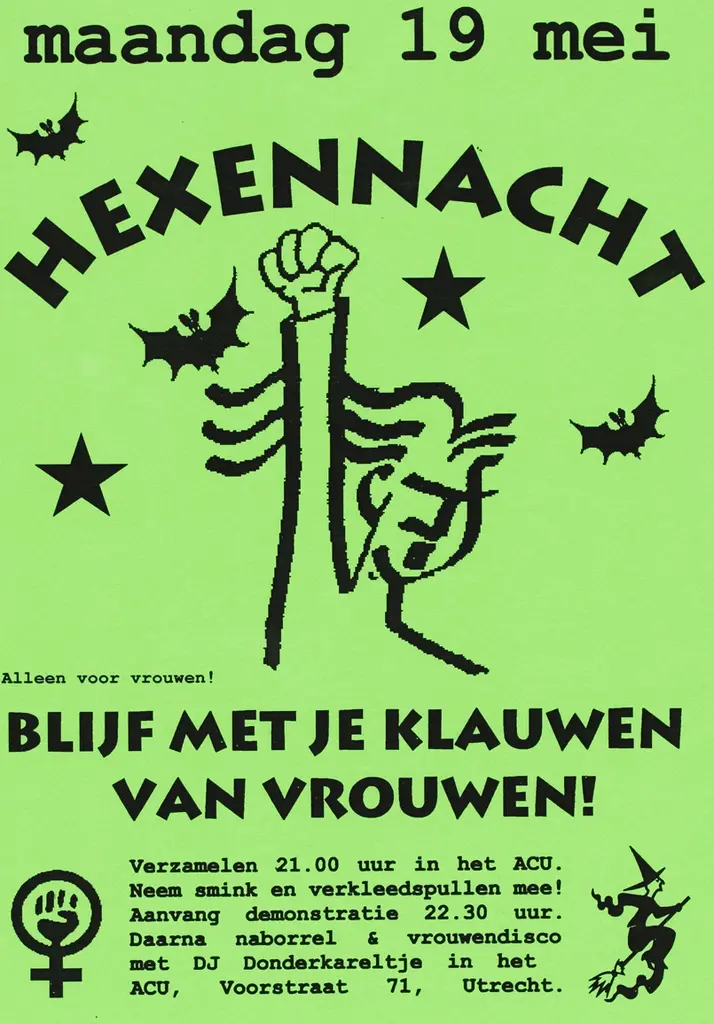
19 May
Torches, chants and banners continued to symbolise the protests in the following nights. Women made themselves visible on the streets, drawing attention to the power of women.
Witch Night was held in many countries, such as on 30 April in Germany: Walpurgis Night. This is an ancient European festival, which was celebrated on the night of 30 April to 1 May. During this night, evil spirits had free rein. Since it was then Queen's Day in the Netherlands, it was decided to move Heksennacht to a date shortly after 30 April. The choice fell on 19 May, reportedly the birthday of one of the activists.
No men?
In the early years, the question of male participation was not even raised. Men played little or no role in the women's movements. And besides, the Witch Night demonstration also had a symbolic function: women together showing that they were taking back the streets. In later years, however, the debate about whether it should be with or without men did come into play. Opinions differed on this. Some felt that men could take part in the demonstrations. Others refused men, because of the idea of "creating a safe space for women", and also because of the idea that they want the street back, of all men, not just some men.
Nowadays, everyone is welcome at the Witch Nights.