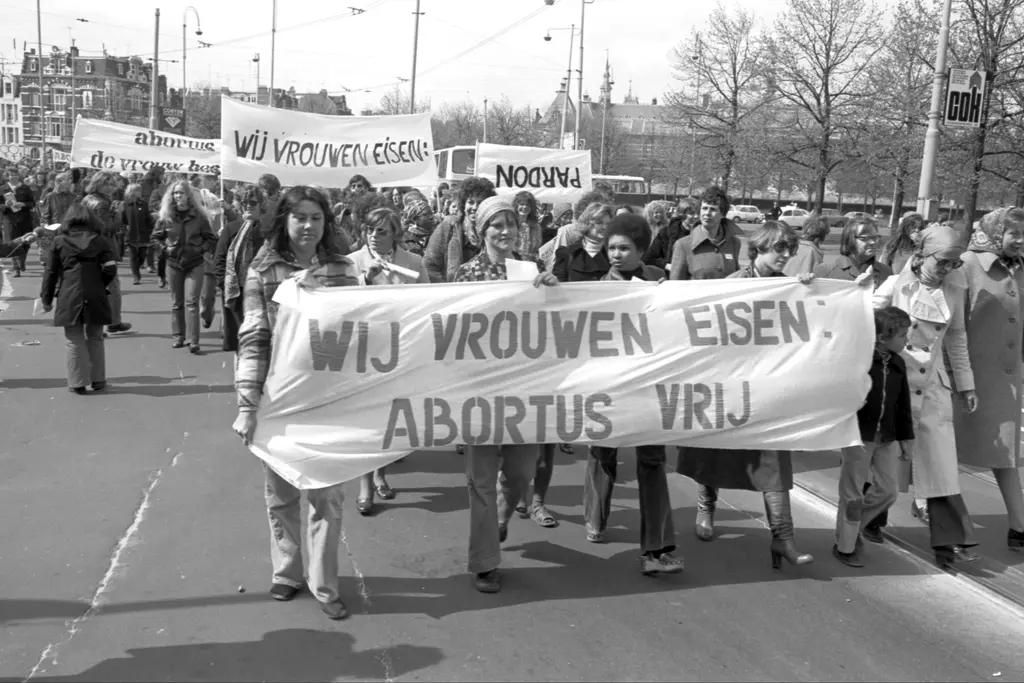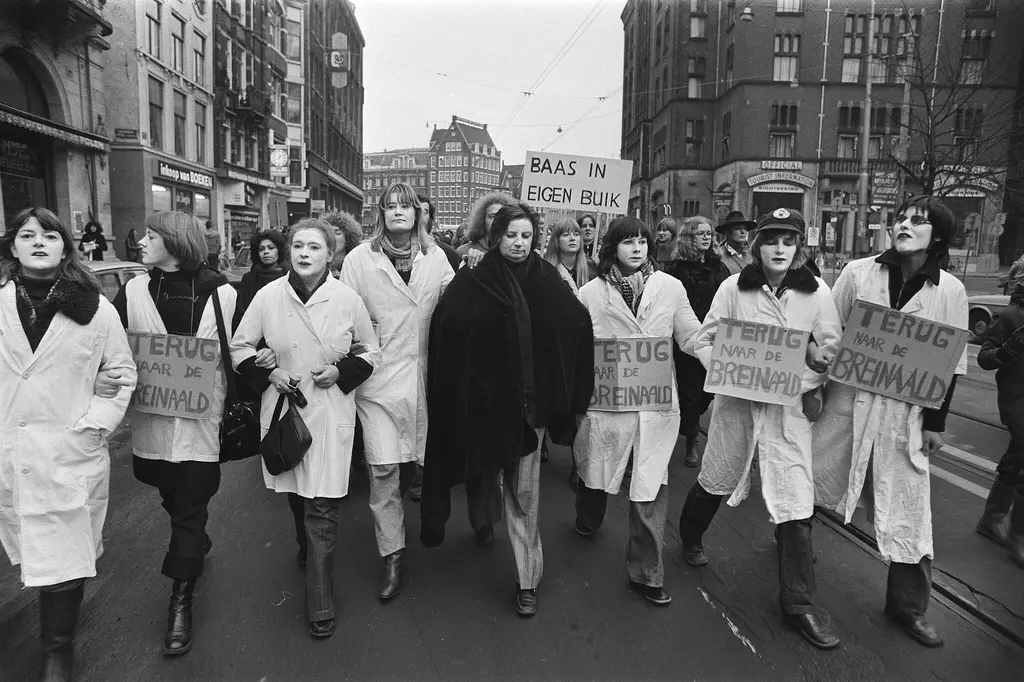
The deliberate termination of pregnancy, or while abortion provocatus, is of all times. Despite the fact that there were severe penalties for abortion in the 19th century, in practice hardly anyone received punishment. With a number of developments in the 19th century, that was about to change as the text below shows based on the sources below.
The deliberate termination of pregnancy, or while abortion provocatus, is of all times. Despite the fact that there were severe penalties for abortion in the 19th century, in practice hardly anyone received punishment. With a number of developments in the 19th century, that was about to change as the text below shows based on the sources below.
Abortion laws before 1800
Until the 19th century, every region in the Netherlands relied on its local law, including abortion. This law was strongly influenced by Roman Catholic Church law. Abortion, like infanticide, was seen as a more serious form of homicide.
Importantly, it was believed that no soul was yet present in an incipient pregnancy. Most legal scholars held that the 'inspiration' occurred 40 days after conception. Among the people, however, there was a view that the foetus began to live only when the mother felt it moving (from about 18 weeks). Therefore, in the first months of pregnancy, abortion was not a serious crime.
This had an effect on the punishment of abortion. Abortion after inspiration was seen as murder and punishable by imprisonment, before that it was "only" punishable by banishment. Heavy punishments, but in practice they hardly ever occurred. Abortion was simply not considered a social problem. This while abortion did occur, mainly to avoid the shame of unwed motherhood or to hide the consequences of infidelity.
Ca. 1800: Reintroduction of medical abortion
Terminating a pregnancy to save a woman's life was not common until the 19th century. This was due to the influence of Christianity and a lack of medical knowledge about the female body. Pregnancy could not be diagnosed with certainty in the first few months, let alone seen if the woman was at risk. This was partly because it was unusual for a woman to be examined by a doctor during pregnancy.
In the late 18th century, the view spread from England among doctors that abortion was justified if the pregnancy meant the death of the mother. Causes for the change in attitude were the increase in obstetric knowledge and the development of independent scientific thinking, which broke the Christian taboo. In the Netherlands, medical abortion was introduced quickly and almost silently.
1809: Abortion banned in Penal Code
When the Netherlands came under French control in 1795, work began on a single penal code for the whole of the Netherlands. This code, introduced in 1809, included abortion provisions. According to historian Jan de Bruijn, this did not indicate increased concern about abortion, but a different attitude about criminal law: it had to be comprehensive.
The main change with earlier local legislation was the removal of the distinction between the animate and inanimate foetus (although this distinction persisted among the people well into the 19th century). The underlying medical view was outdated and, according to the new church views, a soul was already present from fertilisation. Therefore, abortion was now considered murder from the beginning of pregnancy.
Not enforced
Contrary to what you might expect, punishments were not tightened. This was due to the influence of the Enlightenment, which saw crime as a consequence of social conditions. Nevertheless, both the woman and the person performing the abortion risked banishment or up to six years in prison. In 1811, a provision was added against doctors who performed abortions without valid medical reasons. This showed that the reintroduction of medical abortion had come under the spotlight.
Hardly any women were still being prosecuted, partly because abortion was very difficult to prove. If a miscarriage could be established at all, it had to be proved whether it was spontaneous or intentional and whether the pregnancy was still alive. Moreover, the abortion drugs used hardly left any traces, which would change with the spread of mechanical methods (see below: 'More effective abortion methods').
The current Penal Code was drafted in 1881. In it, the pregnant woman was punished less severely than the person who performed the abortion on her. The fact that medical abortion was allowed was not included in the code, as the relevant minister Modderman took it for granted.
The Dutch colonies
In the Dutch colonies, the Dutch Penal Code was introduced during the 19th century. Abortion does not seem to have been strictly prosecuted there either. The Dutch East Indies newspaper De nieuwe vorstenlanden reported in 1899:
"Here in India, where, when it comes to taking so-called housekeepers, the prescription is usually: no children, one never hears of prosecution for inducing abortion, which therefore goes unpunished and is considered by many to be something very common."
Ca. 1830: More effective abortion methods
Rusted nails on gin, vinegar in which seven copper cents had lain for a day, or a mixture of green soap, soot and soda water. These examples of potions to induce an abortion were given by GP and historian Van Andel in his 1909 Volksgeneeskunst in Nederland . Until the 19th century, so-called 'internal' and 'external' remedies were mainly used to induce an abortion. Internal remedies were herbs and potions that were eaten or drunk. These were often not very effective. External remedies involved exerting pressure on the uterus from outside, for example by hard punching on the abdomen or strenuous physical exercise. Other women performed venesection, or took a bath to which a 'pungent' substance such as salt, soap or mustard had been added. The effect of external remedies was also uncertain.
Although these methods remained in use in the 19th century, the much more effective 'mechanical' or instrumental methods also came into circulation. Instruments intervened directly in the uterus, such as by inserting sharp objects or injecting suds or other liquids into the uterus. These methods were used by doctors in medical abortion from about 1830 onwards and then spread to the public, where they were well established by the end of the 19th century.
Ca. 1880: The rise of contraception
From the late 19th century, people in the Netherlands favoured smaller families and birth control. This also created a need for contraception. To this end, the New Malthusian Union (NMB) was founded in 1881, following the English example. This union promoted the use of contraceptives within marriage. One of its founders was C. V. Gerritsen, the husband of Aletta Jacobs. Other well-known people also joined the union, such as gynaecologist Hector Treub (see below) and doctors Aletta Jacobs and Jan Rutgers. The NMB saw contraception as the best way to prevent abortion.
1901: Hector Treub starts first nationwide abortion debate
'Simply ridiculous.' That was what Leiden professor of obstetrics and gynaecology Hector Treub (1856-1920) wrote about the abortion ban in 1901. In doing so, he was the first to draw attention to abortion in the public debate. Why was this professor so critical of the law?
By the end of the 19th century, the visibility of abortion in society had increased, partly due to the emergence of illegal professional abortionists with the rise of mechanical abortion methods. Treub warned as early as 1895 of the harmful physical consequences of poorly performed illegal abortions. He called for the abolition of the abortion ban so that doctors could be sure they would not be prosecuted if they terminated a pregnancy for medical reasons. This way, doctors would compete illegal abortionists out of the market. When he criticised the Catholic Church's hardened stance on abortion in an article in the Journal of Criminal Law in 1901, it sparked a pen fight that sparked interest in abortion beyond medical and legal circles.
This first nationwide abortion debate eventually resulted in the Morality Act.
Disclaimer: History is never unambiguous. This timeline shows how, based on available sources, we have interpreted and contextualised events.
*In the running text, we use the generic term 'abortion' by which we refer to 'abortion provocatus', or the deliberate termination of a pregnancy, in this timeline.